
140
Protection
🦁
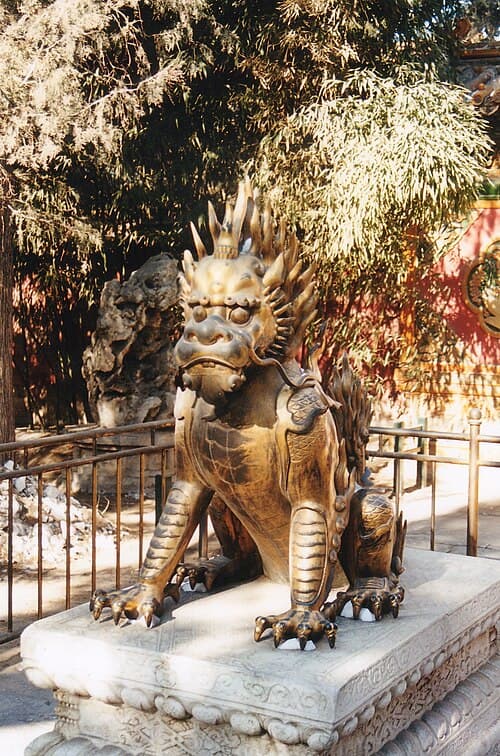
Haetae (Korean Guardian)
South Korea
The Haetae is Korea's mythological guardian lion that eats fire and prevents disaster, symbolizing justice, protection, and the fierce defense of those under its care.
4.4Learn more →


Pujok are Korean shamanistic talismans made from yellow paper with red ink inscriptions, used for protection against evil spirits, illness, and misfortune in homes and on the body.
Pujok (부적) are among the oldest continuous spiritual practices in Korea, representing the intersection of Taoist, Buddhist, and indigenous Korean shamanic (musok) traditions in a single practical object. A Pujok is typically a piece of yellow or white paper inscribed with symbols, Chinese characters, or figures in red vermilion ink, created according to precise ritual specifications and empowered through specific ceremonies or by a shaman (mudang) or Buddhist monk trained in the tradition. The resulting talisman is considered to carry specific protective or luck-generating power directly proportional to the ritual expertise of its creator.
The range of Pujok purposes mirrors the full spectrum of human concern: Sipgu pujok (fire prevention talisman) is placed in the kitchen; pyeongan pujok (peace talisman) is placed at the main entrance; haengun pujok (good fortune talisman) is kept in the wallet; yonung pujok (business prosperity talisman) is placed behind the cash register; and myoung pujok (fate-improvement talisman) is worn on the body. Each type uses specific symbols, character combinations, and colors calibrated to its purpose. The most powerful Pujok are made on specific auspicious days of the lunar calendar at auspicious hours.
The visual language of Pujok is esoteric and extensive, drawing on Chinese Taoist talismanic writing (fu), Buddhist seed syllables, and Korean shamanic symbolic vocabulary simultaneously. The most common symbols include: circular diagrams representing heaven's order; eight trigrams of the I Ching deployed in protective configurations; specific Chinese characters meaning peace, health, or wealth; and abstract figures representing divine beings or their blessings. The combination of these elements in precise arrangements is the core technology of the Pujok tradition.
Targeted spiritual protection against the specific threats that most endanger human life — fire, illness, financial ruin, malicious spirits, and the general vulnerability of existence to unseen forces.
Purchase from a reputable source — ideally a mudang (shaman) or a Korean temple where monks create Pujok according to traditional specifications. Post fire-prevention Pujok above the kitchen stove, facing down. Post peace and protection Pujok above the main entrance, facing outward. Keep prosperity Pujok in your wallet, folded toward your bills. Do not tear, crumple, or disrespect the Pujok. Replace annually or when the paper begins to deteriorate.
Archaeological evidence of talismanic paper inscriptions in Korea dates to at least the 7th century CE Silla kingdom, making Pujok one of the longest continuously practiced ritual paper traditions in East Asian history — an unbroken tradition of approximately 1,400 years of people reaching for protection through inscribed paper.
Pujok are generally considered universally applicable in their protective function — the power comes from the symbols and the ritual creation process, not from the ethnicity of the user. However, using one with genuine understanding of what it is and respectful handling is important. Simply buying one as a decorative item without respect for its ritual nature is considered disrespectful to the tradition.
Yes — Pujok are highly specialized, and using the wrong type is considered ineffective or potentially counterproductive. For significant needs (protection from a specific threat, serious health concerns, major business decisions), consulting a practicing mudang who can create a custom Pujok for your specific situation is recommended over purchasing generic ones.
Like Japanese omamori, an old Pujok that has served its time should be burned — specifically in a clean fire (not general trash burning), ideally at a temple or in the manner prescribed by the shaman or monk who created it. Do not simply throw it in the garbage, as this is considered disrespectful to the protective spirit within.
South Korea
The Haetae is Korea's mythological guardian lion that eats fire and prevents disaster, symbolizing justice, protection, and the fierce defense of those under its care.

South Korea
The Korean Dokkaebi is a mischievous but fundamentally good-natured goblin who rewards honesty and punishes greed, serving as both a protective house spirit and a moral guardian.

Japan
Omamori are sacred Japanese amulets sold at Shinto shrines and Buddhist temples, offering specific divine blessings for love, safety, success, health, or any of dozens of specialized needs.

China
The Bagua Mirror is feng shui's most powerful deflection tool — an octagonal mirror ringed with the eight trigrams of the I Ching, used exclusively for exterior protection.

