

2
General
🍀
Four-Leaf Clover
Ireland
The rarest clover mutation, treasured as nature's own lucky charm.
4.9Learn more →

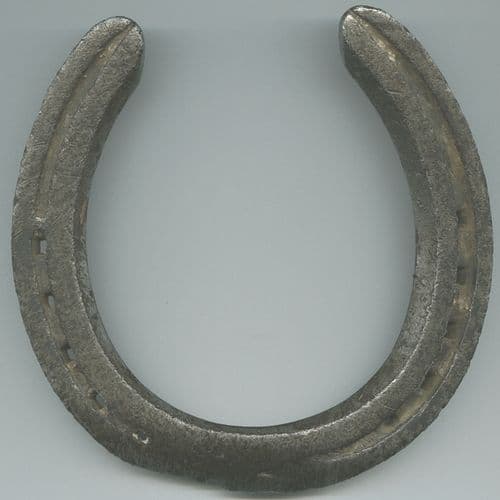
An iron crescent hung above doorways to catch and hold good luck.
The horseshoe is one of Europe's oldest and most enduring protective talismans, its crescent shape and iron composition combining to create a charm believed to be irresistible to good fortune. Blacksmiths, who worked with fire and iron — elements long associated with magical power — were regarded with a mixture of awe and respect in medieval society, and the objects they forged were thought to carry inherent protective energy.
The most widespread belief holds that a horseshoe hung with the opening facing upward acts as a cup, collecting and holding luck that would otherwise pass by. In some regional traditions, particularly in Ireland and parts of Britain, the horseshoe is hung points downward so that luck pours out over all who pass beneath it. Both interpretations have passionate adherents, and the debate itself has become part of the charm's cultural richness.
The association with iron is deeply significant: across European folklore, iron was believed to repel witches, fairies, and evil spirits. A horseshoe nailed above a stable door protected the animals within; above a cottage door, it protected the family. Many old British country homes still display horseshoes above their entrances, a tradition maintained as much for genuine belief as for aesthetic charm.
The horseshoe symbolises protection, good fortune, and the power of skilled craftsmanship to shape destiny. Its crescent form echoes the moon, connecting it to lunar cycles of growth and renewal. The seven nail holes in a standard horseshoe are considered especially auspicious, as seven is widely regarded as the luckiest number in Western tradition.
Hang a horseshoe above your front door — the debate over which way up is yours to settle based on your own tradition. For personal use, small horseshoe pendants are worn on necklaces or bracelets. A horseshoe given as a gift at a wedding or housewarming is considered particularly powerful, as the giver's goodwill is said to travel with the charm.
Lord Horatio Nelson famously had a horseshoe nailed to the mast of his flagship HMS Victory. When the ship won the Battle of Trafalgar in 1805, it was cited as evidence of the charm's power — conveniently overlooking that Nelson himself was killed in the battle.
In most British and American traditions, points up so luck collects in the cup. In Ireland and some other regions, points down so luck spills onto everyone who passes beneath. Both are valid traditions — choose the one that resonates with you.
Traditional belief holds that a found or used horseshoe carries more power than a new one, as it has already accumulated the energy of service. However, decorative horseshoes made specifically as charms are perfectly effective symbolic objects.
Iron was considered a magical metal in European folklore because of its strength, its connection to fire through forging, and its believed ability to repel supernatural entities including fairies, witches, and malevolent spirits.
Ireland
The rarest clover mutation, treasured as nature's own lucky charm.

United Kingdom
The humble copper coin that promises a turn of fortune when found heads-up.

United Kingdom
The most universally lucky number in Western culture, encoded in the cosmos itself.

