

35
General
🎲
Lucky Dice
United Kingdom
The pair of spotted cubes that embody chance itself, transformed into a personal lucky talisman.
4.1Learn more →

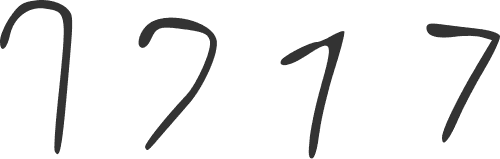
The most universally lucky number in Western culture, encoded in the cosmos itself.
The number seven holds an almost unchallenged position as the luckiest number in Western culture — a status backed not by arbitrary superstition but by its remarkable frequency in natural, cosmological, and cultural structures that struck ancient observers as evidence of divine design. Seven days in a week (corresponding to the seven classical planets visible to the naked eye), seven notes in the Western musical scale, seven colours in the rainbow, seven wonders of the ancient world, seven deadly sins, seven sacraments — the number's recurrence seemed too consistent to be coincidence.
In ancient Mesopotamia, where much of Western numerological tradition originated, seven was the number of completion and perfection — the combination of three (the divine triad of heaven) and four (the earthly square of matter). The Babylonians organised time in seven-day cycles based on their astronomical observations, and this structure passed through Jewish, Islamic, and Christian cultures to become the universal week. The Bible's account of creation in six days plus a day of rest embedded seven as the number of divine completion in European consciousness.
Psychological research conducted by cognitive scientist George Miller established that seven is indeed special for human cognition: his 1956 paper 'The Magical Number Seven, Plus or Minus Two' demonstrated that human working memory optimally processes around seven items simultaneously. This cognitive reality may underlie the intuitive sense that seven represents a complete and satisfying unit of experience — not too few, not too many, but exactly the right amount.
The Number Seven traces its origins to United Kingdom, where it has been revered for generations as a powerful symbol of good fortune and positive energy. Historical records and oral traditions suggest that early versions of this charm appeared centuries ago, when communities in United Kingdom first began attributing supernatural qualities to objects drawn from their natural and spiritual environment.
Over time, the Number Seven evolved from a regional folk object into a widely recognized talisman. Traders, travelers, and migrants carried it across borders, introducing it to new cultures that often adopted and adapted it to fit their own belief systems. Today it is found in united kingdom, france, germany and beyond, each culture adding its own layer of meaning and ritual to the charm's enduring legacy.
In its homeland of United Kingdom, the Number Seven occupies a revered place in both daily life and ceremonial practice. It is not merely decorative — it is woven into the fabric of cultural identity, appearing in celebrations, rites of passage, and household traditions that have been passed down through generations.
Beyond United Kingdom, the Number Seven has gained recognition in united kingdom, france, germany and other regions, where it is valued for its symbolic connection to universal good luck. Scholars of material culture and anthropologists note that charms like the Number Seven serve a dual psychological function: they provide a tangible focus for hope and intention, and they connect their owners to a living cultural tradition that transcends individual experience.
To get the most from your Number Seven, keep it in a place where you will see it daily — on a desk, nightstand, or near your front entrance. Physical proximity reinforces the intention behind the charm and serves as a regular reminder of your goals.
Traditional practice recommends handling the charm with clean hands and respectful intention. Many practitioners in United Kingdom advise setting a clear purpose when you first acquire the charm: hold it, state your wish or goal silently or aloud, and then place it in its chosen position. Periodically cleansing the charm — by passing it through incense smoke, placing it under moonlight, or simply wiping it with a clean cloth — is believed to refresh its energy.
If the charm is meant to be worn (as jewelry or a carried token), keep it close to your body throughout the day. If it is a household object, place it in the area of your home most associated with its purpose — for example, near a workspace for success charms, or by the bed for love and health charms.
Seven represents divine completion, the full spectrum of experience, and the harmony between heavenly principles and earthly reality. As a lucky charm number, it signifies that all necessary elements are present — that you are in alignment with the deep structures of the cosmos. Encountering or choosing seven suggests a situation where all parts are working together toward a fortunate outcome.
Notice when seven appears spontaneously — in number plates, phone numbers, addresses, and times — as a potential sign of good fortune. Make wishes on the seventh of the month, or at 7:07. Seven-themed jewellery and charms are given as presents for seventh anniversaries, seventh birthdays, or any seventh milestone as concentrated lucky gifts.
When people from Western cultures are asked to choose a random number between one and ten, the most common answer is seven — selected far more frequently than any other number. This finding has been replicated across dozens of countries, suggesting that the lucky association with seven has become so deeply embedded that it influences even supposedly random choices.
Seven's luck comes from its remarkable appearance across domains: seven planets, seven days, seven notes, seven rainbow colours, seven deadly sins. Ancient observers found this recurrence too consistent for coincidence and concluded seven must be cosmically privileged. Modern cognitive research adds that seven is also the natural unit size of human working memory.
Seven is particularly lucky in cultures influenced by the Abrahamic traditions and ancient Mesopotamian astronomy. In Chinese and Japanese cultures, four is considered unlucky (its word sounds like 'death') and eight is the luckiest number. Even within Europe, regional variations exist.
Choose the seventh item when given options; make seven of anything when making physical luck tokens; notice the clock at 7:07 and make a wish; write intentions seven times; keep seven of your most meaningful lucky objects together as a set.
The Number Seven originates from United Kingdom, where it has been used as a general charm for centuries. Its influence has since spread to united kingdom, france, germany and many other regions worldwide.
Notice when seven appears spontaneously — in number plates, phone numbers, addresses, and times — as a potential sign of good fortune. Make wishes on the seventh of the month, or at 7:07. Seven-themed jewellery and charms are given as presents for seventh anniversaries, seventh birthdays, or any seventh milestone as concentrated lucky gifts. For best results, set a clear intention when you first acquire the charm and keep it in a prominent, respectful location.
Yes, giving a Number Seven as a gift is considered a generous and meaningful gesture in most traditions. In United Kingdom, gifted charms are often believed to carry even stronger energy than those purchased for oneself, because they come with the goodwill and intention of the giver.
Many practitioners recommend periodically cleansing your Number Seven to refresh its energy. Common methods include passing it through incense smoke, placing it in moonlight overnight, rinsing it under clean water (if the material allows), or simply wiping it down with a clean cloth while setting a fresh intention.
While the Number Seven originated in the cultural traditions of United Kingdom, it is not exclusive to any single religion. It has been adopted and adapted by people of many faiths and backgrounds, each bringing their own interpretation to its symbolism and use.
United Kingdom
The pair of spotted cubes that embody chance itself, transformed into a personal lucky talisman.

United Kingdom
The humble copper coin that promises a turn of fortune when found heads-up.
United Kingdom
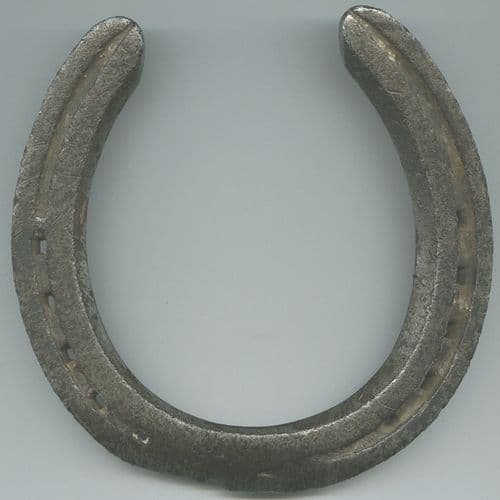
An iron crescent hung above doorways to catch and hold good luck.

