

179
Protection
🗡️
Indonesian Keris Dagger
Indonesia
The sacred wavy-bladed dagger of Java is both a masterwork of metallurgy and a living talisman possessing its own spirit and destiny.
4.6Learn more →


Sacred textile patterns encoded with Javanese cosmology, batik is both high art and living magical script worn on the body.
Javanese batik is far more than a beautiful fabric technique — it is a complex visual language encoding entire cosmological systems, spiritual protections, and social meanings in wax-resist dyed textiles. Each traditional batik pattern (motif) carries specific meanings, powers, and appropriate contexts for wear. Wearing the wrong batik pattern to a ceremony is equivalent to speaking the wrong words — a cultural and spiritual error. The most sacred batik patterns were historically reserved for the royal courts of Yogyakarta and Surakarta and were forbidden for commoners to wear under pain of serious punishment.
The Parang Rusak (broken blade) pattern, characterized by interlocking diagonal S-curves suggesting both waves and daggers, was the most exclusively royal of all batik patterns. Only the Sultan and immediate royal family were permitted to wear it. The Sido Mukti pattern, featuring stylized butterflies and flowers, is specifically worn at weddings to invite prosperity and happiness to the union. The Kawung pattern — four-petaled circles arranged in perfect geometric regularity — represents the universe in its ideal orderly state and is associated with philosophical clarity and spiritual power.
Modern Javanese batik production has made these patterns accessible to everyone, but traditional communities still observe the appropriate use of patterns for specific occasions. UNESCO inscribed Indonesian batik on its Intangible Cultural Heritage list in 2009, recognizing that the tradition's true value lies in the living knowledge of what each pattern means and when it should be worn. Wearing traditional Javanese batik is thus a form of participatory cosmology — an act of clothing the body in the ordered language of the universe.
The cosmological ordering of existence made wearable, with specific patterns providing protection, invitation of prosperity, expression of social position, and connection to specific spiritual powers.
Wear Sido Mukti batik at weddings and celebrations to invite prosperity. Wear Kawung at philosophical discussions and spiritual gatherings for clarity. Keep a small piece of sacred batik in an altar or money box as a prosperity talisman. For protection during important events, consult a Javanese cultural practitioner about which pattern is most appropriate.
The most elaborate Javanese batik — the tulis (hand-drawn) type — can take one highly skilled craftsperson up to six months to complete a single piece. The canting (a small copper cup with a spout) used to apply hot wax in precise patterns requires years of training to master. Such pieces are considered heirloom objects and are inherited through families for generations.
Batik tulis (hand-drawn) is the most sacred and valuable — each motif applied by hand with a canting tool. Batik cap (stamped) uses copper stamps and produces consistent patterns faster; it is considered traditional but less spiritually charged. Printed batik (screen-printed or machine-printed) is essentially just fabric printing and carries no traditional spiritual significance.
Most patterns are appropriate for anyone to wear and purchase. However, certain patterns that were historically restricted to royalty — particularly Parang Rusak — are still considered culturally sensitive. Wearing these patterns to Javanese royal ceremonies would be inappropriate. For everyday fashion use, all patterns are freely available.
Batik exists throughout Indonesia, but Javanese batik (particularly from Solo/Surakarta and Yogyakarta) is the most cosmologically elaborate. Balinese batik tends toward different color palettes and motifs. Madura, Cirebon, and Pekalongan batik traditions are also significant. The Javanese court tradition is the source of the deepest symbolic coding.
Indonesia
The sacred wavy-bladed dagger of Java is both a masterwork of metallurgy and a living talisman possessing its own spirit and destiny.
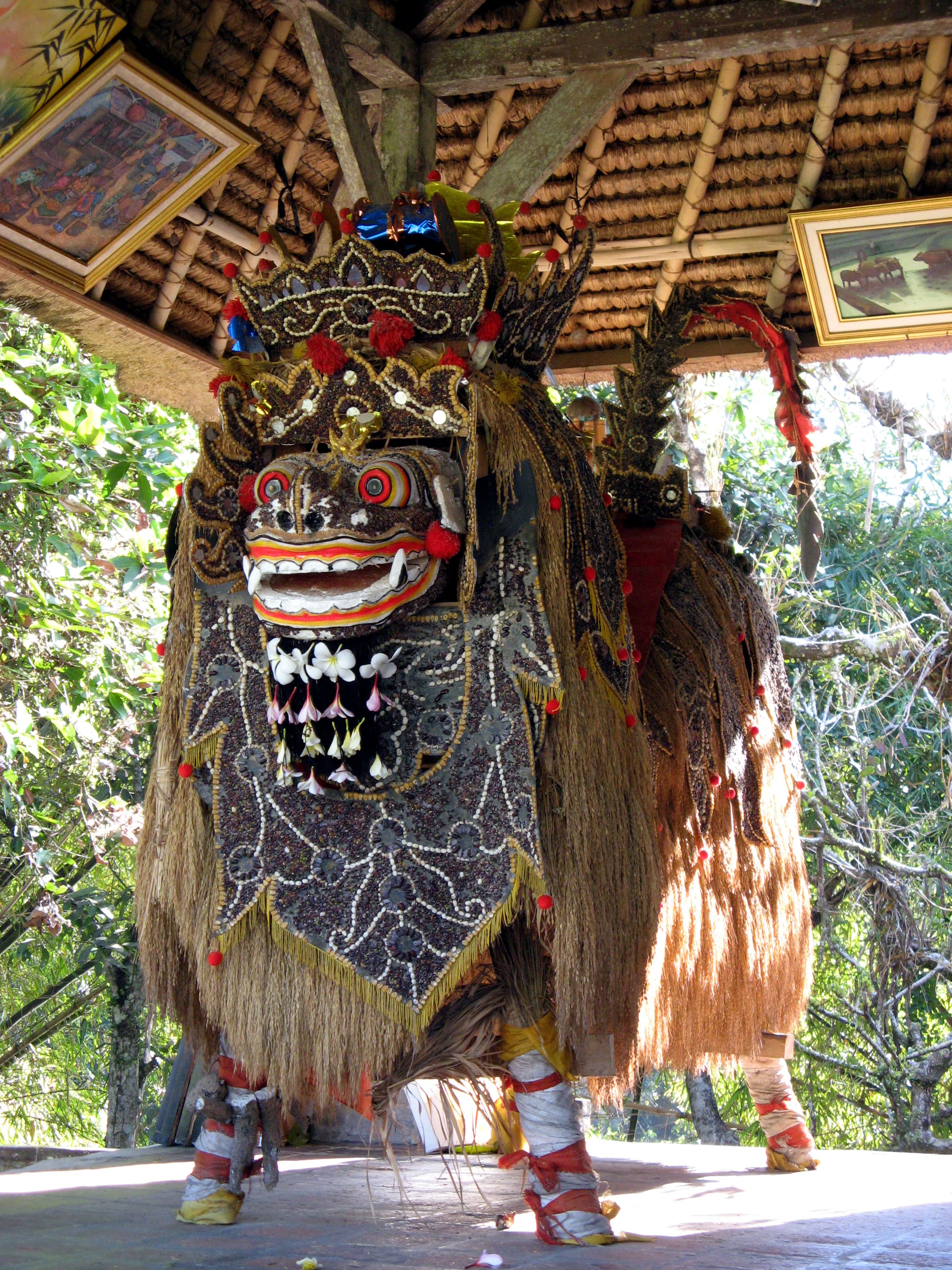
Indonesia
The lion-like protective deity Barong leads a cosmic battle against evil and chaos, represented in Bali's most sacred ritual dance.

India
Rising pure from muddy water, the lotus is the universal symbol of spiritual awakening and untouched beauty across Asia.

India
Sacred geometric diagrams functioning as visual mantras, yantras concentrate divine energy into a specific intention.

