

151
Wealth
🦡
Tanuki
Japan
The rotund raccoon dog of Japanese folklore is a beloved wealth and luck charm associated with money, sake, and the cheerful prosperity of good times shared with others.
4.3Learn more →


The Uchide no Kozuchi is the legendary magic mallet from Japanese folklore that grants any wish when shaken — the ultimate symbol of abundance conjured from thin air.
The Uchide no Kozuchi (打ち出の小槌, 'miracle mallet' or 'wishing mallet') is one of Japanese folklore's most powerful magical objects — a small mallet that grants any wish when waved or shaken, summoning the desired object or outcome from thin air. It appears most famously in the tale of Issun-boshi ('One-Inch Boy'), in which a tiny hero defeats a demon and uses the demon's dropped mallet to grow to full human size and marry the princess he loves. In this story, the mallet's power is explicitly the power to transform the impossible into reality.
The mallet is one of the seven treasures (shichifukujin no takara-mono) associated with Japan's Seven Lucky Gods — divine figures who arrive each New Year on the Takarabune (treasure ship) loaded with the seven precious things. The ship itself represents the arrival of all good fortune at once, and the mallet is listed among the objects it carries, alongside invisible cloaks, medicine bags, and bottomless purses. This New Year association makes the Uchide no Kozuchi particularly powerful as a charm for new beginnings and the miraculous opening of fortune at the start of a cycle.
The Tanuki (raccoon dog) is also depicted with the Uchide no Kozuchi in some artistic traditions, where the mallet complements the Tanuki's shape-shifting powers and commercial luck associations. Miniature mallet charms are sold at New Year markets and festivals throughout Japan, particularly at shrines dedicated to Daikoku, the deity of wealth and one of the Seven Lucky Gods who is specifically associated with the mallet as his divine implement.
The Lucky Mallet (Uchide no Kozuchi) traces its origins to Japan, where it has been revered for generations as a powerful symbol of prosperity and abundance. Historical records and oral traditions suggest that early versions of this charm appeared centuries ago, when communities in Japan first began attributing supernatural qualities to objects drawn from their natural and spiritual environment.
Over time, the Lucky Mallet (Uchide no Kozuchi) evolved from a regional folk object into a widely recognized talisman. Traders, travelers, and migrants carried it across borders, introducing it to new cultures that often adopted and adapted it to fit their own belief systems. Today it is found in japan and beyond, each culture adding its own layer of meaning and ritual to the charm's enduring legacy.
In its homeland of Japan, the Lucky Mallet (Uchide no Kozuchi) occupies a revered place in both daily life and ceremonial practice. It is not merely decorative — it is woven into the fabric of cultural identity, appearing in celebrations, rites of passage, and household traditions that have been passed down through generations.
Beyond Japan, the Lucky Mallet (Uchide no Kozuchi) has gained recognition in japan and other regions, where it is valued for its symbolic connection to financial prosperity. Scholars of material culture and anthropologists note that charms like the Lucky Mallet (Uchide no Kozuchi) serve a dual psychological function: they provide a tangible focus for hope and intention, and they connect their owners to a living cultural tradition that transcends individual experience.
To get the most from your Lucky Mallet (Uchide no Kozuchi), keep it in a place where you will see it daily — on a desk, nightstand, or near your front entrance. Physical proximity reinforces the intention behind the charm and serves as a regular reminder of your goals.
Traditional practice recommends handling the charm with clean hands and respectful intention. Many practitioners in Japan advise setting a clear purpose when you first acquire the charm: hold it, state your wish or goal silently or aloud, and then place it in its chosen position. Periodically cleansing the charm — by passing it through incense smoke, placing it under moonlight, or simply wiping it with a clean cloth — is believed to refresh its energy.
If the charm is meant to be worn (as jewelry or a carried token), keep it close to your body throughout the day. If it is a household object, place it in the area of your home most associated with its purpose — for example, near a workspace for success charms, or by the bed for love and health charms.
The miraculous creation of abundance from nothing, the power of intention and action to transform impossible situations, and the New Year's promise that fortune arrives fresh and complete with each new cycle.
Keep a miniature Uchide no Kozuchi in a wallet or purse as a wish-granting portable talisman. Place one on a business desk to invoke the energy of conjured prosperity. Shake the mallet while making a specific wish, especially at New Year. Give as a gift alongside a red envelope or a Takarabune (treasure ship) decoration for maximum New Year blessing.
In Osaka, the world-famous New Year Toka Ebisu festival at Imamiya Ebisu shrine features sellers of lucky bamboo branches (fukusasa) decorated with miniature Uchide no Kozuchi, coins, sea bream, and other lucky trinkets — over one million people visit over three days to receive these individually assembled personalized luck arrangements.
Daikoku is the Japanese deity of wealth, farmers, and the kitchen, depicted as a round, smiling figure seated on bales of rice with a large sack over one shoulder and the Uchide no Kozuchi in his hand. He is one of the Seven Lucky Gods (Shichifukujin) and the mallet is his signature attribute — the implement through which he distributes wealth to those he favors.
In the folklore tradition, the mallet grants any wish — it is entirely non-specific in its power. For charm use, make one clear specific wish (much like the Daruma tradition of one goal per doll) and shake or wave the mallet while stating it mentally. The specificity of the wish is considered to focus the mallet's power.
Yes — small handmade mallets are considered valid luck objects, particularly if crafted from auspicious wood (pine for longevity, bamboo for flexibility, hinoki cypress for purification). The act of crafting the object while holding the intention of the wish is itself considered part of the charm's activation.
The Lucky Mallet (Uchide no Kozuchi) originates from Japan, where it has been used as a wealth charm for centuries. Its influence has since spread to japan and many other regions worldwide.
Keep a miniature Uchide no Kozuchi in a wallet or purse as a wish-granting portable talisman. Place one on a business desk to invoke the energy of conjured prosperity. Shake the mallet while making a specific wish, especially at New Year. Give as a gift alongside a red envelope or a Takarabune (treasure ship) decoration for maximum New Year blessing. For best results, set a clear intention when you first acquire the charm and keep it in a prominent, respectful location.
Yes, giving a Lucky Mallet (Uchide no Kozuchi) as a gift is considered a generous and meaningful gesture in most traditions. In Japan, gifted charms are often believed to carry even stronger energy than those purchased for oneself, because they come with the goodwill and intention of the giver.
Many practitioners recommend periodically cleansing your Lucky Mallet (Uchide no Kozuchi) to refresh its energy. Common methods include passing it through incense smoke, placing it in moonlight overnight, rinsing it under clean water (if the material allows), or simply wiping it down with a clean cloth while setting a fresh intention.
While the Lucky Mallet (Uchide no Kozuchi) originated in the cultural traditions of Japan, it is not exclusive to any single religion. It has been adopted and adapted by people of many faiths and backgrounds, each bringing their own interpretation to its symbolism and use.
Japan
The rotund raccoon dog of Japanese folklore is a beloved wealth and luck charm associated with money, sake, and the cheerful prosperity of good times shared with others.

Japan
The beckoning cat is Japan's most iconic good-luck charm, believed to wave fortune, customers, and prosperity into any space it occupies.

Japan
The round, roly-poly Daruma doll is Japan's symbol of perseverance — you set a goal, paint one eye, and complete the other only when the goal is achieved.
China
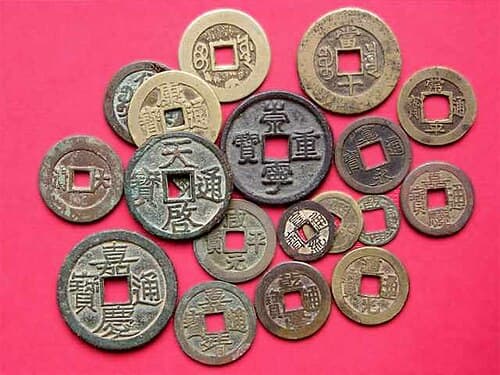
Ancient Chinese coins with square holes, tied in groups of three with red string, are powerful feng shui wealth activators connecting the circular heavens with the square earth.

