
117
Protection
🗿
Maori Hei-tiki
New Zealand
The sacred humanoid pendant of the Maori, worn as a powerful charm of ancestral protection, fertility, and good fortune.
4.9Learn more →

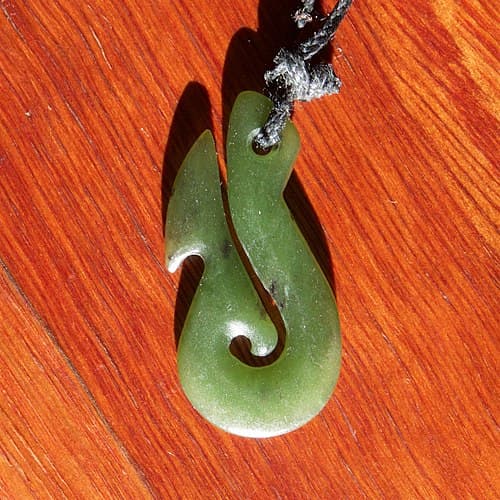
The sacred Maori fish hook pendant, worn as a charm of prosperity, safe sea travel, and the strength to draw abundance from any ocean.
The Hei Matau — literally 'neck fish hook' — is one of the most significant and widely worn of all Maori pendants. Its form directly references the fish hooks that were essential tools for the Maori and their Polynesian ancestors, who navigated the vast Pacific on nothing but skill, stars, and courage. In Maori legend, the demigod Maui fished up the North Island of New Zealand itself using a magical fish hook, making the matau a symbol of extraordinary power — the ability to pull entire worlds into being through focused intention and skill.
Traditionally carved from bone or pounamu, the Hei Matau curves in a graceful arc that mirrors the ocean's own waves. It was worn by seafarers for protection during ocean voyages and to attract abundant catches. More broadly, it came to represent prosperity in any endeavour that requires skill and patience — the fisherman's virtues applied to business, relationships, and spiritual practice. The hook shape also suggests the capacity to attract and hold good fortune, drawing what you seek toward you.
Today the Hei Matau is one of the most popular New Zealand souvenirs and is widely worn by athletes, travellers, and anyone seeking to improve their material circumstances. It carries a particular energy of determined, purposeful action — not passive luck, but the earned good fortune of someone who goes where the fish are.
Prosperity through skill, safe passage over any crossing, the power to attract abundance, and the courage of those who venture far from shore.
Wear against the skin when travelling, especially over water. Before important business negotiations or job interviews, hold the hook and visualise drawing your desired outcome toward you. Fishers and sailors wear it as both practical talisman and spiritual protection on the water.
Ancient Polynesian fish hooks, including ancestors of the Hei Matau, were made from materials ranging from human bone to turtle shell to volcanic glass. The hook was considered so intimately connected to its maker that a broken hook was often buried with considerable ceremony to respect the energy invested in it.
Absolutely. Its prosperity meaning extends to any endeavour requiring patient skill. Entrepreneurs, sales professionals, and creative practitioners all wear it to attract abundance and clients.
Pounamu (greenstone) carries the highest spiritual prestige in Maori tradition. Bone is the most traditional material for fish hooks. Modern versions in sterling silver or titanium are widely available and perfectly appropriate.
Yes — it is specifically designed for those who interact with the sea. It is considered especially effective when worn during surfing, sailing, diving, or any other water-based activity.
New Zealand
The sacred humanoid pendant of the Maori, worn as a powerful charm of ancestral protection, fertility, and good fortune.

New Zealand
Sacred New Zealand jade carried as a living charm of spiritual authority, healing, and the enduring power of the land.

United States
Nature's original magnet, carried as the most ancient and powerful charm for drawing to you whatever you most deeply desire.

