

316
General
🌼
Mexican Marigold
Mexico
The flower of the dead — cempasúchil — whose brilliant orange blooms guide departed souls home during Día de los Muertos.
4.6Learn more →


A charm honoring the prickly pear cactus that sits at the heart of the Mexican national symbol — resilience, nourishment, and flourishing in harsh conditions.
The nopal (prickly pear cactus) occupies a central place in Mexican national identity, literally placed at the center of the national flag where an eagle perches on a nopal eating a serpent — the vision that guided the Aztecs to found Tenochtitlan (modern Mexico City) in 1325. But the nopal's significance predates the Aztec founding story by thousands of years; it was a crucial food source for the earliest Mexican peoples, providing water-rich pads, sweet fruit (tunas), and a habitat for the cochineal insect whose bodies produce brilliant red dye that colored the textiles and art of countless Mesoamerican cultures.
In Mexican folk medicine, the nopal is one of the most versatile and revered medicinal plants, used to treat diabetes, high cholesterol, wounds, and digestive problems. Modern research has confirmed many of these traditional uses, finding the cactus's mucilage, fiber, and antioxidant compounds do indeed support blood sugar regulation and digestive health. The nopal's ability to thrive in conditions that would kill other plants — extreme heat, drought, poor soil — makes it a powerful symbol of Mexican resilience and the capacity to flourish where others cannot.
As a charm, the nopal represents the dual nature of the tough and the tender: the cactus is both covered in spines and yet produces sweet fruit, both harsh in appearance and nourishing in reality. This is understood as a model for human resilience — a protective outer toughness that shields a genuinely sweet and generous inner nature.
The nopal represents resilience, the ability to thrive in difficult conditions, and the paradox of protective toughness concealing generous nourishment. It embodies Mexican identity as fundamentally shaped by the landscape — a people who have survived conquest, colonialism, and hardship while maintaining their sweetness and cultural richness. As a charm it brings endurance, adaptability, and the flourishing of health even in adversity.
Keep a nopal cactus plant in your home or garden as a living luck charm and air purifier. A small ceramic or metal nopal charm works well for those without green space. Place nopal imagery where you need reminders of resilience — home offices, study areas, anywhere you face ongoing challenge. Eating nopal regularly is itself a form of taking this medicine into your body.
The cochineal dye produced from insects living on nopal cactus plants was so valuable after the Spanish conquest that it was the second most profitable export from New Spain after silver. The brilliant crimson dye colored the Catholic Church's ceremonial robes, the British redcoat military uniforms, and the paintings of the Old Masters — all thanks to a tiny insect living on Mexican cactus.
In traditional Mexican medicine, nopal is considered a balancing plant that maintains the body in a state of equilibrium — when the body is in balance, everything flows better, including luck. Modern nutritional science confirms nopal's benefits for blood sugar, cholesterol, and digestive health. A body in better health is certainly positioned for better outcomes.
Opuntia ficus-indica is the most common edible prickly pear grown in Mexican households. It thrives in bright sunlight with minimal water, making it excellent for windowsills or patios. Choose a variety suited to your climate — some are cold-hardy to surprising temperatures while others need warm, protected conditions.
According to Aztec legend, the god Huitzilopochtli told his people to found their city where they saw an eagle perched on a prickly pear cactus devouring a serpent. When they saw this vision on a small island in Lake Texcoco around 1325 CE, they built Tenochtitlan, which would grow into one of the largest cities in the world and eventually become Mexico City.
Mexico
The flower of the dead — cempasúchil — whose brilliant orange blooms guide departed souls home during Día de los Muertos.

Mexico (Aztec/Mexica civilization)
A replica of the great Mexica calendar stone, representing cosmic time, solar power, and the cyclical nature of all creation.
Mexico
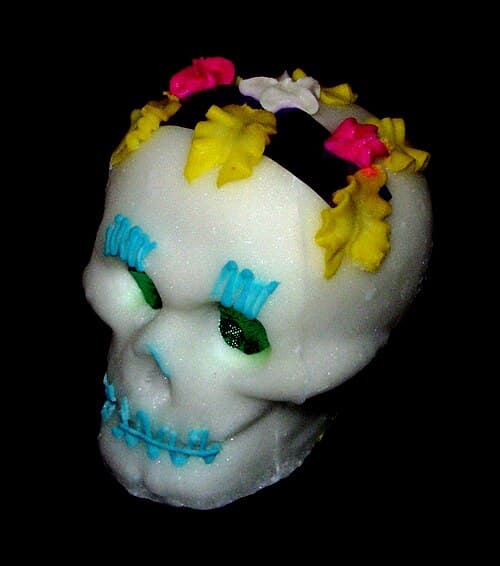
A decorated sugar skull that honors the dead during Día de los Muertos, celebrating the joyful reunion between the living and their beloved ancestors.

