

2
General
🍀
Four-Leaf Clover
Ireland
The rarest clover mutation, treasured as nature's own lucky charm.
4.9Learn more →


The carried token of the animal renowned across cultures for its fecundity and quick fortune.
The rabbit's foot is one of Europe's most controversial lucky charms — widely recognised, frequently carried, and increasingly questioned in its traditional form. The belief in the rabbit's foot as a luck-bringer is ancient and geographically widespread, appearing in Celtic Britain, France, and Germany with variations extending to West African and African-American hoodoo traditions, suggesting either a very old shared belief or independent parallel developments.
In European folklore, the rabbit's particular association with luck stems from several characteristics: its underground burrows made it an animal of the underworld and therefore privy to chthonic wisdom; its extraordinary fertility made it a symbol of abundance; and its unusual gait — hind feet landing ahead of front feet when running — was considered a magical inversion of normal locomotion. Additionally, the rabbit was one of the animals believed to be a form taken by witches, making its foot a powerful magical object.
The specific conditions under which a rabbit's foot was considered most powerful varied by tradition but typically involved specificity about which foot (usually the left hind foot), the time of capture (full moon, new moon, or a Friday), and the method of carry. In the 20th century, mass-produced rabbit's feet — often dyed in bright colours — became ubiquitous good-luck charms, though increasing animal welfare awareness has led to significant cultural rethinking of the tradition and a shift toward artificial or symbolic versions.
The rabbit's foot represents the kind of quick, opportunistic luck that belongs to creatures of great fertility and rapid movement — the luck that arrives suddenly, is seized quickly, and moves on just as fast. It suggests fortune that rewards reflexes and readiness rather than patient waiting.
Carry a rabbit's foot charm (now widely available in faux fur versions) in your pocket or attach it to a keychain. The traditional prescription was to keep it in the left pocket, closest to the heart. Modern practitioners often use crystal or metal rabbit figures as symbolic alternatives that carry the same folkloric resonance without animal welfare concerns.
The early American president Abraham Lincoln reportedly carried a rabbit's foot throughout his political career. Whether this contributed to his election victories (the charms were in his pocket when he won the presidency) or to his eventual tragedy is the kind of question that lucky charm believers and sceptics debate with equal pleasure.
The left side is traditionally the side of luck (the word 'sinister' comes from the Latin for left), and the hind feet are the rabbit's most powerful and distinctive limbs — the source of its leaping, escaping speed. The combination was considered maximally lucky in most British and French traditions.
Yes — many charm shops sell faux fur rabbit's feet made from synthetic materials that are indistinguishable in appearance from the original. Crystal rabbit figures, metal rabbit charms, and ceramic rabbits all carry the animal's lucky symbolism without any animal welfare concerns.
The rabbit's foot is lucky in many European and African-diaspora traditions, but not universally. In some East Asian traditions the hare (closely related) is lucky for different reasons. There are cultures where the rabbit foot specifically does not appear in luck traditions.
Ireland
The rarest clover mutation, treasured as nature's own lucky charm.

United Kingdom
The humble copper coin that promises a turn of fortune when found heads-up.
United Kingdom
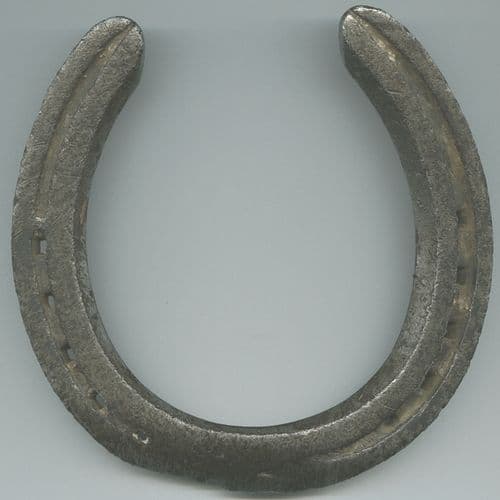
An iron crescent hung above doorways to catch and hold good luck.

