

257
General
🎨
Rwandan Imigongo
Rwanda
Rwanda's ancient geometric art form made from cow dung — a unique and sophisticated visual tradition of extraordinary beauty.
4.6Learn more →


UNESCO-listed Ugandan bark cloth — an extraordinary material made from fig tree bark used for royal ceremonies and everyday life.
Bark cloth (lubugo) production among the Buganda kingdom of Uganda is one of the world's oldest continuously practiced textile traditions. Made from the inner bark of the mutuba fig tree (Ficus natalensis), Ugandan bark cloth is produced through a process of careful harvest (stripping the bark without killing the tree, which regenerates), soaking, beating with grooved wooden mallets until soft and pliable, and drying to a smooth, brown, paper-like material. The process has remained essentially unchanged for over 600 years, and the tradition was inscribed on UNESCO's Intangible Cultural Heritage list in 2008.
In Buganda kingdom tradition, bark cloth served as the primary textile before the introduction of cotton — used for everything from everyday clothing to burial shrouds. Royal bark cloth, beaten finer and colored with natural dyes, was distinguished from common cloth by its quality and the specific rituals surrounding its production. The royal bark-cloth makers (abalangira) held privileged positions at the Buganda court, and specific families held hereditary rights to produce bark cloth for royal use. Bark cloth wrapping the bodies of Buganda kings at burial is still made today, maintaining an unbroken ritual tradition.
Contemporary Ugandan designers have embraced bark cloth as a material for fashion, home furnishing, and art, creating a sustainable textile industry that supports the rural families who have maintained the tradition. As a lucky charm, bark cloth objects carry the energy of one of Africa's most sustainable, patient, and beautiful material traditions — a tree that gives and regenerates, a process that transforms raw bark into something beautiful, and an artistic tradition that has survived colonial disruption to flourish again.
Sustainable abundance (the regenerating tree), patience and transformation (bark to cloth), the continuity of cultural tradition across centuries of change, and the Buganda kingdom's enduring artistic heritage.
Use bark cloth items in home decor as sustainably sourced, culturally significant textiles. Small bark cloth bags or pouches can serve as charm containers. The material's natural brown tones and earthy texture make it appropriate for grounding and stability work in personal practice.
A single mutuba tree can be harvested for bark cloth approximately once a year without being cut down — the tree regenerates its bark within 12 months if properly harvested. This sustainable harvesting system means that some bark-cloth making families in Uganda work with trees that have been in their family's care for many generations, creating a living heritage linking families to specific trees across the landscape.
Extremely sustainable when done correctly — the mutuba fig tree survives the annual bark harvest and regrows within 12 months. No synthetic chemicals are used in processing. The trees sequester carbon and support local biodiversity. Ugandan bark cloth is now promoted internationally as one of the world's truly sustainable natural textiles.
Well-beaten bark cloth feels somewhat like soft suede or thick felt — warm to the touch, slightly springy, and with a natural texture from the fibers. High-quality pieces are remarkably smooth. The material breathes well, making it suitable for clothing in Uganda's warm climate. It is more fragile than cotton but more robust than paper.
Bark cloth is used in Buganda enthronement ceremonies, burial rites for royalty and commoners, and traditional weddings. The Kasubi Tombs — the royal tombs of Buganda kings near Kampala, a UNESCO World Heritage Site — are partly built with and maintained using bark cloth. The king's coronation robes include traditional bark cloth elements.
Rwanda
Rwanda's ancient geometric art form made from cow dung — a unique and sophisticated visual tradition of extraordinary beauty.
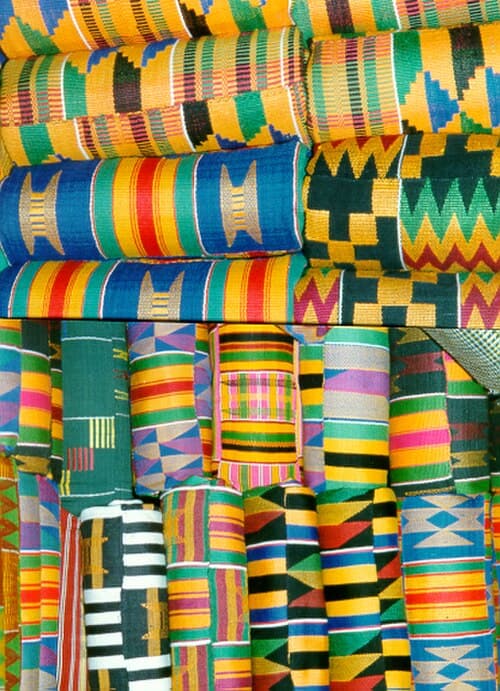
Ghana
Woven silk and cotton fabric of the Akan whose patterns encode proverbs, royal achievements, and ancestral pride.

North / West Africa
Ancient geometric symbols woven into Berber carpets — each pattern a protective charm and map of the weaver's world.

