
241
Health
👫
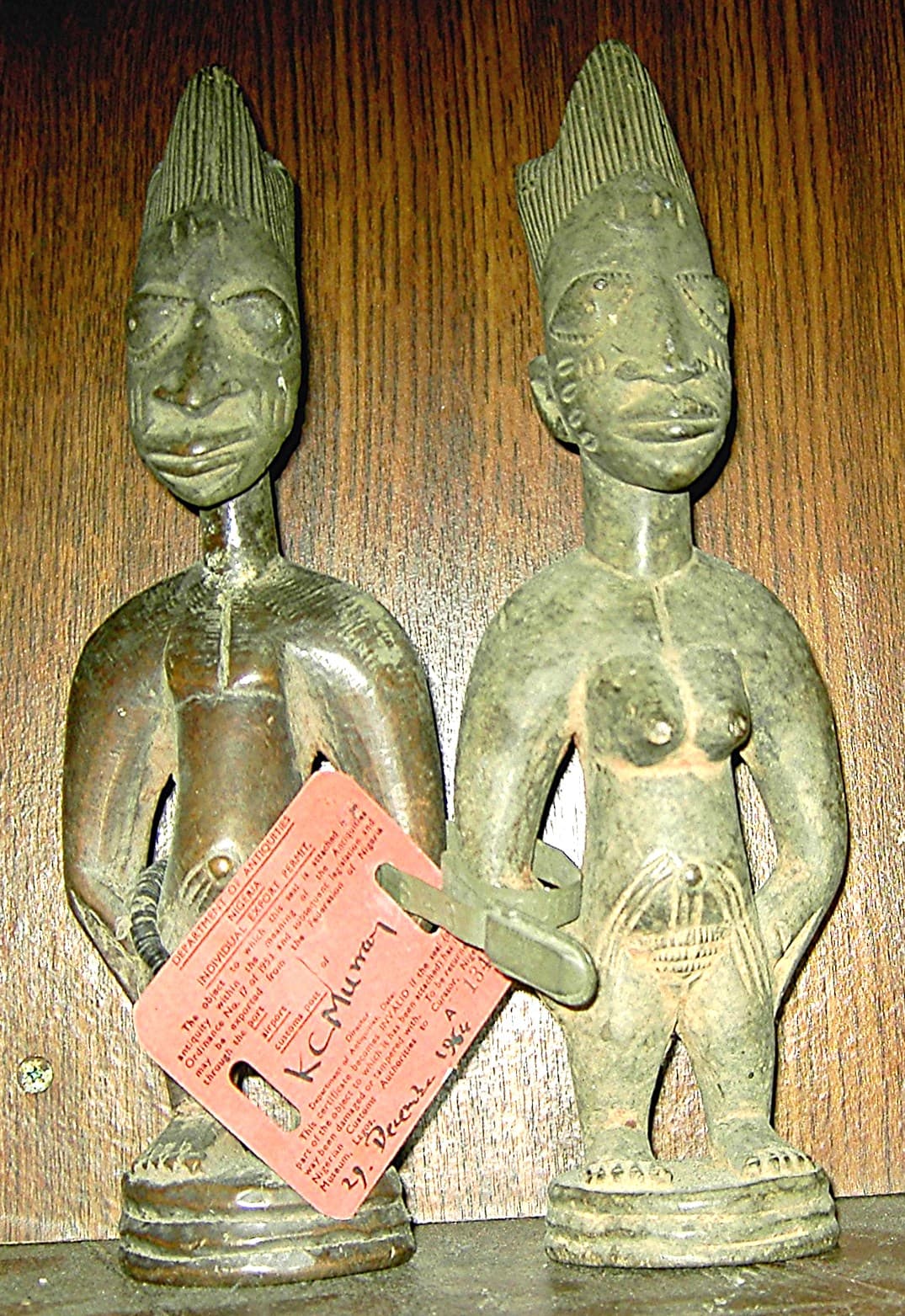
Yoruba Ibeji Twin Figure
Nigeria
Sacred twin figure used to house the spirit of a deceased twin, ensuring the family's continued blessing.
4.6Learn more →


Consecrated charm aligned with a specific Yoruba orisha, channeling divine power for the wearer's protection and purpose.
The Yoruba religious system (known in its diaspora forms as Candomblé, Santería, and Trinidad Orisha) recognizes hundreds of orishas — divine beings who serve as intermediaries between the supreme creator Olodumare and humanity. Each orisha governs a specific domain of human experience: Oya rules storms and transformation; Oshun oversees rivers, love, and fertility; Ogun commands iron, war, and labor; Yemoja is the mother of all waters; Eshu/Elegba opens and closes all paths. Devotees identify their primary orisha through divination, and once identified, that orisha becomes a spiritual patron deserving of regular offerings and devotion.
Orisha charms (orí) are consecrated objects specifically attuned to the energy of a particular divine being. They may take the form of beads in the orisha's sacred colors, metal implements associated with the deity, or pouches containing herbs, minerals, and substances sacred to that orisha. These objects are not merely symbolic — in Yoruba theology, they are genuine vessels that contain a portion of the orisha's power (ashe), activated through ritual consecration by an authorized priest (babalawo or iyanifa). Wearing or housing such an object creates a direct line of communication and protection between the devotee and their orisha.
For those outside the Yoruba tradition, orisha-aligned charms still function as powerful focal points for working with specific energies: Oshun's charm for love and creativity, Ogun's for protection during physical work, Oya's for courage during major transitions. The tradition's global spread through the African diaspora means that access to properly consecrated charms is available through diaspora priests in the Americas and Europe as well as in West Africa itself.
The Yoruba Orisha Charm traces its origins to Nigeria, where it has been revered for generations as a powerful symbol of safety and spiritual defense. Historical records and oral traditions suggest that early versions of this charm appeared centuries ago, when communities in Nigeria first began attributing supernatural qualities to objects drawn from their natural and spiritual environment.
Over time, the Yoruba Orisha Charm evolved from a regional folk object into a widely recognized talisman. Traders, travelers, and migrants carried it across borders, introducing it to new cultures that often adopted and adapted it to fit their own belief systems. Today it is found in nigeria, benin, togo and beyond, each culture adding its own layer of meaning and ritual to the charm's enduring legacy.
In its homeland of Nigeria, the Yoruba Orisha Charm occupies a revered place in both daily life and ceremonial practice. It is not merely decorative — it is woven into the fabric of cultural identity, appearing in celebrations, rites of passage, and household traditions that have been passed down through generations.
Beyond Nigeria, the Yoruba Orisha Charm has gained recognition in nigeria, benin, togo and other regions, where it is valued for its symbolic connection to spiritual guardianship. Scholars of material culture and anthropologists note that charms like the Yoruba Orisha Charm serve a dual psychological function: they provide a tangible focus for hope and intention, and they connect their owners to a living cultural tradition that transcends individual experience.
To get the most from your Yoruba Orisha Charm, keep it in a place where you will see it daily — on a desk, nightstand, or near your front entrance. Physical proximity reinforces the intention behind the charm and serves as a regular reminder of your goals.
Traditional practice recommends handling the charm with clean hands and respectful intention. Many practitioners in Nigeria advise setting a clear purpose when you first acquire the charm: hold it, state your wish or goal silently or aloud, and then place it in its chosen position. Periodically cleansing the charm — by passing it through incense smoke, placing it under moonlight, or simply wiping it with a clean cloth — is believed to refresh its energy.
If the charm is meant to be worn (as jewelry or a carried token), keep it close to your body throughout the day. If it is a household object, place it in the area of your home most associated with its purpose — for example, near a workspace for success charms, or by the bed for love and health charms.
Divine protection and guidance from a specific orisha, alignment with that deity's particular powers, the presence of ashe (divine energy) in physical form, and direct connection to Yoruba sacred tradition.
Identify your patron orisha through Ifa divination with an authorized priest. Receive consecrated beads and objects specific to that orisha. Maintain regular offerings (the specific foods, colors, and prayers appropriate to your orisha) to keep the relationship alive and the charm potent.
The Yoruba Ifa divination system, used to determine a person's orisha and life path, was inscribed on UNESCO's Representative List of the Intangible Cultural Heritage of Humanity in 2008. The system uses 256 odu (chapters) containing thousands of verses, proverbs, stories, and prescriptions — making it one of the most complex oral literature systems in the world.
Traditional Ifa divination performed by an authorized babalawo (Ifa priest) is the definitive method. This involves casting the divining chain (opele) or palm nuts (ikin) to read the odu that governs your life path, which identifies your patron orisha (ori orisa). Avoid online quizzes or non-initiated guessing games, as incorrect identification is considered spiritually problematic.
In traditional Yoruba practice, wearing unconsecrated beads in orisha colors is generally acceptable as spiritual aspiration or solidarity. However, wearing consecrated elekes (sacred bead necklaces) received in ceremony without proper initiation is considered presumptuous and potentially harmful in traditional contexts.
Eshu/Elegba is always approached first, as he opens all paths of communication with other orishas. Many practitioners begin with Yemoja or Oshun for their accessible, nurturing energies. Ogun and Shango are considered more demanding. An Ifa priest will guide you to the appropriate orisha for your situation.
The Yoruba Orisha Charm originates from Nigeria, where it has been used as a protection charm for centuries. Its influence has since spread to nigeria, benin, togo and many other regions worldwide.
Identify your patron orisha through Ifa divination with an authorized priest. Receive consecrated beads and objects specific to that orisha. Maintain regular offerings (the specific foods, colors, and prayers appropriate to your orisha) to keep the relationship alive and the charm potent. For best results, set a clear intention when you first acquire the charm and keep it in a prominent, respectful location.
Yes, giving a Yoruba Orisha Charm as a gift is considered a generous and meaningful gesture in most traditions. In Nigeria, gifted charms are often believed to carry even stronger energy than those purchased for oneself, because they come with the goodwill and intention of the giver.
Many practitioners recommend periodically cleansing your Yoruba Orisha Charm to refresh its energy. Common methods include passing it through incense smoke, placing it in moonlight overnight, rinsing it under clean water (if the material allows), or simply wiping it down with a clean cloth while setting a fresh intention.
While the Yoruba Orisha Charm originated in the cultural traditions of Nigeria, it is not exclusive to any single religion. It has been adopted and adapted by people of many faiths and backgrounds, each bringing their own interpretation to its symbolism and use.
Nigeria
Sacred twin figure used to house the spirit of a deceased twin, ensuring the family's continued blessing.

Nigeria
Sacred red coral beads of Nigerian royalty — symbols of divine right to rule and vessels of oba power.

West Africa
Ancient African currency and fertility symbol used across the continent for centuries.

