
5
Protection
🖐️
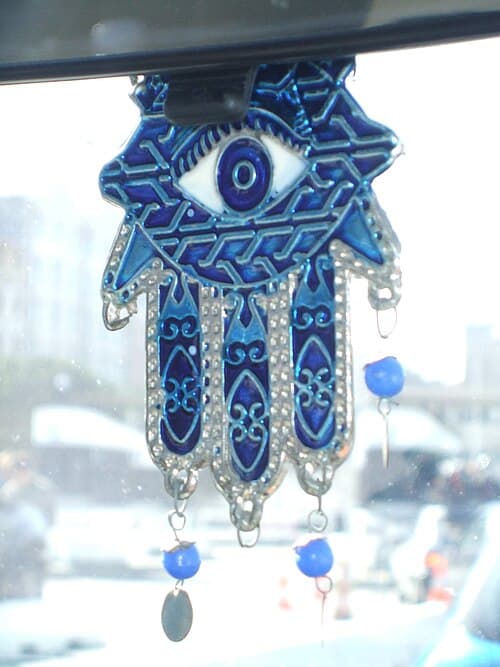
Hamsa Hand
Middle East
An open palm amulet warding off the evil eye across Middle Eastern and North African cultures.
4.9Learn more →

Central Asia
6 charms from this country
Afghanistan sits at the crossroads of Persian, Turkic, South Asian, and Central Asian charm traditions, all filtered through centuries of Islamic devotion. The evil eye (nazar) is the supreme concern: blue glass beads (nazarband) are pinned to babies' clothing, hung from doorways, and attached to vehicles throughout the country. The hand of Fatima appears on jewelry, door knockers, and embroidery as a powerful ward against harm.
Lapis lazuli — mined in the mountains of Badakhshan for over six thousand years — was considered a stone of divine protection by ancient Afghans and continues to be made into amulets and jewelry. The tawiz (written Quranic charm sealed in metal or cloth) is carried by soldiers and civilians alike for protection in conflict. The pomegranate, abundant in Afghan orchards, symbolizes prosperity and unity.
Middle East
An open palm amulet warding off the evil eye across Middle Eastern and North African cultures.
Middle East / North Africa
The sacred open palm named for the Prophet Muhammad's daughter, a cornerstone of Islamic protective symbolism.

Iran
The ancient sky-stone of the world's oldest cultures, worn as a charm of protection, communication, and the sacred turquoise bridge between earth and heaven.
Iran
The sky-blue gemstone mined in Iran for 5,000 years, believed to protect against the evil eye and bring victory in battle.

Middle East
The crescent moon and star, a symbol of Islamic faith found on mosques, flags, and protective amulets across the Muslim world.

Afghanistan
The royal blue stone of wisdom and truth, carried as a charm of intellectual power, inner vision, and the authority of those who speak truth to power.

