
5
Protection
🖐️
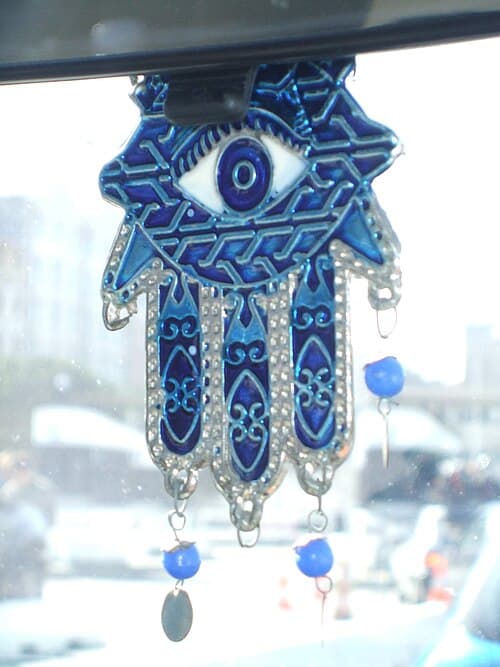
Hamsa Hand
Middle East
An open palm amulet warding off the evil eye across Middle Eastern and North African cultures.
4.9Learn more →

Middle East
3 charms from this country
Palestinian charm traditions are among the most ancient in the world, rooted in Canaanite, Byzantine, Islamic, and folk traditions layered across one of history's most contested landscapes. The evil eye (ayn) is the primary malevolent force in Palestinian folk belief, guarded against with blue glass beads, alum burned in fires, and Quranic verses recited by mothers over their children. The hand of Fatima is the most popular protective jewelry motif.
Palestinian embroidery (tatreez) incorporates protective auspicious motifs — the cypress tree (eternal life), the eight-pointed star (protection), the crescent moon — stitched into clothing that functions simultaneously as cultural identity and wearable charm. The olive tree, which has been growing in Palestinian soil for thousands of years, is the supreme symbol of rootedness, endurance, and abundant blessing.
Middle East
An open palm amulet warding off the evil eye across Middle Eastern and North African cultures.
Middle East / North Africa
The sacred open palm named for the Prophet Muhammad's daughter, a cornerstone of Islamic protective symbolism.

Middle East
The crescent moon and star, a symbol of Islamic faith found on mosques, flags, and protective amulets across the Muslim world.

