
5
Protection
🖐️
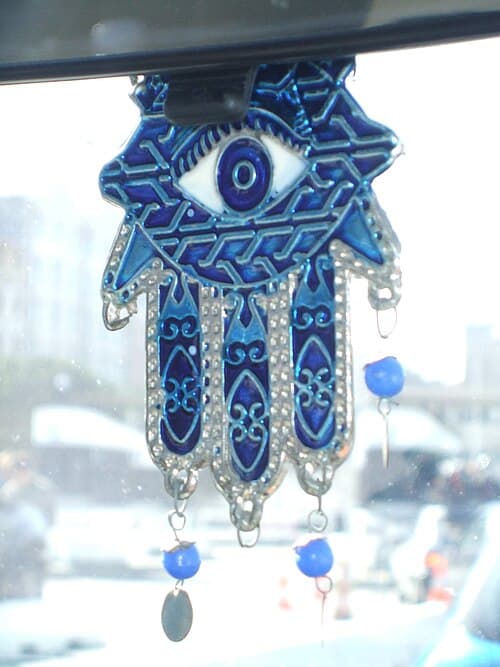
Hamsa Hand
Middle East
An open palm amulet warding off the evil eye across Middle Eastern and North African cultures.
4.9Learn more →

Central Asia
5 charms from this country
Uzbekistan stands at the heart of the ancient Silk Road, and its charm tradition reflects millennia of trade-route syncretism between Persian, Turkic, Chinese, and Islamic cultures. The sacred city of Samarkand was a world center of Islamic scholarship, and Quranic amulets (tawiz) inscribed with protective verses are carried by millions. The hamsa hand appears throughout Uzbek decorative art, particularly in the geometric tile patterns of the great madrasas.
The evil eye is guarded against with blue-and-white nazarlik beads woven into jewelry, horse harnesses, and cradles. Uzbek embroidered suzani textiles incorporate auspicious symbols — pomegranates for fertility, rosettes for the sun, almond shapes (bodom) for life — stitched as wedding gifts to bring luck to a new household. Turquoise mined in the Kyzylkum desert has been used as a protective stone since antiquity.
Middle East
An open palm amulet warding off the evil eye across Middle Eastern and North African cultures.

Iran
The ancient sky-stone of the world's oldest cultures, worn as a charm of protection, communication, and the sacred turquoise bridge between earth and heaven.
Iran
The sky-blue gemstone mined in Iran for 5,000 years, believed to protect against the evil eye and bring victory in battle.

Middle East
The crescent moon and star, a symbol of Islamic faith found on mosques, flags, and protective amulets across the Muslim world.

Uzbekistan
Uzbekistan's magnificent embroidered textiles — a bride's years of work encoding blessings for her marriage in silk and thread.

