
293
General
💎
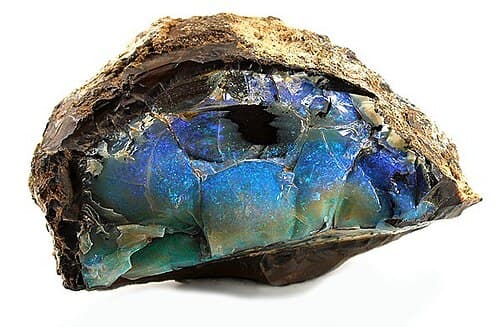
Australian Opal
Australia
The rainbow-fire gemstone of the Australian outback, worn as a charm for creativity, spontaneity, and the full spectrum of possibility.
4.9Learn more →

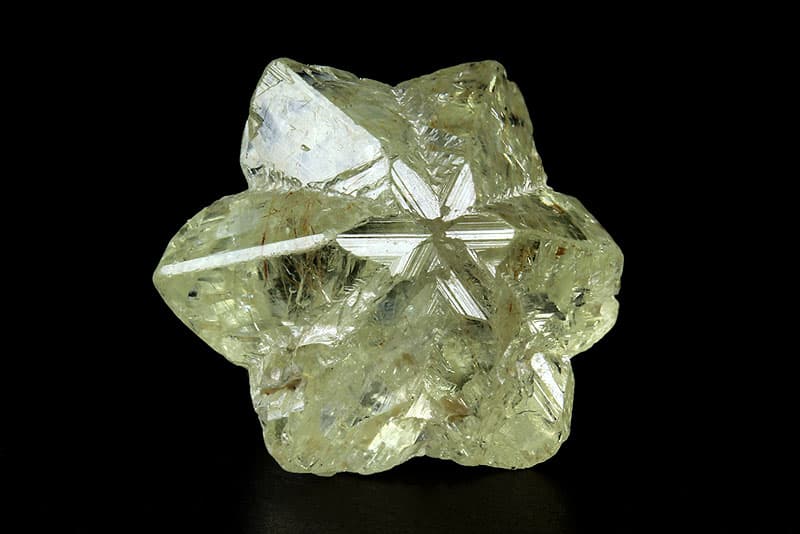
The magical colour-changing chrysoberyl of imperial Russia, worn as a charm of adaptability, balance between worlds, and the astonishing capacity to be more than one thing at once.
Alexandrite is a chromium-bearing variety of chrysoberyl that displays one of nature's most remarkable optical phenomena: a dramatic colour change from green in daylight to red or purplish-red in incandescent light. The same stone appears to be an entirely different gem depending on whether you are outdoors in sunshine or indoors by candlelight. This chameleon quality is caused by the way chromium's absorption spectrum interacts differently with daylight versus tungsten light, producing the most complete colour change of any natural gemstone.
Alexandrite was discovered in Russia's Ural Mountains in 1830, reportedly on the birthday of Tsar Alexander II — hence the name. Its colours of red and green matched the military colours of Imperial Russia, making it instantly the most prestigious gem in the Russian court. Russian aristocrats and generals wore it as a symbol of loyalty and the capacity to transform while remaining fundamentally the same. The original Urals deposits were largely exhausted by the early 20th century; Brazil's Hematita mines discovered in the 1980s now provide most commercial alexandrite.
As a charm, alexandrite is uniquely suited to those who navigate multiple worlds or identities — who present differently in different contexts while maintaining authentic selfhood throughout. It encourages balance between the material world (daylight, action, the green of growth) and the inner world (lamplight, reflection, the red of passion and blood). It is the stone of writers who are also accountants, warriors who are also poets, and anyone who refuses to be reduced to a single dimension.
Adaptability across contexts, balance between the material and spiritual, the grace of being authentically multiple, and the astonishing potential that resists easy categorisation.
Wear in different lighting environments and consciously notice the colour change — this practice mirrors the charm's invitation to appreciate how different contexts reveal different aspects of your authentic self. Place on a windowsill where it transitions between daylight and artificial light to maintain its balancing energy.
Fine alexandrite is rarer than diamond and can command prices of USD 50,000 to 70,000 per carat for top-quality stones with a strong colour change. Most 'alexandrite' sold cheaply is synthetic (lab-created corundum or spinel) — genuine natural alexandrite with a strong colour change is among the rarest and most valuable gemstones in the world.
Many practitioners use lab-created alexandrite specifically because it is more affordable and allows access to the stone's unique energy. The colour-change effect — the key feature that carries the metaphysical significance — is identical in lab and natural stones.
In Russian tradition, its dual nature made it a stone of good omens — 'emerald by day, ruby by night' meant it combined the luck of both gems. It is the traditional modern birthstone for June, considered the luckiest birth month in many European traditions.
Fine alexandrite with a dramatic colour change is rarer than fine ruby, emerald, or sapphire. Only a handful of locations worldwide produce gem-quality material, and the original Russian source is nearly exhausted. It is legitimately one of the rarest gemstones on Earth.
Australia
The rainbow-fire gemstone of the Australian outback, worn as a charm for creativity, spontaneity, and the full spectrum of possibility.

Canada
The stone of magic and transformation, carried as a charm for psychic protection, the awakening of hidden gifts, and the luminous mystery of the Northern Lights made stone.

Sri Lanka
The ethereal stone of the feminine divine, worn as a charm of intuition, emotional balance, new beginnings, and the luminous mystery of lunar cycles.

