

375
Health
🦢
Lithuanian Stork
Lithuania
Lithuania's beloved white stork — the bird that nests on rooftops and chimneys, bringing luck, babies, and spring's return.
4.5Learn more →

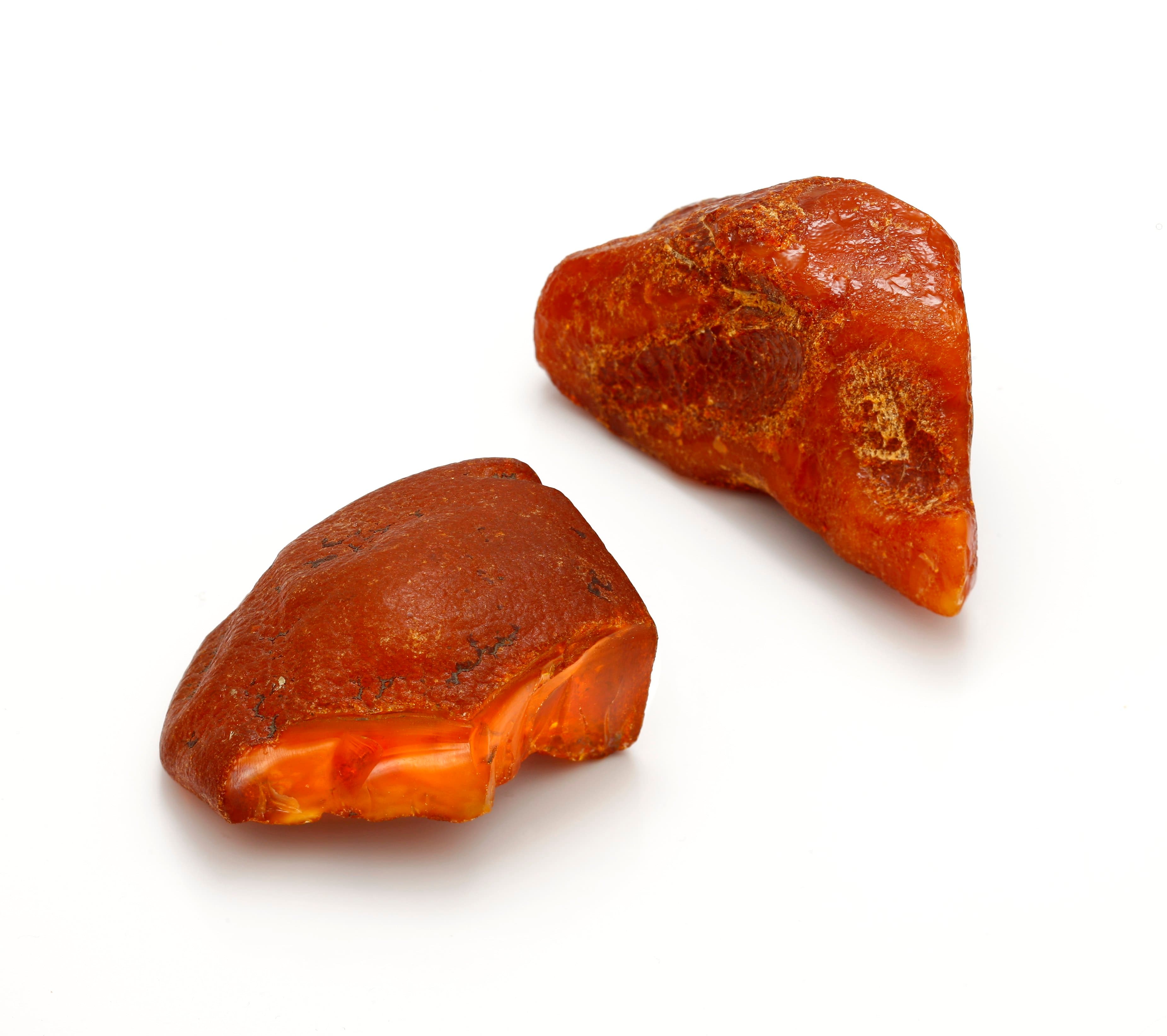
Ancient fossilized Baltic tree resin — the Northern European gold that carries 45 million years of healing and protective energy.
Baltic amber is not a stone but a fossil — tree resin from Eocene-era forests that covered what is now the Baltic Sea floor, hardened over 45 million years into transparent golden gems. Washing ashore on the beaches of Lithuania, Latvia, Estonia, Poland, and the Kaliningrad coast after storms, amber has been harvested and traded since the Neolithic period — Bronze Age amber trade routes linked the Baltic to Egypt and Mycenean Greece, making amber one of humanity's earliest internationally traded luxury goods.
In Baltic folk medicine, amber is considered among nature's most powerful healing substances. Amber teething necklaces for infants, based on the folk belief that amber's warmth releases succinic acid through the skin (a belief with some scientific basis, as amber does contain succinic acid), remain popular across the Baltic states and Slavic world. Amber smoke from burning pieces purifies spaces and treats respiratory conditions in Lithuanian folk practice.
As a lucky charm, Baltic amber carries an almost incomprehensible depth of time — sunlight compressed into golden transparency over 45 million years. Holding amber is holding petrified sunlight. Its warm, electric touch (amber was humanity's first known source of static electricity, giving us the word 'electricity' from the Greek 'elektron,' their name for amber) and its frequent inclusions of ancient insects make it a portal to deep time and deep health.
Ancient healing, petrified sunlight, deep time's accumulated energy, the warmth of the primal forest, protection of children, and the golden light of the North preserved.
Wear Baltic amber beads against the skin for continuous healing energy — the warmth of the body activates the resin's qualities. Place amber in sunlight to recharge it. Give amber teething necklaces to infants for traditional Lithuanian protection. Burn a tiny amber chip as purification incense in a home needing healing.
An insect preserved in Baltic amber that you can buy at a Baltic market may be 40-50 million years old — possibly the oldest thing you will ever hold in your hands. The 1993 film Jurassic Park's premise (dinosaur DNA extracted from insects in amber) was inspired by genuine scientific attempts, though the DNA degrades far too completely to be used for cloning.
Genuine amber floats in saturated salt water (a solution of 1/4 cup salt per cup of water), feels warm rather than cold to the touch, is lightweight, and produces a distinctive pine-resin smell when rubbed briskly. Plastic substitutes fail most of these tests.
Cognac amber (dark honey-orange) is most traditional for healing. Transparent clear amber is most prized for its sunlight-transmission quality. White (milky) amber is used for fertility. All colors carry healing energy — choose what draws you.
Yes — direct skin contact is essential for amber's healing tradition. The body's warmth activates the resin's qualities and creates the gentle charge that has always been associated with amber's special energy.
Lithuania
Lithuania's beloved white stork — the bird that nests on rooftops and chimneys, bringing luck, babies, and spring's return.

Latvia
Latvia's ancient warrior ring — three interlaced silver bands representing the trinity of Latvian cosmic wisdom.

Estonia
Estonia's national flower — the brilliant blue cornflower (rukkilill) symbolizing Estonian simplicity, honesty, and the blessing of natural beauty.

