
33
Protection
📿
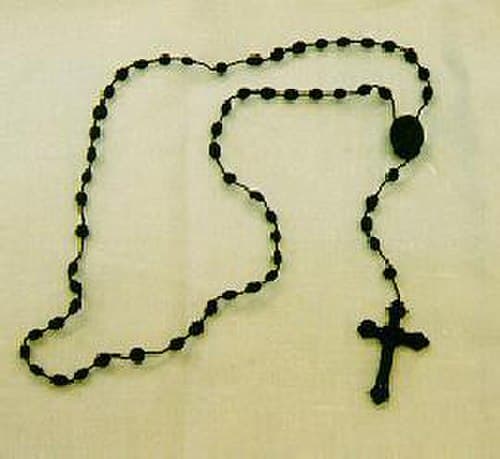
Rosary Beads
Medieval Europe
Rosary beads are the most recognizable Catholic prayer tool in the world, used by hundreds of millions for meditative prayer, protection, and the invocation of divine grace.
4.8Learn more →


Buddhist prayer beads (mala) are used across all Buddhist traditions as a tool for counting mantra repetitions and sustaining meditative focus, while serving as a protective and calming talisman.
The mala — from the Sanskrit word for 'garland' — is a string of 108 beads used in Hindu, Buddhist, and Jain practices to count recitations of mantras, prayers, or divine names. The number 108 is considered deeply sacred across these traditions: it is the number of names of the divine in various traditions, the number of energy channels (nadis) in the body, and a number produced by the mathematical relationship between the distances and diameters of the sun, moon, and earth. A 108-bead mala allows exactly 100 repetitions of a mantra (with the remaining 8 dedicated to the teacher and any errors) when divided by the guru bead that marks the beginning and end of the circle.
Buddhist malas are used in all major Buddhist schools — Theravada, Mahayana, Vajrayana — though the specific number of beads, materials, and mantras vary by tradition. In Tibetan Buddhism, the mala is held in the left hand during practice, with the right hand turning each bead as a mantra is spoken. The physical touch of the beads creates a tactile anchor that helps the meditating mind stay present through thousands of repetitions.
As a charm worn outside of meditation practice, the mala is believed to carry the accumulated spiritual energy of every mantra ever recited on it. Wearing a mala that has been used in deep practice is like wearing a battery charged with intention and blessing. Even without formal practice, the mala functions as a reminder to breathe, to be present, and to connect with the deeper dimensions of experience.
Meditative focus, accumulated spiritual energy, connection to Buddhist teaching, mindfulness, and the calming repetition of sacred sound.
Use the mala for mantra meditation — hold it in your left hand, touch each bead with the right thumb and middle finger, and recite one mantra per bead. Wear it as a bracelet or necklace throughout the day as a mindfulness reminder. If you receive a mala that was blessed by a teacher or used in deep practice, treat it with particular care.
Scientists studying mantra meditation using malas have found that reciting the traditional 'Om Mani Padme Hum' mantra 108 times produces measurable changes in heart rate variability similar to the effects of prolonged aerobic exercise — suggesting the mala practice has significant physical as well as spiritual benefits.
Different materials are prescribed for different purposes: bodhi seed for Buddhist practice, lotus seed for compassion cultivation, crystal for clarity, rudraksha for Shiva mantra practice, and sandalwood for calming. Choose based on your intended practice.
When worn with respect and understanding of its purpose — rather than purely as a fashion accessory — most Buddhist teachers do not object. Wearing it with sincere appreciation for its meditative tradition is generally considered appropriate.
108 is considered the most sacred number in Hindu and Buddhist traditions. It appears in the number of divine names, the number of body energy channels, the measurement relationships between the sun, moon, and earth, and many other sacred contexts.
Medieval Europe
Rosary beads are the most recognizable Catholic prayer tool in the world, used by hundreds of millions for meditative prayer, protection, and the invocation of divine grace.

India
The eight-spoked wheel represents the Buddha's Noble Eightfold Path and the turning of cosmic law, one of the most universal Buddhist symbols.
Ancient India / Tibet
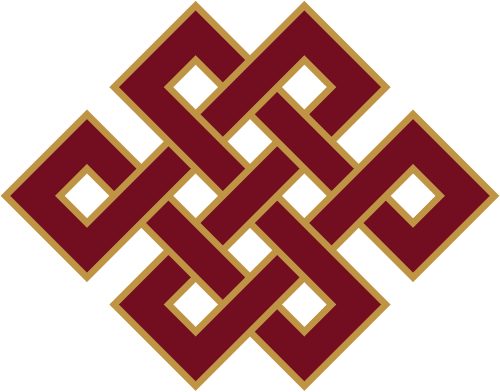
The Endless Knot (Shrivatsa) is one of the Eight Auspicious Symbols of Buddhism, representing the interconnectedness of all phenomena, infinite compassion, and the timeless wisdom of the Buddha.

