
420
Wealth
🪙
Lucky Coins (I-Ching)
China
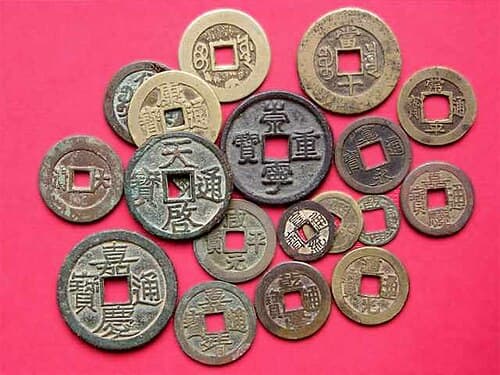
Ancient Chinese coins with square holes, tied in groups of three with red string, are powerful feng shui wealth activators connecting the circular heavens with the square earth.
4.5Learn more →


The gold sycee ingot — the boat-shaped gold and silver currency of imperial China — is the most direct and universally recognized symbol of accumulated financial wealth in the Chinese tradition.
The Chinese ingot (yuanbao, 元寶), those characteristic boat-shaped gold and silver currency units that appear in paintings, porcelain, and New Year decorations across the Chinese world, are among the most visually immediate wealth symbols in any culture — they look exactly like what they represent. The yuanbao was the official currency unit of China from the Tang dynasty through the 20th century, and its distinctive oval boat shape (wider at the ends, narrowing slightly at the waist, with upturned ends) made it immediately identifiable across all social classes as the concentrated physical form of wealth.
The name yuanbao breaks down as yuan (original, primary) + bao (treasure, precious), making its translation approximately 'primary treasure' or 'the original form of wealth.' The shape itself has mythological resonance: the upturned ends create a form that resembles a smile, an open vessel receiving abundance from above, and (in some interpretations) a boat riding the waves of prosperity. The boat imagery is particularly significant in Chinese maritime trading culture, where the phrase 'when the boat comes in' (chuan lai) means the same as its English equivalent — the arrival of expected fortune.
In feng shui practice, yuanbao are among the most versatile wealth activators. A bowl filled with yuanbao figurines placed in the wealth corner represents accumulated treasure. Yuanbao in the mouth of a Pixiu represent the wealth it has gathered. Yuanbao beneath the feet of a Laughing Buddha or Maneki-neko represent the treasure at the charm's disposal. Gold-colored yuanbao figurines are given at Chinese New Year in sets of eight or nine for comprehensive wealth blessings.
Accumulated financial wealth in its most direct and immediate form, the primary treasure of earthly prosperity, and the auspicious 'boat of fortune' that carries abundance safely to harbor.
Fill a bowl with gold-colored yuanbao figurines and place in the wealth corner (southeast per bagua) or on a desk. Place yuanbao beneath or beside other wealth charms (Pixiu, Laughing Buddha, Money Frog) to represent the treasure they guard or attract. Display yuanbao in multiples of 8 or 9. Give sets of gold yuanbao at Chinese New Year in addition to red envelopes for maximum wealth blessing.
The largest historical yuanbao in museum collections weigh over 1,800 grams (nearly 4 pounds) of silver and were used exclusively for major imperial treasury transactions — ordinary people would never have handled a full-sized yuanbao in their lives, making the figurine tradition an aspirational democratization of imperial-scale wealth.
Chinese coins (the round ones with square holes) were everyday currency used for small transactions. Yuanbao were large gold or silver ingots used for major transactions, tax payments, and treasury storage. As luck charms, coins represent steady daily income flow while yuanbao represent large, accumulated wealth and major financial windfalls.
Gold yuanbao are most common and most directly associated with maximum wealth in Chinese culture (gold being the superior metal). Silver yuanbao are sometimes used for the metal element's association with precision and accumulation. A bowl containing both gold and silver yuanbao together is considered an especially complete wealth representation.
Eight yuanbao (representing prosperity and the lucky number 8) is the most popular configuration for a wealth bowl. Nine (representing completion and ultimate good fortune) is also excellent. The number four is avoided (homophone of 'death'). Odd numbers are generally considered more yang/active and therefore more wealth-generating.
China
Ancient Chinese coins with square holes, tied in groups of three with red string, are powerful feng shui wealth activators connecting the circular heavens with the square earth.

China
The Laughing Buddha — the round, joyful, sack-carrying monk — is China's most beloved symbol of happiness, wealth, and the simple abundance that comes from contentment.

China
Pixiu is a mythical Chinese creature with a dragon's head, horse's body, and lion's feet that eats gold but cannot excrete it — the ultimate symbol of wealth accumulation.
China
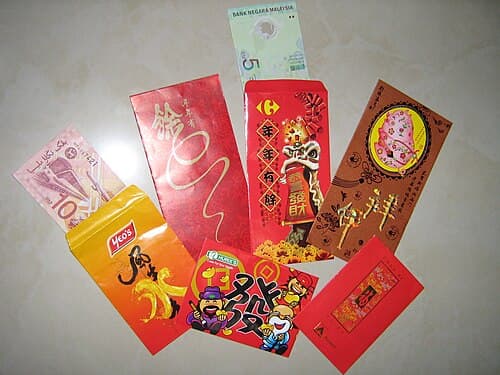
The red envelope (hongbao) is China's most universal good-fortune gift, transferring luck and blessings along with cash at every major life celebration.

