
96
General
🗿
Totem Pole Charm
Pacific Northwest Coast, North America
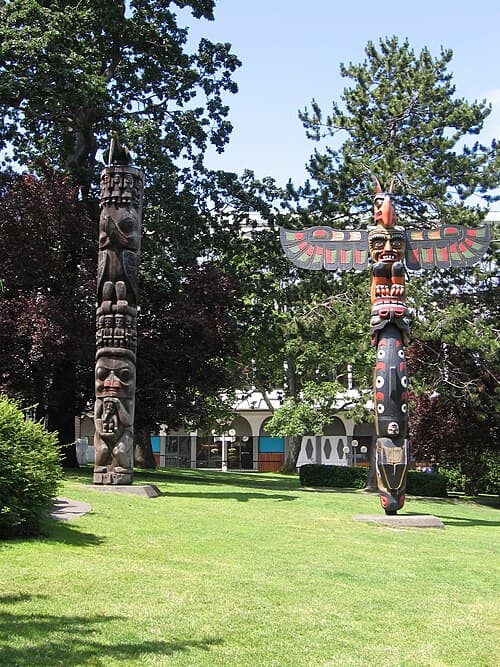
A miniature representation of the carved cedar poles that record family histories, clan crests, and ancestral stories of Pacific Northwest peoples.
4.4Learn more →


The trickster creator figure of Haida mythology whose cunning brought light, salmon, and all of civilization to the world.
In Haida mythology, Raven is simultaneously creator, trickster, transformer, and thief — a being of supernatural cunning who shaped the world through a combination of genuine altruism and outrageous self-interest. The central Raven story tells how Raven, in an act that was partly generous and partly just because he wanted it for himself, stole the box containing the sun from the Sky Chief's house and released it into the sky, giving light to a world previously kept in darkness. This story captures Raven's essential nature: the world's great gifts often arrive through unexpected and morally complicated paths.
Haida Raven artwork is rendered in the distinctive Northwest Coast formline style — a sophisticated visual language of flowing lines, ovoids, and U-forms that creates figures simultaneously realistic and geometric. Raven is typically shown with his characteristic sharp beak, which he uses both as a tool and a weapon, and is often depicted in the moment of transformation, between his bird and human forms. Master Haida carvers like Bill Reid have brought this imagery to global prominence, particularly through works like 'Raven and the First Men' which depicts Raven releasing the first humans from a clamshell.
As a charm, Raven energy invites intelligence, creativity, adaptability, and the willingness to bend rules when the situation demands it. Raven is the patron of artists, storytellers, inventors, and anyone who needs to find unconventional solutions to impossible problems.
The Haida Raven represents creative intelligence, transformative power, and the necessary role of the trickster in keeping the world alive and moving. It embodies the understanding that creation and chaos are linked — that gifts come from unexpected sources and that the most important changes in life often arrive through disruption rather than order. Raven energy sparks innovation and lateral thinking.
Carry or wear Raven imagery when facing creative challenges, when you need to think beyond conventional solutions, or when you're navigating a system that seems impenetrable. Call on Raven energy when you need clever speech, persuasive communication, or the ability to see what others miss. Place Raven art in creative workspaces to invite this transformative energy.
Haida master artist Bill Reid's 'Raven and the First Men,' carved from a single block of 106 yellow cedar laminations weighing 4.5 tons, is considered one of the greatest Canadian works of art. It depicts Raven coaxing the first humans out of a clamshell — a story about Raven's lonely boredom being resolved by creating companions, suggesting that civilization itself was born from a trickster's loneliness.
While raven figures appear across many world cultures, the Haida Raven has specific stories, visual representations, and cultural meanings unique to Haida tradition. The Norse Huginn and Muninn are Odin's wisdom-messengers, quite different from Raven the creator-trickster. Even among Pacific Northwest nations, Raven stories vary significantly between Haida, Tlingit, and Tsimshian traditions.
Raven is neither simply good nor bad — this is exactly what makes the trickster figure so sophisticated and enduring. Raven acts from complex motivations that produce sometimes wonderful and sometimes chaotic outcomes. This moral ambiguity is considered realistic: most important things in the world come from similarly complicated origins.
Seek artwork from enrolled Haida artists directly or through reputable galleries specializing in Northwest Coast Indigenous art. The Haida Gwaii region of British Columbia has active carving communities. Organizations like the Haida Heritage Centre can direct you to legitimate artisans whose work benefits the Haida community.
Pacific Northwest Coast, North America
A miniature representation of the carved cedar poles that record family histories, clan crests, and ancestral stories of Pacific Northwest peoples.

Pacific Northwest and Plains Indigenous peoples
A supernatural bird of immense power found across Indigenous traditions from the Pacific Northwest to the Great Plains, representing the awesome force of storms and sky.

Pan-Indigenous North America
A sacred symbol across countless Indigenous cultures representing freedom, spiritual connection, and messages from the divine.

