

305
Wealth
🟢
Guatemalan Jade
Guatemala (Motagua Valley)
The true jadite of the ancient Maya, rediscovered in Guatemala's Motagua Valley and worn today as connection to royal ancestral power.
4.8Learn more →


A small woven piece of the sacred textile tradition that encodes Maya cosmology, community identity, and ancestral knowledge in every thread.
The huipil is the traditional woven blouse of Maya and other Mesoamerican women, a rectangular garment with a hole for the head that has been worn continuously for at least two thousand years. But calling it simply a blouse vastly understates its significance: the huipil is a sacred text, a community identity document, and a living archive of cosmological knowledge woven in silk, cotton, and synthetic fiber with designs that encode the wearer's village of origin, marital status, ceremonial roles, and sometimes personal spiritual experiences.
In Guatemala's Maya communities, weaving is a sacred art passed from mother to daughter through generations, its patterns protected as community intellectual property. The backstrap loom — a simple but brilliantly effective device with one end attached to a fixed point and the other to the weaver's own back — produces textiles of extraordinary intricacy that can take weeks or months to complete. The geometric patterns in huipiles encode the quetzal bird, the ceiba tree (Maya world tree), the corn plant, the four cardinal directions, and the cyclical calendar in forms so abstracted they might appear as pure geometry to the uninitiated eye.
A small piece of authentic huipil fabric or a miniature woven textile in the huipil style serves as a powerful connection charm — to Maya culture, to the sacred art of weaving, to the wisdom encoded in Mesoamerican textile tradition, and to the specific community from which the fabric originated.
The huipil textile represents encoded ancestral knowledge, community belonging, and the understanding that sacred information can be transmitted through beauty. It embodies the Maya principle that the most mundane objects — clothing, household textiles — can carry the most profound cosmological knowledge when made with intention and skill. A huipil charm connects its keeper to the wisdom traditions of Mesoamerica and to the living art of Maya women weavers.
Keep a small piece of huipil fabric or a miniature woven pendant as a connection charm to Mesoamerican wisdom traditions. Place it on your altar alongside other sacred objects from the Americas. Purchase directly from Maya cooperatives to ensure your money supports the weavers themselves. Use the textile as a meditation focus, contemplating what knowledge might be encoded in its patterns.
UNESCO recognized the traditional textiles of Guatemala's indigenous communities with their 'Intangible Cultural Heritage' status. A single elaborate huipil can contain over a million individual weaving movements and take three months to complete. When Guatemalan women weave while also running a household, raising children, and farming, the textile becomes a record of extraordinary human time and devotion.
Seek out cooperatives like Mayan Hands, Aj Quen, and similar fair-trade organizations that connect weavers directly to buyers, ensuring fair compensation. Purchasing from these sources rather than tourist market resellers keeps the majority of the sale price with the actual artists. Some organizations offer weaving workshops where you can learn the technique directly from Maya weavers.
Yes, and many Maya weaving cooperatives in Guatemala offer workshops for visitors. Backstrap loom weaving has a steep initial learning curve but produces stunningly complex textiles once mastered. Weaving is itself considered a meditative spiritual practice in Maya tradition — the rhythmic repetition is understood as prayer.
Color meanings vary by community, but common associations include: red for blood, life force, and the cardinal direction east; yellow for corn and the sun; blue/green for water, sky, and the sacred quetzal; white for purity and the wind; black for the night sky and underground. The combinations encode specific meanings unique to each weaving community's tradition.
Guatemala (Motagua Valley)
The true jadite of the ancient Maya, rediscovered in Guatemala's Motagua Valley and worn today as connection to royal ancestral power.
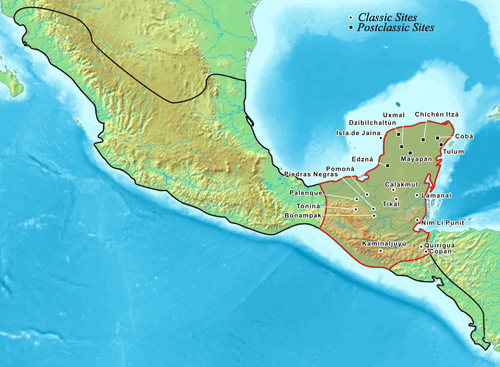
Guatemala and Mexico (Maya civilization)
The sacred green stone of Maya royalty, associated with immortality, royal power, and the life-giving force of the maize god.

Mexico (Aztec/Toltec civilization)
A symbol of the feathered serpent deity — the union of earthly and divine, wisdom and power, sky and earth — one of Mesoamerica's greatest spiritual concepts.

