
362
Health
🎀
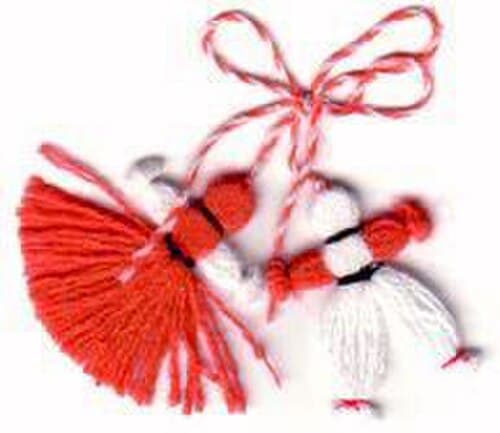
Bulgarian Martenitsa
Bulgaria
Bulgaria's red and white spring charm worn from March 1st to celebrate winter's end and invite health and happiness.
4.6Learn more →


North Macedonia's vibrant red poppy — a symbol of the fertile Vardar Valley, summer joy, and the resilience of beauty on difficult terrain.
The poppy (мак/mak in Macedonian) is deeply embedded in North Macedonian folk culture — the wild red Papaver rhoeas blooms across the Vardar Valley and Macedonia's agricultural land each May and June in waves of brilliant scarlet, one of the Balkans' most spectacular seasonal sights. The poppy appears throughout Macedonian folk embroidery, carved wooden objects, and traditional costume decoration as the signature flower of Macedonian summer.
In Macedonian folk medicine, poppy has multiple uses: poppy seed tea (from the legal Papaver rhoeas variety) for mild pain relief and sleep; poppy seed pastries for celebration and abundance; poppy head decorations at folk festivals for summer blessing. The poppy's abundance of seeds — thousands in each head — makes it a natural symbol of fertility and numerous offspring.
As a lucky charm, the Macedonian poppy carries summer's fierce, brief beauty — the red flower that blooms intensely for just a week or two then disappears, teaching that full presence in beauty's brief moment is life's highest art. The poppy is the Balkans' lesson in joyful impermanence: bloom brilliantly now, scatter your seeds generously, and trust the earth to receive them for next year's bloom.
The Macedonian Poppy traces its origins to North Macedonia, where it has been revered for generations as a powerful symbol of good fortune and positive energy. Historical records and oral traditions suggest that early versions of this charm appeared centuries ago, when communities in North Macedonia first began attributing supernatural qualities to objects drawn from their natural and spiritual environment.
Over time, the Macedonian Poppy evolved from a regional folk object into a widely recognized talisman. Traders, travelers, and migrants carried it across borders, introducing it to new cultures that often adopted and adapted it to fit their own belief systems. Today it is found in north macedonia and beyond, each culture adding its own layer of meaning and ritual to the charm's enduring legacy.
In its homeland of North Macedonia, the Macedonian Poppy occupies a revered place in both daily life and ceremonial practice. It is not merely decorative — it is woven into the fabric of cultural identity, appearing in celebrations, rites of passage, and household traditions that have been passed down through generations.
Beyond North Macedonia, the Macedonian Poppy has gained recognition in north macedonia and other regions, where it is valued for its symbolic connection to universal good luck. Scholars of material culture and anthropologists note that charms like the Macedonian Poppy serve a dual psychological function: they provide a tangible focus for hope and intention, and they connect their owners to a living cultural tradition that transcends individual experience.
To get the most from your Macedonian Poppy, keep it in a place where you will see it daily — on a desk, nightstand, or near your front entrance. Physical proximity reinforces the intention behind the charm and serves as a regular reminder of your goals.
Traditional practice recommends handling the charm with clean hands and respectful intention. Many practitioners in North Macedonia advise setting a clear purpose when you first acquire the charm: hold it, state your wish or goal silently or aloud, and then place it in its chosen position. Periodically cleansing the charm — by passing it through incense smoke, placing it under moonlight, or simply wiping it with a clean cloth — is believed to refresh its energy.
If the charm is meant to be worn (as jewelry or a carried token), keep it close to your body throughout the day. If it is a household object, place it in the area of your home most associated with its purpose — for example, near a workspace for success charms, or by the bed for love and health charms.
Vivid present-moment beauty, joyful impermanence, abundant seed-potential, Macedonian fertility, summer's fierce brief joy, and the courage to bloom brilliantly even briefly.
Keep a dried poppy or ceramic poppy charm to remind yourself to bloom fully in the present moment without grasping. Poppy seed pastries eaten at new beginnings bless the endeavor with the poppy's abundant seed potential. Use a poppy charm during midsummer to amplify the season's maximum energy.
The word 'poppy' entered English via Old English 'popæg,' ultimately from a Macedonian/Thracian language — one of the few surviving words from the pre-Slavic Balkanic languages. Macedonia's poppy heritage is thus linguistically embedded in the English-speaking world's own vocabulary without most speakers realizing it.
The common field poppy (Papaver rhoeas) is legally unproblematic and symbolically positive worldwide. Avoid confusing it with opium poppy symbolism — the Macedonian folk tradition uses the field poppy exclusively for its beauty and seed abundance.
May and June when field poppies bloom is the peak energy period. But the dried poppy carries summer's preserved energy through winter — use it during dark months as a reminder of summer's certain return.
You are wishing the recipient the poppy's gifts: presence in beauty's brief moment, the courage to bloom brilliantly without guarantee of permanence, and the faith that one's seeds (actions, children, ideas) will find fertile ground.
The Macedonian Poppy originates from North Macedonia, where it has been used as a general charm for centuries. Its influence has since spread to north macedonia and many other regions worldwide.
Keep a dried poppy or ceramic poppy charm to remind yourself to bloom fully in the present moment without grasping. Poppy seed pastries eaten at new beginnings bless the endeavor with the poppy's abundant seed potential. Use a poppy charm during midsummer to amplify the season's maximum energy. For best results, set a clear intention when you first acquire the charm and keep it in a prominent, respectful location.
Yes, giving a Macedonian Poppy as a gift is considered a generous and meaningful gesture in most traditions. In North Macedonia, gifted charms are often believed to carry even stronger energy than those purchased for oneself, because they come with the goodwill and intention of the giver.
Many practitioners recommend periodically cleansing your Macedonian Poppy to refresh its energy. Common methods include passing it through incense smoke, placing it in moonlight overnight, rinsing it under clean water (if the material allows), or simply wiping it down with a clean cloth while setting a fresh intention.
While the Macedonian Poppy originated in the cultural traditions of North Macedonia, it is not exclusive to any single religion. It has been adopted and adapted by people of many faiths and backgrounds, each bringing their own interpretation to its symbolism and use.
Bulgaria
Bulgaria's red and white spring charm worn from March 1st to celebrate winter's end and invite health and happiness.

Serbia
The curled-toe traditional Serbian shoe — a symbol of cultural identity, grounded tradition, and the blessing of walking one's own path.

Bosnia
The hand-hammered Bosnian copper — a Sarajevo craft tradition carrying centuries of Baščaršija market blessing energy.

