
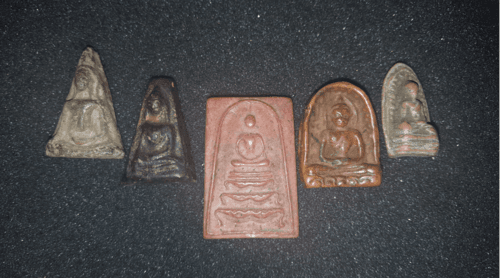
475
Protection
📜
Takrut Scroll
Thailand
A rolled metal or bark scroll inscribed with sacred Pali or Khmer text, the Takrut is one of Southeast Asia's most potent protective talismans.
4.5Learn more →

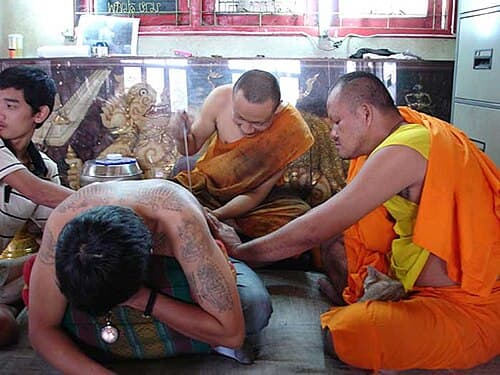
Sacred geometric tattoos blessed by monks carry the power of the inscribed formulas directly on the body as permanent living talismans.
Sak Yant (from Thai 'sak' meaning 'to tap' and 'yant' from Sanskrit 'yantra') are sacred tattoos inscribed using a long metal spike or bamboo needle by monks or spirit practitioners (ajarn), creating geometric, animal, and script designs imbued with specific magical powers. Unlike decorative tattoos, Sak Yant are considered living sacred objects — the tattoo is not merely a design on the skin but a yantra that has been physically inscribed on the body with mantras chanted continuously during the tattooing process, making the body itself a sacred text.
The most famous Sak Yant is the Hah Taew (Five Lines), a pattern of five lines of magical script that provides five different types of protection: protection from evil spirits, reversal of negative fortune, protection from black magic, good fortune in love, and success and prosperity. Each of the five lines contains specific Pali mantras that activate these protections. The Paed Tidt (Eight Directions) is a circular design that provides protection in all eight cardinal and intercardinal directions simultaneously. The Suea (Tiger) design conveys the tiger's strength, ferocity, and fearlessness to the wearer.
Sak Yant gained enormous international attention when celebrities including Angelina Jolie received them at Thai temples, but the tradition predates recorded history in the region and was historically worn primarily by soldiers seeking invulnerability in battle. The tattoos retain their power only if the wearer observes specific precepts: typically avoiding certain foods, refraining from disrespecting others, and maintaining moral conduct. The tradition holds that breaking these precepts weakens the tattoo's power.
Permanent talismanic protection inscribed directly on the body, with different designs providing targeted powers from invulnerability to attraction to success.
Receive a Sak Yant from a qualified monk or ajarn through the traditional needle tattooing process. Observe all precepts given by the tattooist. Return annually to the original practitioner or a qualified monk for re-blessing (wai khru ceremony) to maintain the tattoo's power. Treat the tattooed area with special respect.
Thailand hosts an annual Wai Khru festival at Wat Bang Phra temple near Bangkok, where thousands of Sak Yant wearers gather for a mass re-blessing ceremony. During the ritual, many participants enter trance states and begin moving like the animals depicted in their tattoos — moving like tigers, cobras, or monkeys — in a phenomenon that has been documented by anthropologists and filmed extensively.
Traditional practitioners are divided. Many senior monks accept that electric tattoo machines can inscribe the design accurately. However, the most conservative and powerful ajarn still use the traditional khem sak (metal spike) or mai sak (bamboo needle), arguing that the slower, manual process allows for deeper mantra transmission. Both methods can produce valid Sak Yant.
Yes. Breaking the precepts given by the tattooist is considered the primary way to weaken or nullify a Sak Yant. Missing annual re-blessings also progressively weakens the tattoo. Some Sak Yant are believed to 'expire' after achieving their purpose. A tattoo that has lost power may cause bad luck if not properly de-activated by a qualified practitioner.
Different designs have traditional placement requirements. The Hah Taew is placed on the upper left shoulder. Yant Paed Tidt goes on the center of the back. Animal designs often go on the chest. The general rule is that powerful yants should be placed above the waist, with the most sacred ones on the upper body. Placement below the waist is generally avoided.
Thailand
A rolled metal or bark scroll inscribed with sacred Pali or Khmer text, the Takrut is one of Southeast Asia's most potent protective talismans.
Thailand
Consecrated Buddha image amulets are Thailand's most serious sacred collectibles — worn for protection, luck, and spiritual merit.

Thailand
A sacred phallic amulet from Thailand believed to provide extraordinary luck, sexual power, and protection from harm.

India
Sacred geometric diagrams functioning as visual mantras, yantras concentrate divine energy into a specific intention.

