

1
Protection
👁️
Evil Eye (Middle East)
Middle East
A blue glass bead charm that reflects the envious gaze before it can cause harm.
4.8Learn more →

Middle East
6 charms from this country
Syria is one of the oldest continuously inhabited places on earth, and its amulet traditions are correspondingly ancient. The evil eye is the defining protective concern, and blue glass beads against the evil eye have been produced in Syrian glassblowing workshops — particularly in Aleppo — for centuries. The hamsa hand appears in Islamic geometric tilework, jewelry, and decorative arts throughout the country.
The Umayyad Mosque in Damascus, built on a site sacred to Aramaeans, Greeks, Romans, and Byzantine Christians before Islam, reflects Syria's deep layering of protective traditions. Christian communities in Syria carry rosary beads and wear gold crosses, while Muslims carry tasbih and Quranic amulet cases. Jasmine — the flower of Damascus — is woven into garlands as a blessing for weddings.
Middle East
A blue glass bead charm that reflects the envious gaze before it can cause harm.
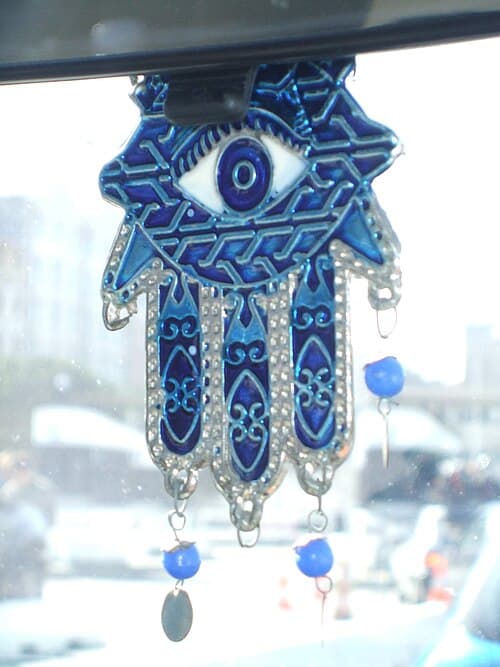
Middle East
An open palm amulet warding off the evil eye across Middle Eastern and North African cultures.
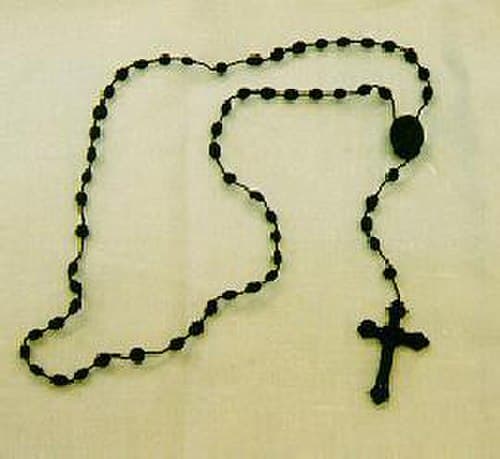
Medieval Europe
Rosary beads are the most recognizable Catholic prayer tool in the world, used by hundreds of millions for meditative prayer, protection, and the invocation of divine grace.
Middle East / North Africa
The sacred open palm named for the Prophet Muhammad's daughter, a cornerstone of Islamic protective symbolism.

Middle East
The crescent moon and star, a symbol of Islamic faith found on mosques, flags, and protective amulets across the Muslim world.

Syria
The fragrant white flower of Damascus, symbol of Syria's ancient beauty and the resilient soul of its people.

