4
Wealth
🐱
Maneki-neko (Lucky Cat)
Japan
The beckoning cat is Japan's most iconic good-luck charm, believed to wave fortune, customers, and prosperity into any space it occupies.
4.9Learn more →

Some lucky charms have transcended their origins to become global celebrities. Discover the stories behind the world's most famous individual charms and their legendary powers.
While most lucky charms are anonymous — mass-produced evil eye beads, generic four-leaf clovers pressed in plastic, and factory-made horseshoe ornaments — a select few have achieved genuine fame. These are objects with names, stories, and legends that have captured the public imagination across centuries and continents.
The 45.52-carat Hope Diamond, now housed in the Smithsonian Institution in Washington D.C., is arguably the most famous individual lucky charm — or rather, unlucky charm — in history. The deep blue diamond is believed to have been mined in India in the 17th century and was originally part of a larger stone known as the Tavernier Blue.
The diamond's curse legend claims that anyone who owns or wears it will suffer misfortune, madness, or death. King Louis XVI and Marie Antoinette, who owned the diamond, were beheaded during the French Revolution. British banker Henry Philip Hope (who gave the stone its current name) is said to have died in poverty. Subsequent owners allegedly suffered a litany of disasters — though historians have debunked many of these claims as later embellishments.
Regardless of whether the curse is real, the Hope Diamond demonstrates a fascinating psychological principle: famous objects accumulate narrative power over time. Each misfortune suffered by an owner is attributed to the diamond, while periods of good fortune are ignored.
The Gotokuji Temple in Tokyo's Setagaya ward is considered the birthplace of the Maneki-neko legend. According to temple tradition, a cat belonging to the priest beckoned a feudal lord inside the temple gate just before lightning struck the spot where he had been standing. The grateful lord became the temple's patron, transforming it from a struggling rural shrine into a prosperous institution.
Today, the temple grounds are filled with thousands of white Maneki-neko figurines, left by visitors who believe the cats will carry their wishes to the gods. The sight of row upon row of identical beckoning cats — from tiny to enormous — is one of Tokyo's most photographed scenes and a powerful visual testament to the enduring appeal of this charm.
When Charles Lindbergh completed the first solo transatlantic flight in 1927, he reportedly carried a small horseshoe in the cockpit of the Spirit of St. Louis. The revelation that the most daring aviator of the age relied on a traditional good-luck charm captured the public imagination and reinforced the horseshoe's status as the quintessential Western lucky charm.
Lindbergh was far from alone. During both World Wars, Allied pilots routinely attached horseshoes, rabbit's feet, and St. Christopher medals to their aircraft. The combination of extreme danger and complete lack of control over many flight outcomes made aviators particularly receptive to lucky charm rituals.
The Koh-i-Noor ("Mountain of Light") is a 105.6-carat diamond now set in the British Crown Jewels. Originating in India, possibly from the Golconda mines, this diamond has been associated with both supreme power and terrible misfortune for over 750 years. Hindu texts state that the Koh-i-Noor carries a curse: any man who wears it will lose his kingdom. Since its arrival in British hands in 1849, it has been worn only by queens and queen consorts — a tradition that neatly sidesteps the curse's gender-specific warning.
The Blarney Stone, set high in the battlements of Blarney Castle in County Cork, Ireland, is perhaps the world's most famous fixed lucky charm. According to legend, anyone who kisses the stone receives the "gift of the gab" — the ability to speak eloquently and persuasively. Over 400,000 visitors per year lean backward over the castle parapet to kiss the stone, making it one of the most popular tourist rituals in Europe.
The stone's origins are disputed. Some legends claim it was the pillow of Jacob from the Bible, returned to Ireland by way of the Crusades. Others say it was given to the McCarthys by Robert the Bruce after the Battle of Bannockburn. Whatever its origin, the Blarney Stone has been a pilgrimage destination for over five centuries.
While Gotokuji Temple claims the Maneki-neko's origin, Imado Shrine in Tokyo's Asakusa district also claims the legend — and specifically markets itself as the shrine for romantic luck. The Imado version of the story features a pair of cats rather than one, making their Maneki-neko especially popular among those seeking love. Visitors purchase pairs of beckoning cats and display them together, believing the combined energy will attract a romantic partner.
The Black Madonna icon at the Jasna Gora monastery in Czestochowa, Poland, is one of the most venerated lucky charms in Christianity. According to tradition, the painting was created by Saint Luke the Evangelist on a tabletop built by Jesus himself. The icon bears two slash marks on the Virgin Mary's cheek, allegedly inflicted by Hussite raiders in the 15th century — the wounds miraculously bled, and the raiders were struck blind.
Millions of pilgrims visit annually, and miniature reproductions of the Black Madonna are among the most widely carried religious amulets in Eastern Europe. Polish soldiers have carried images of the Black Madonna into every major conflict since the 17th century.
While no single rabbit's foot is famous, the tradition itself gained widespread cultural visibility through the Uncle Remus stories and African-American folklore. The rabbit's foot charm draws from a complex blend of Celtic, African, and hoodoo traditions. In hoodoo practice, the foot must come from a rabbit caught in a cemetery at midnight, preferably during a full moon — specifications that reveal the charm's roots in a sophisticated spiritual practice rather than casual superstition.
In 2014, Turkish artist Nazim Karabas created the world's largest evil eye installation by dropping thousands of glass Nazar beads from a helicopter over the Cappadocian landscape. The project, called "Aerial Protection," was designed to symbolically protect the entire region from the evil eye. While not a single famous charm, the installation transformed the Nazar bead from a personal amulet into a landscape-scale artwork and brought renewed international attention to the world's oldest protective symbol.
The charms on this list share several qualities: they are associated with powerful stories, they have been carried or displayed by famous people, and they have accumulated narrative weight over decades or centuries. Fame amplifies a charm's psychological power — if you believe an object protected Charles Lindbergh across the Atlantic, your own confidence in carrying a similar object naturally increases.
This is the self-reinforcing cycle of lucky charm fame: stories create belief, belief creates results (through the psychological mechanisms of confidence and self-efficacy), and results create more stories. The famous charm becomes a living legend — growing more powerful with each generation that tells its tale.
Japan
The beckoning cat is Japan's most iconic good-luck charm, believed to wave fortune, customers, and prosperity into any space it occupies.
United Kingdom
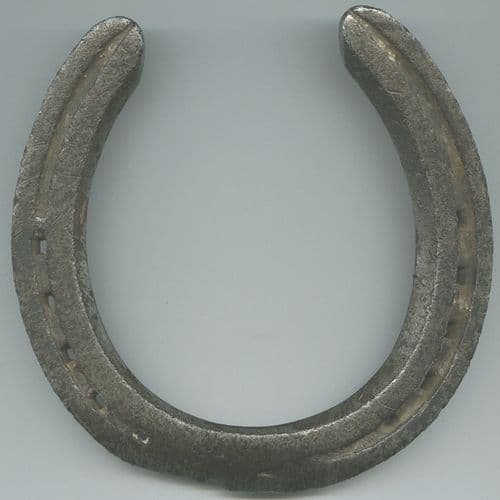
An iron crescent hung above doorways to catch and hold good luck.

Middle East
A blue glass bead charm that reflects the envious gaze before it can cause harm.

Ireland
The rarest clover mutation, treasured as nature's own lucky charm.
From the Eye of Horus to the medieval Seal of Solomon, these ten amulets shaped civilizations, protected armies, and inspired millions across thousands of years.
Trace the extraordinary 5,000-year journey of lucky charms from the tomb-lined corridors of ancient Egypt through Roman amulet markets, medieval pilgrimage routes, and into the digital age.
In Italy, 13 is lucky and 17 is cursed. In China, 4 is feared and 8 is coveted. In many cultures, Friday the 13th is just another day. Explore how different civilisations have constructed entirely different systems of luck — and what that reveals about human nature.