

13
Success
🪲
Scarab Beetle
Egypt
The sacred Egyptian beetle of Khepri, symbol of transformation, rebirth, and the rising sun.
4.6Learn more →

Trace the extraordinary 5,000-year journey of lucky charms from the tomb-lined corridors of ancient Egypt through Roman amulet markets, medieval pilgrimage routes, and into the digital age.
The human desire to carry objects imbued with protective or fortune-bringing power is as old as civilization itself. Long before the first written languages emerged, our ancestors were already carving, shaping, and wearing objects they believed could influence the unseen forces of the world. This is the story of how lucky charms evolved across five millennia, from sacred amulets buried with pharaohs to the crystal pendants sold in modern wellness shops.
The earliest well-documented lucky charm tradition belongs to ancient Egypt, where amulets were not merely decorative — they were essential spiritual technology. The scarab beetle, representing the sun god Khepri and the concept of eternal rebirth, was the most important Egyptian amulet. Carved from stone, faience, or precious metals, scarabs were placed over the hearts of the dead to ensure safe passage to the afterlife. The living wore them as rings, pendants, and belt ornaments to attract regeneration and prosperity.
The Eye of Horus (Wadjet) was another cornerstone amulet, believed to provide protection, health, and restoration. According to myth, Horus lost his eye in battle with Set, and when it was magically restored, it became a symbol of wholeness and healing. Egyptians wore miniature Wadjet eyes on necklaces and painted them on the prows of boats for safe voyages across the Nile.
The ankh, shaped like a cross with a loop at the top, symbolized eternal life and was carried by gods and pharaohs alike. Together, these three symbols — scarab, Wadjet, and ankh — formed the foundation of the Western world's amulet tradition.
The ancient Greeks inherited and expanded Egyptian amulet practices. They developed the concept of the evil eye (baskania), believing that a gaze of envy could cause illness, crop failure, or death. Blue glass beads and eye-shaped amulets became common protective devices, a tradition that persists virtually unchanged in modern Greece and Turkey.
The Romans industrialized lucky charm production. Amulet markets flourished across the empire, selling everything from phallic pendants (fascinum) believed to ward off evil spirits to small bronze hands making protective gestures. Roman soldiers carried amulets into battle, and Roman mothers pinned them to their children's clothing. The Latin word "amuletum" — from which we derive "amulet" — entered the language during this period, reflecting how deeply embedded charm culture had become in daily Roman life.
With the rise of Christianity, lucky charms underwent a theological transformation. Pagan amulets were officially condemned, but the human need for tangible spiritual protection simply found new forms. Relics of saints — fragments of bone, cloth, or personal belongings — became the most sought-after protective objects in medieval Europe. Cathedrals competed to acquire prestigious relics, which drew pilgrims and their money.
For ordinary people who could not afford relics, pilgrimage badges and saint medals served as accessible lucky charms. A pewter badge from Canterbury or a medal of Saint Christopher (patron of travelers) was pinned to a hat or cloak and believed to offer divine protection throughout life's journeys.
The horseshoe emerged as a powerful luck symbol during this period. Iron was believed to repel fairies and evil spirits, and the crescent shape of the horseshoe echoed protective moon symbolism. The legend of Saint Dunstan — who reportedly nailed a horseshoe to the Devil's hoof and made him promise never to enter a house displaying one — cemented the horseshoe's place in European folk tradition.
As European explorers, traders, and colonizers fanned out across the globe from the 15th century onward, lucky charm traditions began to cross-pollinate on an unprecedented scale. Portuguese sailors brought the figa (a clenched fist amulet) to Brazil, where it merged with Afro-Brazilian spiritual traditions. Spanish missionaries encountered elaborate Aztec and Mayan talismanic practices in Mesoamerica. British traders returned from China with jade carvings and from India with elephant figurines, introducing these objects to Western markets for the first time.
The rabbit's foot became popular in European and American folk tradition during this era, likely influenced by both Celtic beliefs about hares and African-American hoodoo practices brought across the Atlantic through the slave trade. By the 18th century, carrying a rabbit's foot for luck was common across the American colonies.
The 19th century brought industrialization to lucky charm production. Four-leaf clover pressing became a popular hobby, and mass-produced clover charms in silver and gold appeared in jewelry shops. The lucky penny tradition solidified during the Victorian era, when finding a coin heads-up was widely considered an omen of good fortune.
In Japan, the Maneki-neko (beckoning cat) emerged during the Edo and Meiji periods, initially as a local temple tradition before becoming the iconic shop-window figure known worldwide today. In China, feng shui principles were codified and popularized, transforming objects like lucky bamboo and the money frog into standardized good-luck devices with specific placement rules.
The 20th century saw lucky charms undergo two major transformations. First, the New Age movement of the 1970s and 1980s revived interest in crystals, talismans, and amulets from a spiritual wellness perspective. Crystals like amethyst, citrine, and rose quartz were repackaged as tools for personal growth, healing, and abundance, creating a multi-billion-dollar industry that continues to grow today.
Second, the globalization of culture through travel, immigration, and the internet has made once-local charms universally accessible. A Hamsa hand from Morocco can be purchased in a New York boutique. A Daruma doll from Japan can be ordered online and delivered to Lagos. The evil eye bead, once confined to the Mediterranean and Middle East, now appears on fashion runways in Paris and Milan.
Even the digital world has developed its own luck rituals. Gamers carry virtual lucky items. Cryptocurrency traders display Maneki-neko figurines beside their monitors. The human instinct to seek tangible symbols of hope and protection has proven remarkably adaptable to every technological era.
The 5,000-year history of lucky charms reveals something profound about human nature: we are, at our core, meaning-making creatures. Whether carved from Egyptian faience, cast in Roman bronze, pressed from Victorian silver, or displayed as a digital avatar, lucky charms serve the same fundamental purpose — they remind us that we are not powerless, that the universe might be listening, and that hope itself has weight.
Egypt
The sacred Egyptian beetle of Khepri, symbol of transformation, rebirth, and the rising sun.

Middle East
A blue glass bead charm that reflects the envious gaze before it can cause harm.
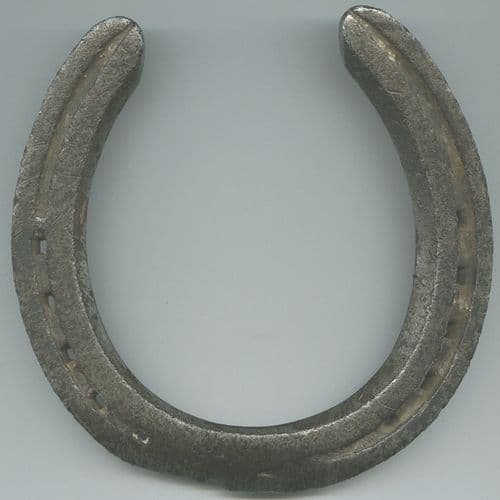
United Kingdom
An iron crescent hung above doorways to catch and hold good luck.

Japan
The beckoning cat is Japan's most iconic good-luck charm, believed to wave fortune, customers, and prosperity into any space it occupies.

Ireland
The rarest clover mutation, treasured as nature's own lucky charm.
Some lucky charms have transcended their origins to become global celebrities. Discover the stories behind the world's most famous individual charms and their legendary powers.
From the Eye of Horus to the medieval Seal of Solomon, these ten amulets shaped civilizations, protected armies, and inspired millions across thousands of years.
In Italy, 13 is lucky and 17 is cursed. In China, 4 is feared and 8 is coveted. In many cultures, Friday the 13th is just another day. Explore how different civilisations have constructed entirely different systems of luck — and what that reveals about human nature.