24
Wealth
🐸
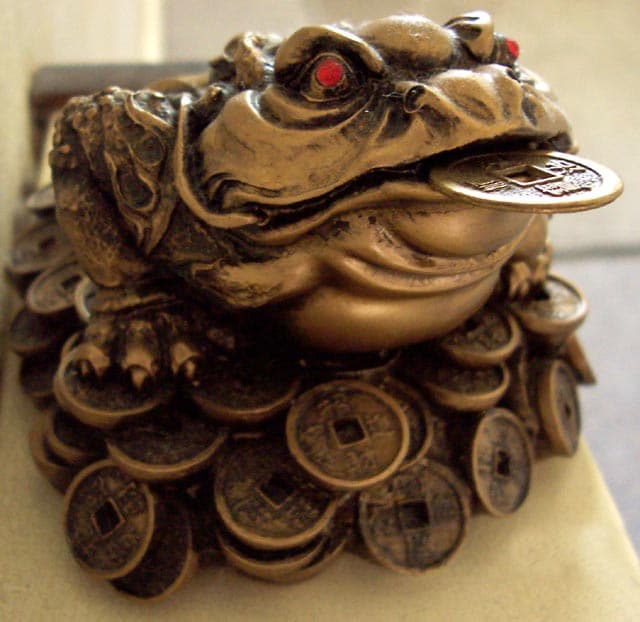
Money Frog (Jin Chan)
China
The three-legged toad sitting on coins with a coin in its mouth is one of feng shui's most potent wealth activators, said to attract money and prevent it from leaving.
4.6Learn more →

Where you place a lucky charm matters as much as which one you choose. Master the ancient art of feng shui charm placement with this room-by-room guide.
In feng shui, the ancient Chinese art of spatial arrangement, every object in your environment either enhances or disrupts the flow of chi — the vital energy believed to permeate all things. Lucky charms are among the most powerful tools for directing chi toward prosperity, health, love, and protection. But a charm placed in the wrong position can be ineffective or, worse, counterproductive. This guide explains exactly where to place the most popular feng shui charms for maximum effect.
Before placing any charm, you need to understand the bagua — the feng shui energy map that divides any space into eight zones plus a center. Stand at the main entrance of your home or room, looking inward. The bagua zones are:
Every charm should be placed in the zone that corresponds to its purpose.
The three-legged Money Frog is the premier feng shui wealth charm. Placement rules are precise and non-negotiable among practitioners:
Lucky Bamboo (Dracaena sanderiana) is one of the easiest feng shui charms to place, because it thrives in low light and requires minimal care — but the number of stalks determines its purpose:
Always tie the stalks with a red ribbon to activate their feng shui energy. Avoid arrangements of 4 stalks (the number 4 sounds like "death" in Mandarin).
The Laughing Buddha (Budai) should be placed following specific rules:
While originating in Japan rather than China, the Maneki-neko has been enthusiastically adopted into feng shui practice:
Tied together with red string in groups of three, six, or nine, Chinese coins (with their characteristic square hole in the center) are versatile feng shui wealth activators:
Wind chimes serve a dual purpose in feng shui: they slow down and disperse chi that is moving too quickly (as in a long hallway aimed directly at a door), and they activate stagnant chi in dead corners:
Feng shui practitioners use specific crystals for specific zones:
Even well-intentioned feng shui practitioners make these errors:
The most effective approach is to start with one zone — usually the southeast wealth corner, since it produces the most immediately noticeable results — and expand from there. Place your chosen charm with intention, keep the area clean and well-lit, and observe the changes in your environment over the following weeks. Feng shui is not instant magic; it is the art of creating conditions in which positive outcomes become more likely. And lucky charms, placed with knowledge and care, are among its most powerful instruments.
China
The three-legged toad sitting on coins with a coin in its mouth is one of feng shui's most potent wealth activators, said to attract money and prevent it from leaving.

China
Lucky Bamboo is a feng shui staple believed to bring good fortune, prosperity, and positive energy when placed in the home or office.

China
The Laughing Buddha — the round, joyful, sack-carrying monk — is China's most beloved symbol of happiness, wealth, and the simple abundance that comes from contentment.

Japan
The beckoning cat is Japan's most iconic good-luck charm, believed to wave fortune, customers, and prosperity into any space it occupies.
Behind the mysticism lies a massive commercial machine. From Murano glass evil eyes to mass-produced Maneki-neko, the global lucky charm industry generates over $30 billion annually. Here is how the business of luck really works.
Are lucky charms mere superstition, or is there real psychology — and perhaps even neuroscience — behind why they work? The answer may surprise you.
Your workspace shapes your financial destiny more than you might think. Learn how to apply ancient feng shui principles and the right lucky charms to transform your home office into a magnet for opportunity and prosperity.