

27
Wealth
💛
Citrine Crystal
Brazil
The golden abundance crystal, known as the Merchant's Stone, carried to attract wealth, success, and the warm energy of solar prosperity.
4.8Learn more →

Are lucky charms mere superstition, or is there real psychology — and perhaps even neuroscience — behind why they work? The answer may surprise you.
Every year, billions of people around the world carry lucky charms, consult feng shui masters, place Money Frogs in strategic corners, and slip birth-year pennies into their wallets. From a strictly materialist viewpoint, these practices seem like quaint superstitions with no rational basis. But a growing body of research in psychology, behavioural economics, and neuroscience suggests that lucky charms may work — not through magic, but through deeply human psychological mechanisms that have tangible effects on performance, decision-making, and even financial outcomes.
The placebo effect — the measurable improvement in outcomes that occurs when people believe they are receiving effective treatment, even when they are not — is one of the most robustly documented phenomena in medicine. It turns out that something very similar operates in the domain of luck.
A landmark 2010 study by psychologist Lysann Damisch and colleagues at the University of Cologne found that simply telling participants that they had a lucky golf ball significantly improved their putting performance. In another experiment, participants who were allowed to keep their personal lucky charm before attempting a dexterity or memory task performed substantially better than those whose charm was taken away.
The mechanism, Damisch and colleagues argued, is self-efficacy: the belief in one's ability to succeed. Lucky charms don't change objective circumstances — they change how the person holding them feels about their chances, and that feeling changes how they perform.
Financial decision-making is among the most anxiety-inducing activities human beings engage in. Research in behavioural economics consistently shows that anxiety leads to poor financial decisions: excessive risk aversion, panic selling, impulsive purchases, and paralysis in the face of important choices.
Rituals — including the use of lucky charms — have been shown to reduce anxiety in high-stakes situations. A 2013 Harvard Business School study found that performing personal rituals before stressful tasks reduced anxiety and improved performance, even when the rituals were self-invented and nonsensical by any objective measure.
The act of placing a Money Frog in the southeast corner of your home, or carrying a citrine crystal in your pocket before a salary negotiation, functions as a pre-performance ritual that calms the nervous system and focuses attention. The charm itself is almost incidental; the ritual around it is what does the psychological work.
Lucky charms work best, across all traditions, when they are acquired and used with conscious intention. This is not a mystical claim — it has a clear psychological basis.
Implementation intentions — specific mental plans in the form "When X occurs, I will do Y" — have been shown to dramatically increase the likelihood of following through on goals. Connecting a lucky charm to a specific financial goal creates a form of implementation intention anchored in a physical object.
Every time you see your lucky bamboo plant, handle your ancient coin, or notice the Laughing Buddha on your desk, you are retriggering the neural pathway associated with your financial intention. This is essentially a free, portable form of the behavioural cue that cognitive behavioural therapists use to help clients maintain new habits.
The human tendency toward magical thinking — the belief that objects, rituals, or symbols can influence outcomes in ways that transcend physical causality — is not a bug in our cognitive operating system. Evolutionary psychologists argue it is a feature.
In uncertain environments where outcomes are unpredictable and the cost of false negatives (not acting when you should) is higher than the cost of false positives (acting when you don't need to), a mind that sees patterns and attributes agency to events will outperform a perfectly rational mind that does not.
In other words, the ancestors who believed their ritual offerings pleased the rain gods were more likely to plant crops at the right time and tend them carefully than those who felt helpless in the face of random weather. The belief in control over outcomes — even illusory control — produces the behaviours that generate real control over outcomes.
Once a person believes in a lucky charm, confirmation bias — the tendency to notice and remember evidence that confirms our existing beliefs — ensures that the charm's apparent effectiveness grows over time.
When good things happen after consulting your lucky charm, you notice and remember. When bad things happen despite it, you may explain it as "the charm only works when properly cleansed" or "I forgot to carry it that day." This is not irrational self-deception — it is standard human cognitive processing, and it helps maintain the motivational benefits of the belief.
More powerfully, lucky charms can create self-fulfilling prophecies in social contexts. A person who enters a business meeting believing themselves to be lucky is more likely to speak confidently, make good eye contact, take bold positions, and respond to setbacks with resilience — all behaviours that actually improve the outcome of business negotiations.
Neuroscientific research on reward anticipation helps explain the powerful grip that luck beliefs have on the human mind. The dopamine system — the brain's central reward circuit — fires not just when we receive a reward, but when we anticipate one. Uncertainty, in particular, produces elevated dopamine release compared to certain outcomes.
Lucky charms operate squarely in this neurological territory. The belief that carrying a certain object might bring financial windfall keeps the dopamine system in a state of pleasurable anticipation. This heightened state of reward anticipation sharpens attention, improves memory formation, and increases motivated behaviour — all of which contribute to actual financial success.
Lucky charms are rarely purely personal — they are embedded in cultural practices shared with others. Wearing an evil eye bracelet, exchanging red envelopes at Lunar New Year, or placing a Maneki-neko in your shop window signals membership in a community with shared values and practices.
This social dimension has concrete financial implications. Researchers studying immigrant entrepreneurial success have noted that shared cultural rituals — including lucky charm practices — help build the trust networks and reciprocal support systems that are essential for business success within and between communities.
The science is clear: lucky charms do not bend the laws of physics. But they do reliably engage psychological mechanisms — increased self-efficacy, reduced anxiety, sharper intentionality, dopamine-mediated motivation, and social cohesion — that produce real improvements in performance and decision-making.
Whether you view your Money Frog as a mystical attractor of wealth or as a daily motivational cue, the outcome may be surprisingly similar. The most rational approach to lucky charms, as the evidence now suggests, is not to dismiss them but to use them consciously — as powerful tools for the only economic force that research consistently shows produces financial abundance: a focused, optimistic, action-oriented mind.
Brazil
The golden abundance crystal, known as the Merchant's Stone, carried to attract wealth, success, and the warm energy of solar prosperity.

United Kingdom
The humble copper coin that promises a turn of fortune when found heads-up.
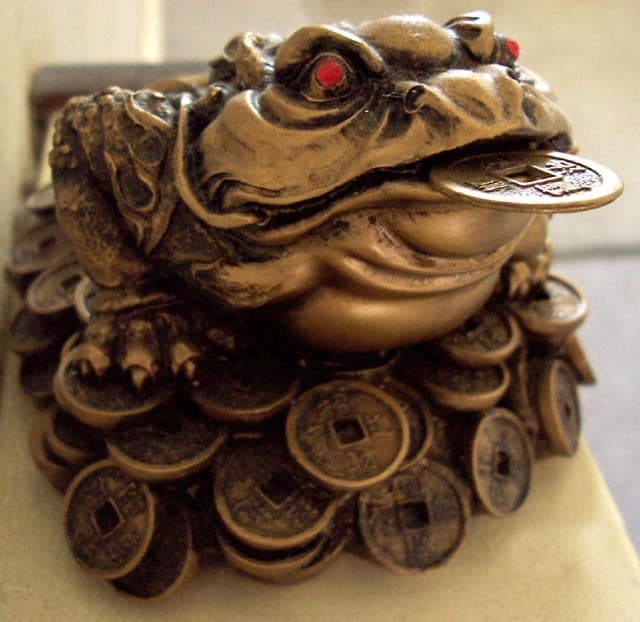
China
The three-legged toad sitting on coins with a coin in its mouth is one of feng shui's most potent wealth activators, said to attract money and prevent it from leaving.

Ireland
The rarest clover mutation, treasured as nature's own lucky charm.
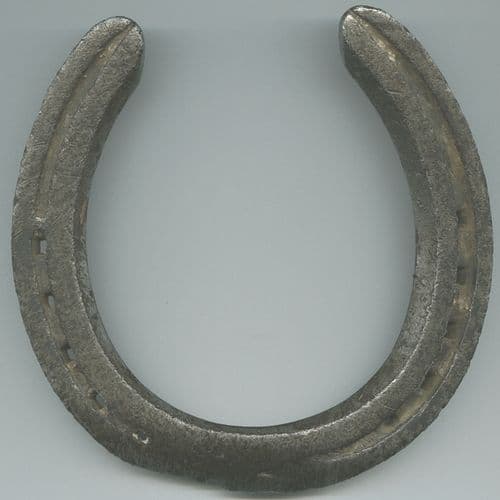
United Kingdom
An iron crescent hung above doorways to catch and hold good luck.

China
Lucky Bamboo is a feng shui staple believed to bring good fortune, prosperity, and positive energy when placed in the home or office.
Behind the mysticism lies a massive commercial machine. From Murano glass evil eyes to mass-produced Maneki-neko, the global lucky charm industry generates over $30 billion annually. Here is how the business of luck really works.
Your workspace shapes your financial destiny more than you might think. Learn how to apply ancient feng shui principles and the right lucky charms to transform your home office into a magnet for opportunity and prosperity.
Long before paper currency, coins were not just currency — they were sacred objects imbued with divine power. Explore how ancient civilisations from China to Rome turned money itself into the world's most practical lucky charm.

