
5
Protection
🖐️
Hamsa Hand
Middle East
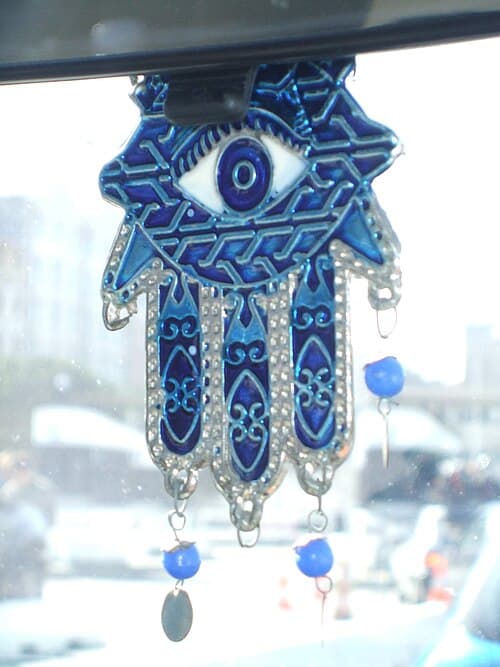
An open palm amulet warding off the evil eye across Middle Eastern and North African cultures.
4.9Learn more →

The hamsa is one of the world's oldest protective symbols, revered across three Abrahamic religions and pre-dating all three. Discover the rich history and cross-cultural significance of the hand that protects.
Few symbols have achieved what the hamsa has: a position of genuine sacred significance across three major world religions — Judaism, Islam, and Christianity — while simultaneously predating all three and maintaining its power across millennia of cultural change. The hamsa hand is a living demonstration that some protective symbols speak to something so fundamental in human experience that they transcend the theological boundaries that might otherwise divide them.
The word hamsa (also spelled khamsa or chamsa) derives from the Arabic and Hebrew words for the number five — a reference to the five fingers of the hand. In different cultural contexts the hamsa is known by different names that carry their own devotional weight:
The fact that the same symbol is simultaneously the hand of these three different sacred women — each revered within her own tradition as a paragon of faith and protection — reveals the hamsa's extraordinary capacity to serve as a vessel for devotional meaning across different theological frameworks.
The hamsa's origins predate Judaism, Christianity, and Islam. Hand-shaped protective amulets appear in the archaeological record of the ancient Near East as early as 1800 BCE, in the culture of ancient Carthage (in modern Tunisia) and Phoenicia (in modern Lebanon and coastal Syria).
In ancient Mesopotamia (modern Iraq), the hand was associated with the goddess Inanna (later Ishtar), queen of heaven and earth. In pre-Islamic Arabia, the hand was associated with Tanit, a powerful protective goddess. The hand as protective symbol appears in ancient Egypt, ancient Rome, and the ancient Levant — it is a truly pan-Mediterranean and pan-Near Eastern form.
The absorption of this ancient protective hand into the emerging Abrahamic traditions is a beautiful example of how ancient symbolic forms persist and are reinterpreted through new theological lenses without losing their fundamental protective function.
Most hamsa designs include an eye at the centre of the palm — the same protective eye symbol associated with evil eye deflection (the nazar) in Turkish and broader Mediterranean tradition. This combination is particularly powerful: the hand that blocks, combined with the eye that watches and deflects.
The eye in the hamsa palm reinforces the charm's primary protective function — guarding against the evil eye by meeting its gaze directly and reflecting it back. The hand says "stop" while the eye says "I see you."
The five fingers of the hamsa carry symbolic meaning beyond their association with named sacred women. Five is a significant number in both Kabbalistic and Islamic numerological systems:
In Islam: The Five Pillars (Shahada, Salat, Zakat, Sawm, Hajj) — the five obligatory acts that structure Muslim life. The hamsa reminds its holder of the five foundations upon which a protected, righteous life is built.
In Kabbalah: The five levels of the soul; the five books of the Torah; the five books of Moses. The hamsa connects its holder to the full depth of the Jewish spiritual heritage.
In numerology: Five is associated with protection, grace, and the integration of the four elements (earth, water, fire, air) with spirit — the fifth element that animates and protects all others.
The hamsa is among the most versatile of protective charms in terms of its usage:
As jewellery: Hamsa pendants, rings, earrings, and bracelets are among the most widely sold protective jewellery worldwide. Worn on the body, the hamsa is believed to provide constant protection against negative energy.
As home decor: Hamsa wall hangings, door knockers, and decorative pieces are placed at entrances to homes and businesses to guard against negative energy entering. The hamsa facing downward (fingers pointing down) is considered welcoming and inviting of positive energy; facing upward (fingers pointing up) it is more specifically protective against the evil eye and harm.
As a gift: Giving a hamsa to a friend, family member, or loved one is an act of intentional protection — you are consciously choosing to extend your protective wish to another. Hamsas are among the most meaningful gifts across Jewish and Muslim communities for this reason.
In ritual practice: Hamsa images are incorporated into mezuzot (Jewish doorpost markers), prayer spaces, and meditation altars in various traditions, serving as focal points for protective intention.
Like the evil eye bead, the hamsa has undergone a remarkable process of global diffusion in recent decades, spreading from its North African, Middle Eastern, and Mediterranean homeland to global fashion and design culture.
This diffusion has brought the hamsa into homes and on the bodies of people who may have no personal connection to Jewish, Islamic, or North African Christian traditions. The same tensions around cultural appropriation that attend the evil eye's global spread apply to the hamsa — particularly given the sacred significance it holds in living religious traditions.
Engaging with the hamsa respectfully involves learning its meanings, understanding its origins, and ideally sourcing it from artisans within the traditions it belongs to. A hamsa purchased from a Jewish Moroccan silversmith, a Palestinian ceramicist, or a Tunisian textile artist carries the living tradition of its making in a way that a mass-produced version cannot.
The hamsa's endurance across 3,000+ years and multiple civilisations reflects something about the human need it addresses. We live in a world of visibility — where our successes and joys are exposed to others' eyes, where envy is an unavoidable feature of social life, where forces beyond our control can disrupt what we have built with love and effort.
The hamsa says: you are seen and protected. The hand raised in blessing and the eye that watches back against the watching world. Five fingers reaching toward the divine and toward those we love.
In this sense, the hamsa is not merely a protective charm — it is a statement of faith. Faith that protection is available, that the divine or the sacred is present in the hand that is raised against harm, and that love — in the form of the sacred women whose names the hamsa carries — is the oldest and most powerful protective force available to human beings.
Middle East
An open palm amulet warding off the evil eye across Middle Eastern and North African cultures.

Ojibwe Nation, North America
A woven hoop hung above the bed to filter nightmares and allow only good dreams to pass through.

Egypt
The ancient Egyptian key of life, a symbol of immortality and the union of masculine and feminine forces.

India
The primordial sound of the universe, Om is the most sacred symbol in Hinduism, Buddhism, and Jainism.

Egypt
The sacred Egyptian beetle of Khepri, symbol of transformation, rebirth, and the rising sun.
A protection charm bundle — sometimes called a mojo bag, medicine pouch, or gris-gris — is one of the most personal and powerful protective tools you can create. Here is how to make one that works.
The dreamcatcher is one of the most widely sold Native American-inspired objects in the world. But its true origins, meanings, and proper use are far richer and more specific than most people know.
From ancient Mesopotamia to modern Instagram aesthetics, the evil eye — and the charms made to ward it off — may be the single most widespread protective talisman in human history. Discover why.

