
5
Protection
🖐️
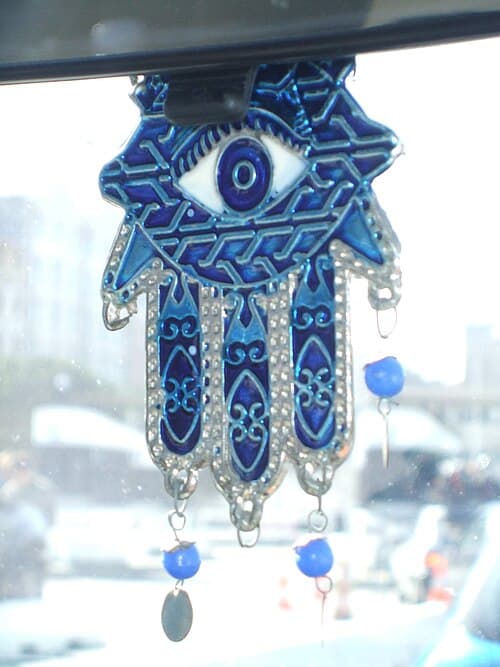
Hamsa Hand
Middle East
An open palm amulet warding off the evil eye across Middle Eastern and North African cultures.
4.9Learn more →

From ancient Mesopotamia to modern Instagram aesthetics, the evil eye — and the charms made to ward it off — may be the single most widespread protective talisman in human history. Discover why.
The evil eye — the belief that a malevolent or envious gaze can cause illness, misfortune, or even death — is recorded in more than 40% of the world's cultures and has a documented history stretching back at least 5,000 years to ancient Sumerian texts. The protective charms developed to ward off this universal threat form one of the most geographically widespread and culturally diverse categories of lucky talisman in human history.
Today, the blue-and-white eye amulet (nazar boncuğu in Turkish) has escaped its Mediterranean and Middle Eastern origins to become a global fashion and design icon, decorating everything from luxury handbags to wall art in apartments from Copenhagen to Buenos Aires. But the nazar is merely one expression of an ancient and profoundly human protective impulse.
At its simplest, the evil eye is the belief that a person can cause harm to another through a look — particularly a look of envy, admiration, or malice. The harm is typically understood as involuntary: the person casting the evil eye may not intend harm and may not even be aware they are doing it. Excessive admiration of a beautiful child, an attractive woman, a prosperous man, or a fine herd of animals could all be sufficient.
The conditions that trigger the evil eye reveal the social anxieties it encodes: visibility and prosperity are dangerous. When others notice that you are doing well — when your beauty, your success, or your luck becomes apparent — you become vulnerable to the levelling force of envy. The evil eye is, in anthropological terms, a mechanism for policing inequality and moderating conspicuous display in communities where excessive individual prosperity could threaten social cohesion.
The earliest written references to the evil eye appear in ancient Sumerian texts dating to approximately 3000 BCE. By the time of ancient Egypt, Rome, and classical Greece, elaborate systems for diagnosing and treating the evil eye had been developed.
Ancient Rome: Pliny the Elder devoted a section of his Natural History to the evil eye, noting that certain people — particularly those with two-coloured eyes — were particularly potent transmitters. Roman soldiers wore phallic amulets (fascinum) and hung them from military standards to deflect the evil eye on the battlefield.
Ancient Greece: The term baskainia (casting the evil eye) appears in texts from the classical period, and countering it was an accepted medical and magical practice. The philosopher Plutarch addressed the evil eye in his Table Talk, offering the theory that the eye could transmit harmful visual rays.
Ancient Egypt: The Eye of Horus (Wedjat) — the sacred eye of the falcon god — was worn as a protective amulet against malevolent gazes and was painted on the prows of ships to protect sailors.
The blue glass eye bead that is now globally recognised as "the evil eye" originated in the Mediterranean and Middle East, where cobalt blue glass has been produced since at least the 14th century BCE. The specific form of the nazar boncuğu — a concentric circle design with a dark pupil surrounded by light blue, dark blue, and white rings — developed in the Ottoman Empire and is still produced by hand in the workshops of Görece, Turkey.
The blue colour is not arbitrary: blue was historically rare and expensive in the ancient world, associated with the sky, the divine, and protective power. The eye design works on a principle of sympathetic magic — the amulet depicts the very thing it is meant to repel, creating a mirror that deflects the harmful gaze back toward its source.
Nazar beads are hung in homes, attached to babies' clothing, placed in car windows, worn as jewellery, and incorporated into wedding decorations across Turkey, Greece, the Levant, the Balkans, and their diaspora communities worldwide. When a nazar bead cracks or breaks, it is understood to have successfully absorbed a particularly powerful evil eye — it has sacrificed itself to protect its owner.
The Hamsa hand (also spelled Khamsa, from the Arabic for "five") is a palm-shaped amulet with an eye in the centre, used for protection against the evil eye across Islamic, Jewish, and Christian communities in North Africa, the Middle East, and the Levantine region.
In Jewish tradition it is called the Hand of Miriam (after Moses's sister); in Islamic tradition, the Hand of Fatima (after the Prophet Muhammad's daughter). The five fingers represent the five pillars of Islam in one tradition, the five books of Moses in another, and the five senses of perception in still another.
The Hamsa illustrates a remarkable feature of evil eye culture: it transcends the religious boundaries that divide its users. The same amulet, with slightly different devotional framing, serves Jews, Muslims, and Christians in the same geographic region — suggesting that the underlying belief in the evil eye is more fundamental than any particular religious framework.
Italy: Malocchio and the Corno The Italian evil eye tradition (malocchio) is one of the most elaborate in Europe. Protection comes primarily from the corno — a twisted, horn-shaped charm worn as a necklace, typically in red or gold. Italian grandmothers are the traditional experts at diagnosing and treating malocchio through a ritual involving olive oil, water, and specific prayers.
India: Drishti and Black Eye Protection In India, the evil eye is called drishti or nazar, and protection methods are extensive. Black eye dots (kajal or kohl) are applied to babies' faces to make them look less attractively perfect — an intentional imperfection to deflect envy. Strings of green chillies and lemons hung over doorways are among the most common protective charms.
Latin America: El Mal de Ojo Across Mexico, Central America, and South America, mal de ojo is particularly associated with the effect of admiring gazes on infants and young children. Protection involves red thread bracelets, small bags of herbs, and the specific ritual of being touched by the person whose gaze is feared — touch neutralises what the eye initiates.
West Africa and the Diaspora The evil eye concept exists across much of West Africa, where it is often understood as a form of witchcraft (the Yoruba concept of oju buruku, or "bad eye"). Protection comes from specific herbs, amulets prepared by traditional healers, and the wearing of protective objects such as cowrie shells.
The nazar's current status as a global aesthetic phenomenon is partly explained by social media. The eye bead's striking graphic quality — its concentric circle design photographs beautifully and translates perfectly into emoji, icon, and graphic design — made it a natural fit for the visual language of Instagram and Pinterest, where it spread rapidly beyond its cultural origins to become a universal "protection" aesthetic.
This has created tension in some communities of origin, where the nazar is not merely decorative but a living protective practice with specific ritual meaning. The commercialisation and decontextualisation of the nazar raises legitimate questions about cultural appropriation and the flattening of complex traditions into design motifs.
However, the evil eye's extraordinary cross-cultural spread also reflects something genuinely universal: the desire to protect what is precious from the destructive power of envy. In that sense, the nazar's global journey may be less appropriation than recognition — people everywhere seeing in this ancient symbol an expression of a fear they also know.
Placement: Hang nazar beads near the front door, in cars, and in nurseries. Wear evil eye jewellery on the wrist or as a pendant. Place hamsa hands in windows or above doorways, palm facing outward.
When it breaks: A broken nazar has done its job. Dispose of it respectfully — in running water or by burying it in earth — and replace it promptly. Do not attempt to repair a broken nazar; its protective function has been completed.
Cleansing: Wipe glass beads with a clean cloth. Some traditions recommend smudging or passing through incense smoke periodically to clear accumulated negative energy.
Giving as a gift: An evil eye charm given as a gift carries the love and protective intention of the giver — traditionally considered more powerful than one purchased for oneself.
Middle East
An open palm amulet warding off the evil eye across Middle Eastern and North African cultures.
United Kingdom
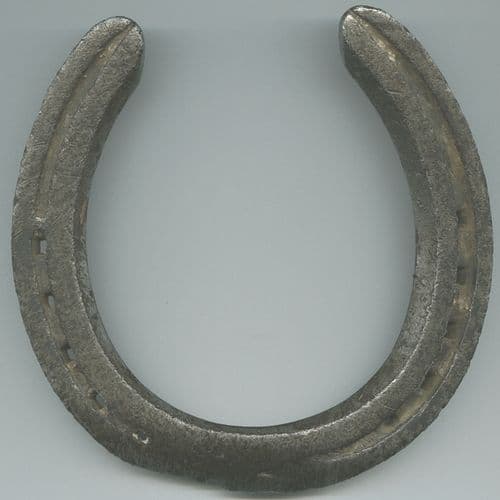
An iron crescent hung above doorways to catch and hold good luck.

Ireland
The rarest clover mutation, treasured as nature's own lucky charm.

Egypt
The ancient Egyptian key of life, a symbol of immortality and the union of masculine and feminine forces.

Egypt
The sacred Egyptian beetle of Khepri, symbol of transformation, rebirth, and the rising sun.
A protection charm bundle — sometimes called a mojo bag, medicine pouch, or gris-gris — is one of the most personal and powerful protective tools you can create. Here is how to make one that works.
The hamsa is one of the world's oldest protective symbols, revered across three Abrahamic religions and pre-dating all three. Discover the rich history and cross-cultural significance of the hand that protects.
The dreamcatcher is one of the most widely sold Native American-inspired objects in the world. But its true origins, meanings, and proper use are far richer and more specific than most people know.

