

1
Protection
👁️
Evil Eye (Middle East)
Middle East
A blue glass bead charm that reflects the envious gaze before it can cause harm.
4.8Learn more →

Behind every lucky charm is a tradition of craftsmanship — from Turkish glass-blowing to Japanese papier-mache, discover the artisanal processes that create the world's most beloved talismans.
In an age of mass production, the most revered lucky charms in the world are still made by hand, using techniques passed down through generations of artisans. The craftsmanship behind a charm is not merely aesthetic — in many traditions, the making process is itself a spiritual act, and a charm produced without proper intention, materials, or technique is considered powerless. Here is a look at the traditional craftsmanship behind some of the world's most iconic lucky charms.
The iconic cobalt blue evil eye bead is produced in a handful of traditional workshops in Turkey, most notably in the town of Gorece near Izmir and in parts of Cappadocia. The process is a form of lampworking — manipulating molten glass over an open flame.
The artisan begins with a rod of clear glass, heating it in a gas-fired furnace until it reaches approximately 1,000 degrees Celsius. Using a metal rod, they gather a glob of molten blue glass and shape it into a sphere. While the glass is still malleable, they layer concentric circles of white, light blue, and dark blue glass to create the distinctive eye pattern. Each layer must be applied at precisely the right temperature — too hot and the colors blur together; too cool and the glass cracks.
A skilled bead-maker can produce several hundred beads per day, but each one is slightly different. This handmade quality is considered essential: a machine-made evil eye bead, while visually similar, is not believed to carry the same protective power by traditional practitioners.
The production of Daruma dolls is centered in the city of Takasaki in Gunma Prefecture, which produces approximately 80% of Japan's Daruma output. The traditional process begins with washi (Japanese paper) soaked in water and layered over a wooden mold. Multiple layers of paper are applied and allowed to dry, creating a hollow shell that is lightweight yet surprisingly durable.
The distinctive weighted base is created by pouring clay or plaster into the bottom of the shell, ensuring the doll always rights itself when pushed — the physical embodiment of the Japanese proverb "fall seven times, stand up eight."
Painting is done entirely by hand. The red pigment traditionally used is derived from cinnabar or modern synthetic vermillion. The bold facial features — thick eyebrows representing cranes and the mustache representing turtles, both symbols of longevity — are painted with confident, single brushstrokes. The blank white eyes are the most important feature: they are deliberately left unpainted, awaiting the owner's intention-setting ritual.
In the souks of Fez and Marrakech, silver Hamsa hands are crafted by artisans from the Berber tradition using techniques that predate Islam in the region. The process begins with melting silver (traditionally from old coins or recycled jewelry) in a small clay crucible over charcoal.
The molten silver is poured into a stone mold or hammered flat and cut into the characteristic hand shape. The intricate surface decoration is created through filigree (twisting thin silver wire into decorative patterns) and granulation (attaching tiny silver balls to the surface). The central eye is often set with a blue stone — historically glass paste, now sometimes genuine lapis lazuli or turquoise.
The finishing process involves oxidation — deliberately darkening the recessed areas with sulfur compounds to create contrast against the polished raised surfaces. This technique, called niello in Western metalworking terminology, gives Moroccan Hamsas their distinctive antiqued appearance.
Japan's two primary centers of Maneki-neko production are the ceramic towns of Seto (in Aichi Prefecture) and Tokoname (also in Aichi). Both towns have centuries-old pottery traditions, and each produces a stylistically distinct version of the beckoning cat.
Traditional Maneki-neko are made from stoneware clay, shaped by hand or in press molds, and fired in kilns at temperatures exceeding 1,200 degrees Celsius. The characteristic glaze colors — white, gold, black, red, and pink — each require specific mineral oxide combinations. Gold Maneki-neko use a glaze containing iron oxide that produces a lustrous metallic finish when fired in a reduction atmosphere.
The raised paw is a particular challenge: it must be positioned at precisely the right angle to suggest beckoning without looking aggressive. Some master potters spend years perfecting the gesture. The bell and collar are often added as separate pieces before the final firing.
Authentic dreamcatchers originate from the Ojibwe (Chippewa) people of the Great Lakes region. Traditional construction begins with a frame made from a bent willow branch, formed into a circle and allowed to dry in shape. The frame represents the circle of life.
The web is woven from sinew (traditionally deer or moose tendon, now sometimes replaced with artificial sinew or thread). The weaving follows a specific pattern that creates a web with a small hole at the center — good dreams are said to pass through this opening and slide down the hanging feathers to the sleeper, while bad dreams are caught in the web and dissipate with the morning sun.
Decorative elements include feathers (owl feathers for wisdom in female dreamcatchers, eagle feathers for courage in male ones), beads (representing the spider that inspired the dreamcatcher legend), and sometimes gemstones or shells. Each element has specific spiritual significance and is not chosen arbitrarily.
Thailand's sacred amulet tradition involves monks and laypeople in an elaborate process that blends spiritual practice with material craft. The most highly regarded amulets are made from sacred clay — a mixture of temple earth, powdered herbs, old temple relics, and sometimes gold leaf or precious metal filings.
The clay mixture is pressed into molds bearing the image of a Buddha or revered monk, then dried and sometimes fired. The critical step is the consecration ceremony (pluk sek), during which monks chant sacred texts over the amulets for hours or even days. Without this ceremony, the amulet is considered a mere piece of clay.
Some of the most valued Thai amulets are made from takrut — thin metal sheets inscribed with sacred Khmer or Pali script, then tightly rolled and sealed in a waterproof casing. The inscriptions are applied by monks using a traditional stylus, and the specific texts used determine the amulet's purpose — protection, wealth, love, or invulnerability.
Across all these traditions, a common theme emerges: the making of a lucky charm is not mere manufacturing. It is an act of spiritual significance. The Turkish bead-maker works with focused intention. The Japanese Daruma painter applies each brushstroke as a meditation. The Moroccan silversmith invokes protection with each hammer strike. The craft and the magic are inseparable.
This is why mass-produced lucky charms, while convenient and affordable, are often regarded by traditionalists as spiritually inert. The power of a charm, these artisans would argue, begins not when you buy it — but when it is made.
Middle East
A blue glass bead charm that reflects the envious gaze before it can cause harm.

Japan
The round, roly-poly Daruma doll is Japan's symbol of perseverance — you set a goal, paint one eye, and complete the other only when the goal is achieved.
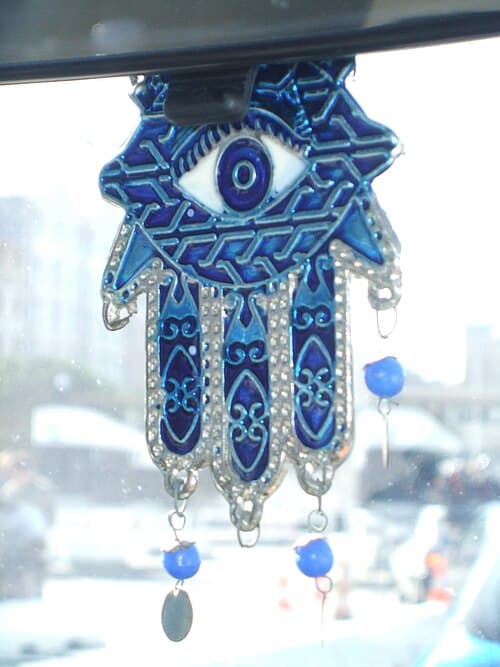
Middle East
An open palm amulet warding off the evil eye across Middle Eastern and North African cultures.

Japan
The beckoning cat is Japan's most iconic good-luck charm, believed to wave fortune, customers, and prosperity into any space it occupies.

Ojibwe Nation, North America
A woven hoop hung above the bed to filter nightmares and allow only good dreams to pass through.
Psychologists have spent decades studying whether lucky charms have measurable effects on performance. The results are more surprising than you might expect.
Every culture on earth has developed its own lucky charm traditions. This guide takes you continent by continent through the most important symbols of fortune worldwide.
Why do intelligent, educated people carry lucky charms? The answer lies in evolutionary psychology, cognitive bias, and the surprising power of illusory control.