2
General
🍀
Four-Leaf Clover
Ireland
The rarest clover mutation, treasured as nature's own lucky charm.
4.9Learn more →

Why do intelligent, educated people carry lucky charms? The answer lies in evolutionary psychology, cognitive bias, and the surprising power of illusory control.
In a world of smartphones, satellite navigation, and evidence-based medicine, it might seem strange that billions of people still carry lucky charms. Yet surveys consistently show that between 50% and 80% of people in developed nations admit to at least one superstitious behavior — carrying a lucky object, avoiding the number 13, or performing a pre-performance ritual. Why?
The answer is not that these people are irrational. It is that superstition is a deeply embedded feature of human cognition — a side effect of mental shortcuts that served our ancestors extraordinarily well.
The human brain is a pattern-recognition machine. We are hardwired to detect connections between events, even when those connections do not exist. Psychologists call this apophenia — the tendency to perceive meaningful patterns in random data.
In evolutionary terms, this bias was invaluable. An ancestor who noticed that a rustling bush sometimes preceded a lion attack was more likely to survive than one who waited for statistical significance. The cost of a false positive (hiding from a wind-rustled bush) was trivial. The cost of a false negative (ignoring a lion) was fatal. Natural selection therefore favored brains that over-detected patterns, even at the expense of occasionally seeing connections that were not real.
Lucky charms exploit this bias. If you wear a pendant before a successful job interview, your brain notes the association. If the next interview also goes well while wearing the pendant, the pattern solidifies. The fact that you also prepared thoroughly, dressed well, and brought strong qualifications is processed as secondary information — the charm gets the credit because it provides a simpler, more emotionally satisfying narrative.
Psychologist Ellen Langer of Harvard University demonstrated in a landmark 1975 study that people consistently overestimate their ability to influence random outcomes. In one experiment, participants who chose their own lottery ticket valued it more highly than those who were assigned one — even though the odds were identical. Langer called this the illusion of control.
Lucky charms are a physical manifestation of this illusion. By carrying an object that "brings luck," you feel you have some influence over outcomes that are actually beyond your control. This feeling is not delusional — it is adaptive. People who feel in control experience less stress, perform better under pressure, and recover more quickly from setbacks. The illusion of control, paradoxically, gives you real control over your own psychological state.
In the 1940s, behavioral psychologist B.F. Skinner placed hungry pigeons in a box that delivered food pellets at random intervals. The pigeons began to repeat whatever behavior they happened to be performing when the food arrived — turning in circles, bobbing their heads, or pecking at corners. Skinner called this superstitious behavior and argued that the pigeons had formed false cause-and-effect associations.
Humans are susceptible to the same mechanism. When a positive outcome follows a specific behavior or the presence of a specific object, we form an association — even if the relationship is purely coincidental. Over time, repeated coincidences harden into belief. The lucky charm becomes "proven" by a lifetime of confirmatory evidence, while disconfirming instances (times you carried the charm but things went badly) are dismissed or forgotten.
This is reinforced by confirmation bias — our tendency to notice and remember evidence that supports our existing beliefs while ignoring evidence that contradicts them.
One of the deeper psychological explanations for lucky charm behavior comes from Terror Management Theory (TMT), developed by psychologists Sheldon Solomon, Jeff Greenberg, and Tom Pyszczynski. TMT proposes that awareness of our own mortality creates an ever-present undercurrent of existential anxiety, and that human culture — including religion, art, and superstition — functions partly as a defense against this anxiety.
Lucky charms fit neatly into this framework. By carrying a protective amulet, you create a symbolic buffer between yourself and the randomness of existence. The charm says: "I am not entirely at the mercy of fate." This is especially important during times of uncertainty, danger, or major life transitions — which is exactly when lucky charm use intensifies.
Research supports this: studies show that superstitious behavior increases under conditions of stress, uncertainty, and lack of control. Soldiers carry more amulets into combat zones. Students are more superstitious before exams. Athletes become more ritualistic before championship matches.
Lucky charm beliefs are not just individual — they are culturally transmitted. Children who watch their parents knock on wood, carry crystals, or hang horseshoes above doorways absorb these behaviors long before they can critically evaluate them. By the time rational thinking develops, the superstitious associations are already deeply encoded.
Social learning theory, developed by Albert Bandura, explains how observing others performing lucky rituals — especially successful, admired others — reinforces the belief that the rituals have value. When a student sees a top performer touching a lucky pen before an exam, the association between the ritual and success is formed vicariously.
Psychologists generally distinguish between positive superstition (behaviors that enhance confidence and reduce anxiety without limiting behavior) and negative superstition (rigid avoidance behaviors driven by fear). Carrying a lucky charm because it makes you feel more confident is positive. Refusing to leave the house without it is potentially problematic.
The boundary between healthy and unhealthy superstition lies in flexibility. If your lucky charm is lost or forgotten and you can still function normally — perhaps with mild disappointment but without panic — your relationship with it is healthy. If its absence triggers severe anxiety or avoidance behavior, it may be worth exploring with a mental health professional.
The misconception that superstition is a sign of low intelligence has been thoroughly debunked. Research consistently shows no correlation between educational attainment and superstitious behavior. Some studies even find a slight positive correlation — more educated people carry more lucky charms, perhaps because they have more high-stakes situations (presentations, negotiations, performances) where psychological support is valuable.
Lucky charms persist not because people are foolish, but because the human brain is built to seek control, find patterns, and manage anxiety through tangible rituals. These are features, not bugs. And the objects we carry to serve these needs — from Egyptian scarabs to modern crystal pendants — are simply the latest iteration of one of humanity's oldest and most universal psychological tools.
Ireland
The rarest clover mutation, treasured as nature's own lucky charm.

United Kingdom
The humble copper coin that promises a turn of fortune when found heads-up.
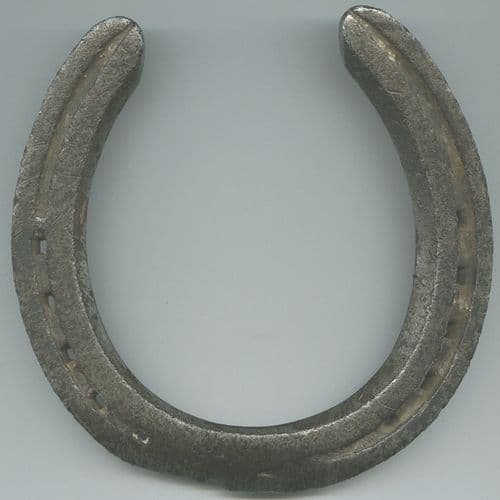
United Kingdom
An iron crescent hung above doorways to catch and hold good luck.

Middle East
A blue glass bead charm that reflects the envious gaze before it can cause harm.
Behind every lucky charm is a tradition of craftsmanship — from Turkish glass-blowing to Japanese papier-mache, discover the artisanal processes that create the world's most beloved talismans.
Psychologists have spent decades studying whether lucky charms have measurable effects on performance. The results are more surprising than you might expect.
Every culture on earth has developed its own lucky charm traditions. This guide takes you continent by continent through the most important symbols of fortune worldwide.