

20
Wealth
🪙
Lucky Penny
United Kingdom
The humble copper coin that promises a turn of fortune when found heads-up.
4.3Learn more →

From Michael Jordan's lucky shorts to Serena Williams's bounce ritual, elite performers have long relied on personal lucky charms and rituals. What do the world's most successful people actually carry for luck?
We might expect the world's most analytically sophisticated high performers — elite athletes, acclaimed musicians, Oscar-winning actors — to be immune to superstition. They know better than anyone that success comes from talent, preparation, and execution. And yet, the lucky charm practices of elite performers are remarkably robust, widespread, and stubbornly persistent.
Research consistently shows that the higher the stakes and the less controllable the outcome, the more likely a performer is to engage in superstitious ritual behaviour. Athletes, who operate in precisely those high-stakes, partially-uncontrollable conditions, are among the most consistently superstitious people on earth.
Perhaps the most famous athletic lucky charm story in sports history involves Michael Jordan and a pair of University of North Carolina basketball shorts. Jordan, a deeply superstitious athlete by his own account, wore his old UNC shorts under his Chicago Bulls uniform throughout his entire professional career.
The shorts represented the championship game where Jordan first proved himself at the highest level — wearing them recreated the conditions of that moment of peak confidence. His Bulls jersey was made slightly longer than his teammates' to cover the shorts beneath. This is textbook superstitious ritual: a physical object anchoring a memory of peak performance, worn as a talisman to summon that performance state in every subsequent high-stakes game.
Serena Williams is probably the most openly superstitious elite athlete in recent memory and has discussed her practices in interviews extensively. Her lucky charm and ritual system includes:
Williams has explicitly stated that she cannot explain why these rituals work — only that interrupting them feels genuinely threatening to her performance. This is consistent with psychological research on pre-performance rituals: their effectiveness appears to be independent of any rational mechanism, operating entirely through the psychology of perceived control.
Rafael Nadal's pre-match routine is so elaborate that it has been studied by sports psychologists and analysed in tennis media for decades. Before each match he:
Nadal has acknowledged that these rituals help him achieve and maintain a state of intense focus — they function as a mental preparation sequence that moves him from ordinary awareness into competitive readiness. The specific objects and actions are almost secondary to the function they serve.
Tiger Woods wears red on Sundays — the final round of golf tournaments — because his mother told him red was his power colour. He wore red on Sundays as a Stanford student, continued through his entire professional career, and maintained the practice even during the periods of personal and professional difficulty that interrupted his dominance.
The Sunday red shirt is one of the most visible and widely discussed athletic lucky charm practices in sports, partly because its regularity makes it a reliable signal to other players and to the crowd that Woods is in his winning mindset.
Colour as lucky charm is ancient — red has been associated with power, vitality, and good fortune across Chinese, Indian, African, and European traditions for millennia. Woods may have absorbed this belief from his Thai heritage through his mother, but its cross-cultural resonance is striking.
Baseball Hall of Famer Wade Boggs ate chicken before every game for his entire career, earning the nickname "the Chicken Man." His pre-game routine also included:
Boggs's career batting average of .328 over 18 seasons suggests either that chicken is indeed a performance-enhancing substance or, more likely, that the elaborate ritual system created an ideal psychological state for high-level performance.
The lucky charm tradition is equally strong in performance arts:
Beyoncé reportedly collects lucky coins and uses specific backstage rituals before every performance.
Taylor Swift is known for her attachment to the number 13 — her "lucky number" — which she writes on her hand before concerts and builds into her release strategies. She has spoken about embracing what others consider an unlucky number and transforming it into her personal luck symbol.
Elvis Presley wore an Egyptian scarab ring as a constant accessory, drawn to the ancient Egyptian symbol of protection and renewal. The scarab beetle's association with Khepri — the god who rolled the sun across the sky — resonated with Elvis's own sense of daily renewal and performance.
The scientific analysis of athletic superstition confirms what seems intuitively obvious from the examples above:
Lucky charms and rituals reduce pre-performance anxiety — critical in sports where anxiety directly impairs physical performance through muscle tension, disrupted breathing, and narrowed attention.
They create a repeatable psychological state — the ritual sequence moves the athlete from ordinary consciousness to performance consciousness through a series of familiar steps, similar to how stage lighting and music cue audiences to enter a particular emotional state.
They preserve a sense of control in situations where control is partial at best — the athlete cannot control whether the opponent plays well, whether the court surface is ideal, or whether the judges are fair. But they can control their ritual sequence.
They are self-reinforcing — every successful performance while using the charm confirms the charm's efficacy. Every failure is explained away as "I didn't follow the ritual correctly" rather than "the charm failed."
The athlete examples suggest that the most effective personal lucky charms share these features:
Anchored in a real memory of success: Jordan's UNC shorts worked because they were genuinely associated with a peak performance moment. Your charm should be connected to a time when you were at your best.
Worn or carried consistently: Intermittent use dilutes the charm's associative power. Consistent use builds it.
Simple enough to maintain: Boggs's chicken dinner was simple. Nadal's ritual sequence is elaborate but consistent. Whatever ritual you build should be sustainable over time.
Understood as a tool, not a guarantee: The most effective athletic charm users know consciously that the charm doesn't change external outcomes — it changes their internal state. That honest understanding is actually what makes the charm work.
United Kingdom
The humble copper coin that promises a turn of fortune when found heads-up.

Egypt
The sacred Egyptian beetle of Khepri, symbol of transformation, rebirth, and the rising sun.

Ireland
The rarest clover mutation, treasured as nature's own lucky charm.
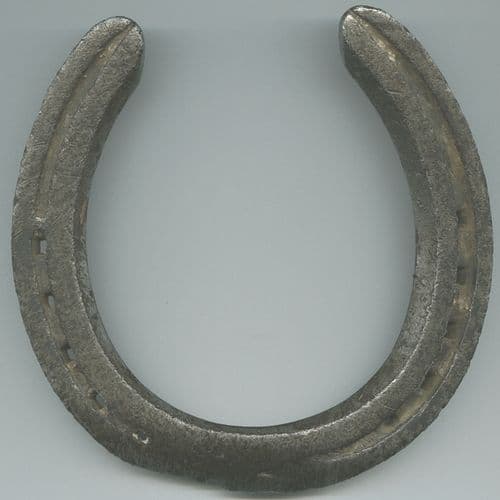
United Kingdom
An iron crescent hung above doorways to catch and hold good luck.
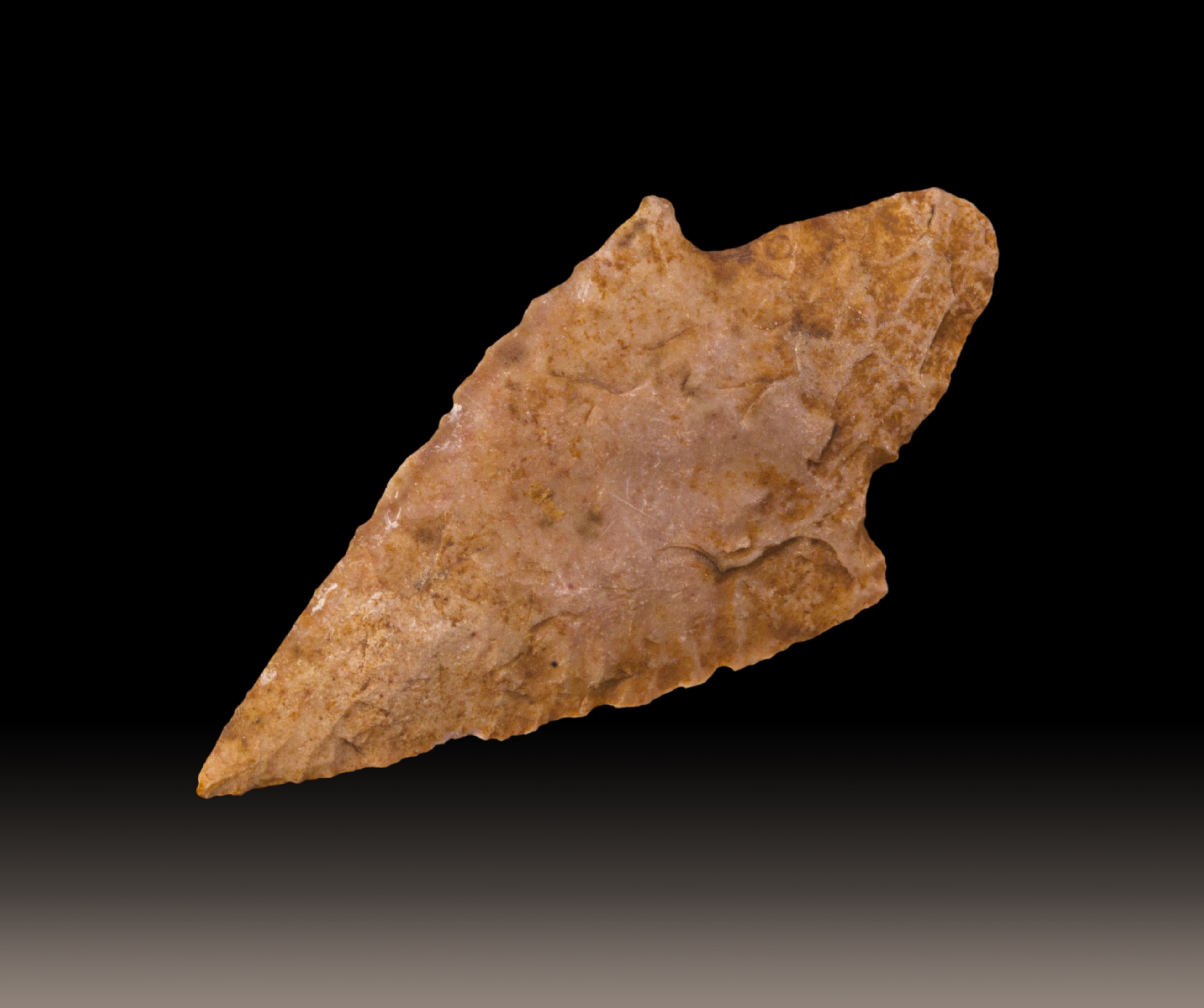
Pan-Indigenous North America
Ancient stone points worn as amulets to deflect evil spirits and negative energy, honoring the skills of ancestral hunters.

Japan
The round, roly-poly Daruma doll is Japan's symbol of perseverance — you set a goal, paint one eye, and complete the other only when the goal is achieved.
From Japan's KitKat craze to India's Saraswati pujas and the pencil-rubbing rituals of American test-takers, students worldwide have developed a rich ecosystem of lucky charms and rituals to help them through exams and academic challenges.
From ancient Greek laurel wreaths to modern crystal companions, students have always sought lucky charms for academic success. Here are the most effective study and exam charms from around the world.
With blank white eyes and a bold red body, the Daruma doll is Japan's most powerful success charm — and it comes with a built-in goal-setting system that makes it one of the most practically effective lucky charms in the world.

