

47
General
🪶
Feather
Pan-Indigenous North America
A sacred symbol across countless Indigenous cultures representing freedom, spiritual connection, and messages from the divine.
4.6Learn more →

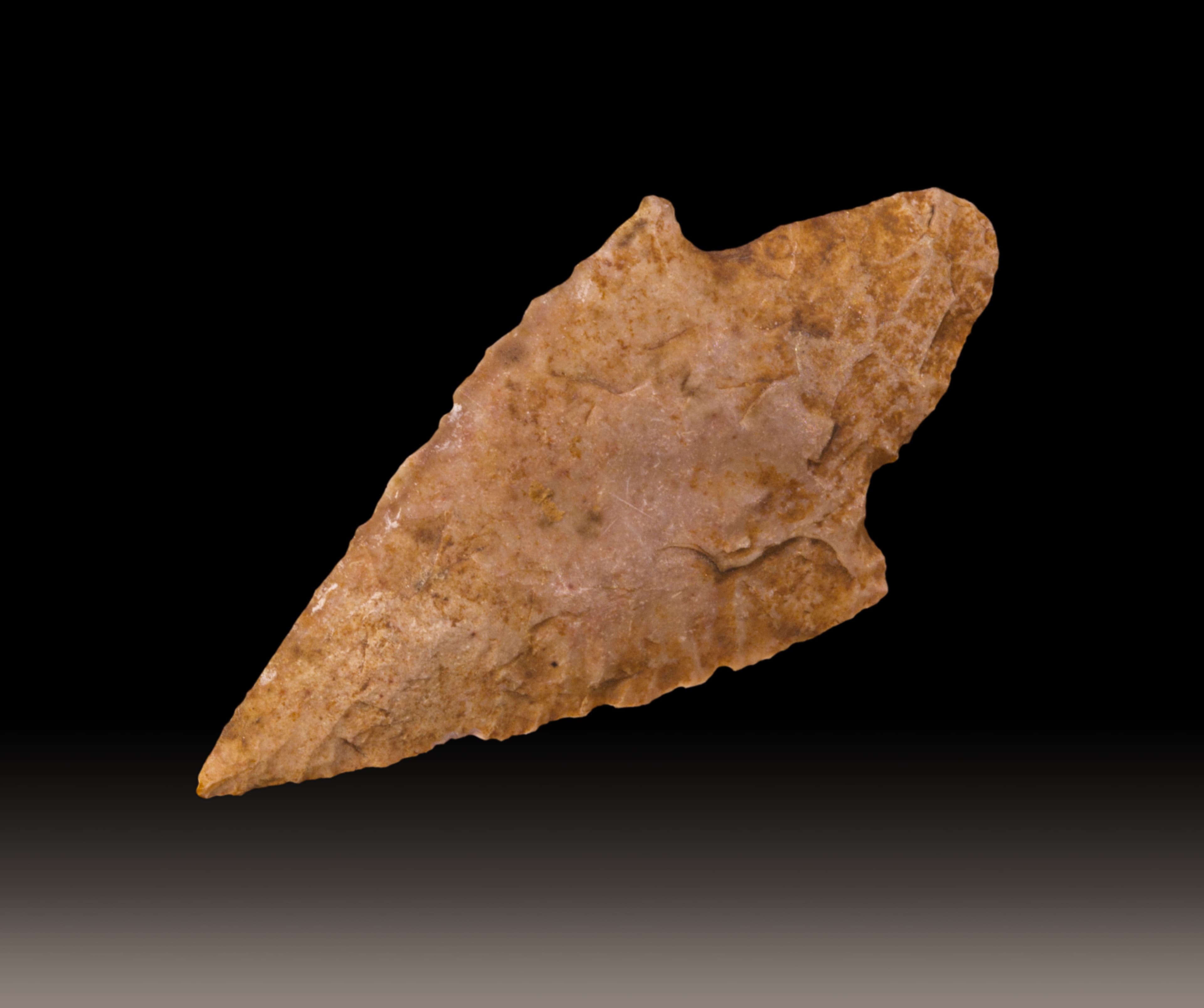
Ancient stone points worn as amulets to deflect evil spirits and negative energy, honoring the skills of ancestral hunters.
Arrowheads, also called projectile points, have been crafted by Indigenous peoples of the Americas for over 13,000 years. When people find ancient arrowheads in fields, riverbanks, or eroding hillsides, these objects arrive already charged with centuries of human intention and skill. The art of knapping flint, obsidian, chert, or jasper into razor-sharp points required deep knowledge, patience, and a steady hand — arrowheads were not merely tools but expressions of mastery and connection to the land.
As protective amulets, arrowheads have been worn by people of many traditions across the Americas. The logic is sympathetic: an arrowhead deflects actual arrows, so by extension it can deflect metaphorical arrows — ill wishes, jealousy, evil intentions, and negative spiritual energy. Apache and Navajo traditions specifically use arrowhead amulets for protection against witchcraft and negative forces. Wearing one near the heart was believed to keep the wearer safe from all manner of spiritual attack.
Today, arrowhead pendants made of stone, crystal, or metal are popular across the American Southwest and beyond. Collectors treasure authentic ancient arrowheads as tangible links to the past, while spiritual practitioners value them for their accumulated power and their symbolic association with precision, purpose, and protection.
The Arrowhead traces its origins to Pan-Indigenous North America, where it has been revered for generations as a powerful symbol of safety and spiritual defense. Historical records and oral traditions suggest that early versions of this charm appeared centuries ago, when communities in Pan-Indigenous North America first began attributing supernatural qualities to objects drawn from their natural and spiritual environment.
Over time, the Arrowhead evolved from a regional folk object into a widely recognized talisman. Traders, travelers, and migrants carried it across borders, introducing it to new cultures that often adopted and adapted it to fit their own belief systems. Today it is found in united states, canada, mexico and beyond, each culture adding its own layer of meaning and ritual to the charm's enduring legacy.
In its homeland of Pan-Indigenous North America, the Arrowhead occupies a revered place in both daily life and ceremonial practice. It is not merely decorative — it is woven into the fabric of cultural identity, appearing in celebrations, rites of passage, and household traditions that have been passed down through generations.
Beyond Pan-Indigenous North America, the Arrowhead has gained recognition in united states, canada, mexico and other regions, where it is valued for its symbolic connection to spiritual guardianship. Scholars of material culture and anthropologists note that charms like the Arrowhead serve a dual psychological function: they provide a tangible focus for hope and intention, and they connect their owners to a living cultural tradition that transcends individual experience.
To get the most from your Arrowhead, keep it in a place where you will see it daily — on a desk, nightstand, or near your front entrance. Physical proximity reinforces the intention behind the charm and serves as a regular reminder of your goals.
Traditional practice recommends handling the charm with clean hands and respectful intention. Many practitioners in Pan-Indigenous North America advise setting a clear purpose when you first acquire the charm: hold it, state your wish or goal silently or aloud, and then place it in its chosen position. Periodically cleansing the charm — by passing it through incense smoke, placing it under moonlight, or simply wiping it with a clean cloth — is believed to refresh its energy.
If the charm is meant to be worn (as jewelry or a carried token), keep it close to your body throughout the day. If it is a household object, place it in the area of your home most associated with its purpose — for example, near a workspace for success charms, or by the bed for love and health charms.
Arrowheads symbolize direction, purpose, and protection. They point the way forward and ward off that which comes against you. As tools of the hunt, they also represent the provider role, gratitude for the land's bounty, and the deep skill of ancestral peoples. Wearing an arrowhead acknowledges these ancient lineages and invites their protective power.
Wear an arrowhead pendant pointing downward against your chest to ground its protective energy into your body. Place arrowheads at the entry points of your home — windowsills and doorways — to deflect negative energy. Arrowheads can also be placed on altars pointing toward the four directions to protect sacred space.
The Clovis points discovered in New Mexico in the 1930s are among the oldest arrowheads ever found in North America, dating to approximately 13,000 years ago. They are so precisely made that modern flintknapping experts struggle to replicate their exact geometry even using the same ancient techniques.
Both have value depending on your intention. Authentic ancient arrowheads carry the accumulated energy of their long history and the skill of their maker, but removing them from archaeological context can be ethically problematic. Modern hand-knapped arrowheads from Indigenous artisans support living craftspeople while still honoring the tradition.
Obsidian arrowheads are prized for their protective qualities and their volcanic origin, which many traditions associate with powerful transformation. Flint and chert are the most historically common and carry strong ancestral energy. Crystal arrowheads blend traditional symbolism with contemporary crystal healing practices.
Displaying arrowheads respectfully — acknowledging their cultural origin and treating them as sacred objects rather than décor — is generally considered appropriate. Avoid displaying them in bathrooms or other disrespectful locations, and never handle them carelessly. Learning about the specific Indigenous cultures of your region deepens this respect.
The Arrowhead originates from Pan-Indigenous North America, where it has been used as a protection charm for centuries. Its influence has since spread to united states, canada, mexico and many other regions worldwide.
Wear an arrowhead pendant pointing downward against your chest to ground its protective energy into your body. Place arrowheads at the entry points of your home — windowsills and doorways — to deflect negative energy. Arrowheads can also be placed on altars pointing toward the four directions to protect sacred space. For best results, set a clear intention when you first acquire the charm and keep it in a prominent, respectful location.
Yes, giving a Arrowhead as a gift is considered a generous and meaningful gesture in most traditions. In Pan-Indigenous North America, gifted charms are often believed to carry even stronger energy than those purchased for oneself, because they come with the goodwill and intention of the giver.
Many practitioners recommend periodically cleansing your Arrowhead to refresh its energy. Common methods include passing it through incense smoke, placing it in moonlight overnight, rinsing it under clean water (if the material allows), or simply wiping it down with a clean cloth while setting a fresh intention.
While the Arrowhead originated in the cultural traditions of Pan-Indigenous North America, it is not exclusive to any single religion. It has been adopted and adapted by people of many faiths and backgrounds, each bringing their own interpretation to its symbolism and use.
Pan-Indigenous North America
A sacred symbol across countless Indigenous cultures representing freedom, spiritual connection, and messages from the divine.

Pan-Indigenous North America
A small sacred pouch containing personally meaningful objects that serve as a spiritual anchor, protection, and connection to one's power.

Pacific Northwest and Plains Indigenous peoples
A supernatural bird of immense power found across Indigenous traditions from the Pacific Northwest to the Great Plains, representing the awesome force of storms and sky.

