2
General
🍀
Four-Leaf Clover
Ireland
The rarest clover mutation, treasured as nature's own lucky charm.
4.9Learn more →

Can a rabbit's foot really improve your luck? Surprising research from psychology and neuroscience reveals that lucky charms work — just not the way most people think.
For centuries, skeptics have dismissed lucky charms as irrational nonsense — objects with no more power than the dust they collect. But over the past two decades, a growing body of rigorous scientific research has revealed something remarkable: lucky charms genuinely improve performance. The mechanism is not supernatural. It is psychological. And understanding how it works can help you harness the power of belief more effectively than any amulet alone.
The most cited research on lucky charms comes from a series of experiments conducted at the University of Cologne by psychologist Lysann Damisch and her colleagues, published in the journal Psychological Science in 2010. In one experiment, participants were asked to putt a golf ball into a hole. Half were told "Here is your ball — it has been lucky so far." The other half received the same ball with no such comment. The "lucky ball" group sank 35% more putts.
In follow-up experiments, participants who were allowed to bring their own lucky charms into a memory test and an anagram challenge significantly outperformed those whose charms were taken away before the task. The effect was not small — it was comparable to the performance difference between novices and experienced practitioners.
Damisch's team identified the mechanism: self-efficacy. A lucky charm increases a person's belief in their own ability to succeed. This heightened confidence leads to greater persistence, higher goal-setting, and reduced anxiety — all of which directly improve performance. The charm does not change the world. It changes the person holding it.
This aligns with decades of research by psychologist Albert Bandura, who demonstrated that self-efficacy is one of the strongest predictors of success across virtually every domain — academics, athletics, business, health, and creative endeavor. Anything that reliably increases self-efficacy is, in a very real sense, a performance enhancer.
The lucky charm effect operates through the same neural pathways as the placebo effect in medicine. When you believe a sugar pill will relieve your pain, your brain releases real endorphins and dopamine. When you believe a charm will bring you luck, your brain releases real confidence and calm.
Neuroimaging studies have shown that holding a meaningful personal object activates the ventromedial prefrontal cortex — the brain region associated with emotional regulation, positive expectation, and reward anticipation. The charm literally primes your brain for success.
Not all charms produce equal psychological effects. Research suggests the most effective lucky charms share three qualities:
Behavioral psychologist B.F. Skinner first described superstitious conditioning in 1948, when he observed pigeons in a cage developing ritualistic behaviors because they associated random movements with food delivery. Humans are susceptible to the same pattern: if you wear a bracelet during an exam and score well, your brain forms an association between the bracelet and success — even if the bracelet had nothing to do with it.
The key insight is that this association, once formed, does have something to do with future success — because it increases confidence and reduces anxiety. Superstitious conditioning is a self-reinforcing loop, and lucky charms sit at the center of it.
Research by Harvard Business School professor Michael Norton and colleagues found that performing a ritual before a stressful task — even a completely arbitrary one, like knocking on wood or touching a lucky object — significantly reduced anxiety and improved performance. The content of the ritual did not matter. What mattered was the act of performing a deliberate, structured behavior that the person associated with preparation and control.
This explains why athletes' pre-game rituals are so consistent and why disrupting those rituals causes measurable performance drops. The charm is not incidental to the ritual — it is often the anchor point around which the entire ritual is organized.
Based on the research, here are evidence-backed strategies for getting the most benefit from a lucky charm:
Lucky charms sit at a fascinating intersection of psychology, neuroscience, and cultural anthropology. They are not evidence of irrationality — they are evidence of the brain's extraordinary ability to use symbols, rituals, and narratives to regulate its own performance. The four-leaf clover in your wallet is not magic. But the confidence it gives you might be the closest thing to magic that science can explain.
Ireland
The rarest clover mutation, treasured as nature's own lucky charm.

Middle East
An open palm amulet warding off the evil eye across Middle Eastern and North African cultures.

Japan
The round, roly-poly Daruma doll is Japan's symbol of perseverance — you set a goal, paint one eye, and complete the other only when the goal is achieved.
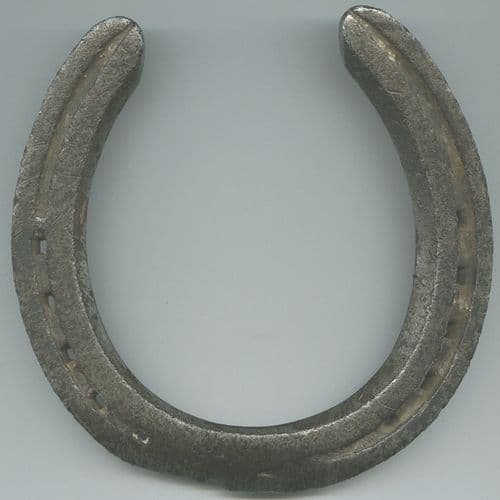
United Kingdom
An iron crescent hung above doorways to catch and hold good luck.

United Kingdom
The humble copper coin that promises a turn of fortune when found heads-up.
From St. Christopher medals to Thai amulets, discover the lucky charms that travelers have relied on for centuries — and which ones to pack on your next trip.
Over time, lucky charms are believed to absorb negative energy and lose their potency. Learn the most respected cleansing and charging methods from traditions worldwide.
Every month of the year is associated with a gemstone believed to bring special fortune to those born under its influence. Discover the history and meaning behind all 12 birthstones.