

14
Success
🎎
Daruma Doll
Japan
The round, roly-poly Daruma doll is Japan's symbol of perseverance — you set a goal, paint one eye, and complete the other only when the goal is achieved.
4.8Learn more →

From Spanish grapes at midnight to Japanese Daruma dolls and Brazilian white clothing, discover the lucky charm traditions that cultures worldwide use to welcome the New Year.
As the calendar turns to a new year, billions of people around the globe reach for lucky charms, perform time-honoured rituals, and follow traditions designed to attract good fortune, health, and prosperity in the months ahead. These practices vary enormously from culture to culture, but they share a common thread: the belief that the threshold between one year and the next is a moment of special power, when our intentions and symbols carry extra weight.
Here is a journey through the most fascinating New Year lucky charm traditions from every corner of the world.
One of the most iconic New Year traditions belongs to Spain, where eating twelve grapes — one for each stroke of midnight — is believed to bring twelve months of good luck. The tradition, known as las doce uvas de la suerte, dates back to 1909 and is taken seriously enough that supermarkets sell special tins of peeled, seedless grapes specifically for the occasion. Each grape represents a wish for one month of the coming year. Locals gather in plazas across the country, with Madrid's Puerta del Sol being the most famous gathering point, to eat their grapes in unison as the clock strikes twelve.
Japan's New Year (Shogatsu) is rich with lucky charm traditions. The Daruma doll — a round, hollow, red-painted figure representing Bodhidharma — is purchased with both eyes blank. You paint one eye while making a wish or setting a goal for the new year, and paint the second eye when the goal is achieved. Millions of Daruma dolls are sold in Japan every December.
Kadomatsu — decorative arrangements of pine, bamboo, and plum placed at the entrance of homes and businesses — serve as temporary housing for the toshigami (year deity) who visits during the New Year period. Pine represents longevity, bamboo represents resilience, and plum represents the coming of spring. They are displayed from December 28 through January 7.
The tradition of Hatsumode — the first shrine or temple visit of the New Year — sees millions of Japanese visitors purchasing omamori (protective amulets) and ema (wooden wishing plaques) to set their intentions for the year ahead. Meiji Shrine in Tokyo alone receives over three million visitors in the first three days of January.
Brazilians welcome the New Year in all-white clothing, symbolising peace, renewal, and the hope for a fresh start. Along the beaches of Rio de Janeiro, Salvador, and other coastal cities, millions gather to offer flowers, perfume, and small boats filled with gifts to Yemanja, the Afro-Brazilian goddess of the sea. The offerings are carried into the ocean on the outgoing tide — if the sea accepts your gift (carries it away), your wish will be granted; if the waves return it, you must try again.
Brazilians also follow the tradition of eating lentils on New Year's Day, as their round, coin-like shape symbolises wealth and abundance. Some tuck a banknote into their shoe or wallet at midnight to ensure financial prosperity.
In one of the more unusual New Year traditions, Danes save chipped or unused plates throughout the year and smash them against the front doors of friends and family on New Year's Eve. The larger the pile of broken crockery on your doorstep, the more friends you have and the more luck you will enjoy in the coming year. While the tradition has become less common in urban areas, it remains alive in smaller communities and is a beloved part of Danish folklore.
Filipinos believe that round shapes attract wealth because they resemble coins. On New Year's Eve, families display thirteen round fruits on the dining table (one for each month plus one for good measure), wear polka-dot clothing, and jingle coins in their pockets at midnight. The more circular shapes you can incorporate into your New Year celebration, the more prosperous your year will be. The number 13 is considered lucky in this context rather than unlucky.
In Turkey, the pomegranate is a powerful symbol of abundance, fertility, and good fortune. On New Year's Eve, families smash a pomegranate on their doorstep at midnight — the more seeds that scatter, the more prosperity the household will enjoy. The fruit's deep red colour is also associated with life and vitality. Pomegranate motifs appear on Turkish ceramics, textiles, and jewellery as year-round lucky symbols, but their significance peaks at the New Year.
The Scottish tradition of first footing (Hogmanay) holds that the first person to cross your threshold after midnight determines your fortune for the coming year. Ideally, the first footer should be a tall, dark-haired man carrying symbolic gifts: coal (for warmth), bread (for food), salt (for flavour), whisky (for good cheer), and a coin (for prosperity). A blonde or red-haired first footer is considered less fortunate — a superstition with roots in the Viking era, when a fair-haired stranger at your door was more likely to be a raider than a friend.
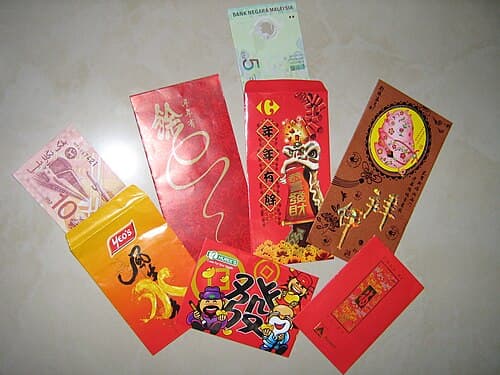
While the Chinese New Year falls later in the calendar (January or February), the traditions are worth noting for their global influence. Red envelopes (hongbao) filled with money are given to children and unmarried adults as symbols of good luck and prosperity. The colour red itself is the ultimate Chinese lucky colour — it represents happiness, wealth, and the ability to ward off evil spirits. Tangerines and oranges are displayed and gifted because their Chinese names sound like the words for "luck" and "wealth."
Italians welcome the New Year wearing red underwear — a tradition so widespread that Italian department stores dedicate entire sections to red lingerie in December. The colour red is believed to bring luck, love, and fertility in the coming year. The underwear must be new (worn for the first time on New Year's Eve) and, according to strict tradition, should be thrown away on January 1 to avoid carrying the previous year's energy forward.
Despite the enormous diversity of New Year traditions, several universal themes emerge:
You do not need to follow any single culture's tradition to benefit from the power of New Year rituals. The psychological research is clear: setting intentions through physical symbols and structured rituals increases the likelihood of follow-through. Whether you light a candle, write a wish on paper and burn it, place a Daruma doll on your desk, or simply eat twelve grapes at midnight, the act of marking the transition with a deliberate gesture creates a psychological anchor for your goals.
Choose a tradition that resonates with you, perform it with sincerity, and carry the intention into the new year. That is the real magic of lucky charms — not supernatural intervention, but the focused attention that transforms a vague hope into a concrete commitment.
Japan
The round, roly-poly Daruma doll is Japan's symbol of perseverance — you set a goal, paint one eye, and complete the other only when the goal is achieved.

Japan
The beckoning cat is Japan's most iconic good-luck charm, believed to wave fortune, customers, and prosperity into any space it occupies.

Ireland
The rarest clover mutation, treasured as nature's own lucky charm.
United Kingdom
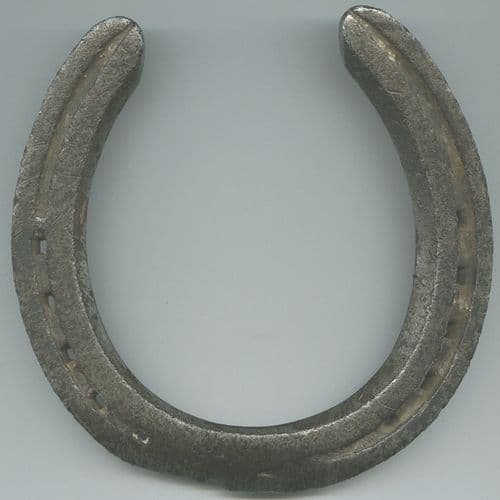
An iron crescent hung above doorways to catch and hold good luck.
China
The red envelope (hongbao) is China's most universal good-fortune gift, transferring luck and blessings along with cash at every major life celebration.
Behind every lucky charm is a tradition of craftsmanship — from Turkish glass-blowing to Japanese papier-mache, discover the artisanal processes that create the world's most beloved talismans.
Psychologists have spent decades studying whether lucky charms have measurable effects on performance. The results are more surprising than you might expect.
Every culture on earth has developed its own lucky charm traditions. This guide takes you continent by continent through the most important symbols of fortune worldwide.

