

1
Protection
👁️
Evil Eye (Middle East)
Middle East
A blue glass bead charm that reflects the envious gaze before it can cause harm.
4.8Learn more →

Middle East
9 charms from this country
Lebanon's extraordinary religious diversity — Maronite Christian, Sunni and Shia Muslim, Druze, Greek Orthodox — creates a uniquely layered charm culture where Christian and Islamic amulet traditions exist side by side and often overlap. The evil eye (ayn al-hasad) is the universal threat across all communities, and blue glass beads, hand of Fatima pendants, and Quranic/biblical verses are all deployed against it.
The Lebanese cedar tree, emblem of the nation, carries ancient associations of divine protection and immortality — the forests of Lebanon were sacred to the Phoenicians, Egyptians, and Hebrews. St. George medallions are carried by Lebanese Christians as protection, while Shia Muslims revere the hand of Abbas. The blue mati eye bead of Mediterranean tradition is found throughout Lebanese jewelry and home decoration.
Middle East
A blue glass bead charm that reflects the envious gaze before it can cause harm.
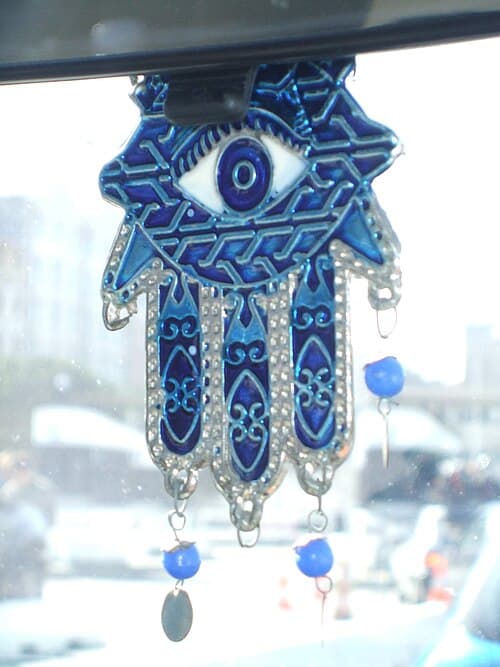
Middle East
An open palm amulet warding off the evil eye across Middle Eastern and North African cultures.
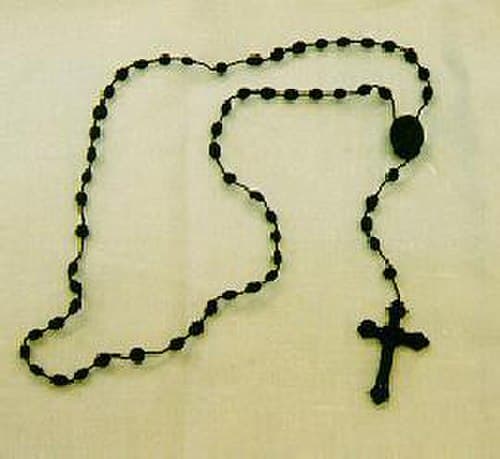
Medieval Europe
Rosary beads are the most recognizable Catholic prayer tool in the world, used by hundreds of millions for meditative prayer, protection, and the invocation of divine grace.
Middle East / North Africa
The sacred open palm named for the Prophet Muhammad's daughter, a cornerstone of Islamic protective symbolism.

France
The patron saint of travellers whose medal has accompanied millions on journeys.
Middle East / North Africa
The sacred number five made physical — a numeral-shaped amulet protecting against the five-fingered evil eye.

Middle East
The crescent moon and star, a symbol of Islamic faith found on mosques, flags, and protective amulets across the Muslim world.

Middle East
Thirty-three or ninety-nine beads used to count the ninety-nine names of Allah and cultivate mindful devotion.

Lebanon
The magnificent cedar tree of Lebanon, symbol of national pride, strength, and the divine groves that once covered the mountain.

