
8
Health
💚
Jade
China
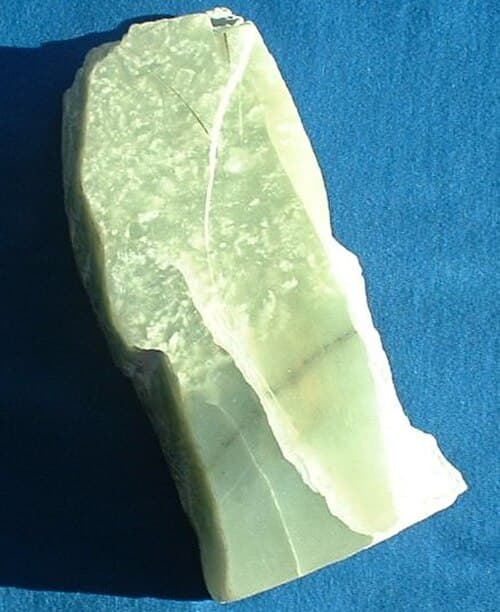
Revered for over 7,000 years, jade is the stone of heaven in Chinese culture, believed to protect health, ward off evil, and connect the wearer to divine virtue.
4.9Learn more →

The ancient Silk Road was not merely a trade route for silk and spices — it was the world's first great highway of symbolic exchange, carrying lucky charms, amulets, and magical beliefs between East and West for over a millennium.
Between approximately 130 BCE and 1450 CE, a network of overland and maritime trade routes connected China to the Mediterranean world across Central Asia, Persia, Arabia, and the Indian subcontinent. We call it the Silk Road, though it carried much more than silk: glass, spices, precious metals, horses, technologies, religions, languages, art forms, diseases — and lucky charms.
The Silk Road was the world's first great highway of symbolic exchange. Along its routes, the amulets and talismans of one civilisation encountered those of another, merged, split, transformed, and multiplied. Many of the lucky charms we use today are products of this extraordinary centuries-long collision of belief systems.
The Silk Road's formal opening is traditionally dated to 130 BCE, when the Han Dynasty emperor Wudi sent his ambassador Zhang Qian westward to forge alliances against the nomadic Xiongnu confederation. Zhang Qian returned with intelligence about the kingdoms of Central Asia and eventually with the first formal diplomatic and trade connections to the Parthian Empire (in modern Iran) and, indirectly, to Rome.
By the 1st century CE, direct (if indirect) trade connections between the Han Empire and the Roman Empire were established. The Romans knew China as Seres — the land of silk — and Chinese records mention the Da Qin (the Great Qin, or Rome) as a distant land of fabulous wealth.
What did these two empires exchange in terms of lucky charms?
From East to West: Chinese silk, jade objects, bronze mirrors (used as protective amulets), and porcelain objects carrying auspicious symbols (the dragon, the phoenix, the bat of happiness) traveled westward. Many of these symbols entered Central Asian and later Western artistic vocabulary, where their specific Chinese meanings were forgotten or transformed.
From West to East: Glass beads (a Roman specialty) traveled eastward, including the deep blue glass beads associated with evil eye protection that would eventually become the Turkish nazar. The Hellenistic artistic tradition — particularly the rendering of figures with naturalistic faces — influenced Buddhist art across Gandhara (modern Pakistan/Afghanistan) and eventually China.
If there is a single material that symbolises Silk Road charm exchange, it may be lapis lazuli — the intensely blue, gold-flecked stone mined almost exclusively from the Badakhshan region of modern Afghanistan.
Lapis lazuli was traded westward to Egypt (where it appears in the death mask of Tutankhamun and in countless amulets) and eastward to India, China, and beyond. Its brilliant blue colour associated it with the sky, the divine, and protective power in virtually every culture it reached.
In Buddhist iconography, lapis lazuli is the body colour of the Medicine Buddha (Sangye Menla), whose blue body represents the healing energy of the sky and whose practice is associated with healing and protection. The lapis lazuli trade route — from Badakhshan through Persia to Egypt, and in the other direction through India to China — is one of the oldest commodity routes in human history, predating the formal Silk Road by millennia.
If any single force was most responsible for carrying lucky charm practices along the Silk Road, it was Buddhism. As Buddhism spread from its Indian homeland northward into Central Asia (1st century CE), eastward into China (Han Dynasty), and eventually to Korea and Japan (4th–6th centuries CE), it carried with it an entire system of protective and luck-attracting symbolic practice:
The Om symbol (ॐ) — the foundational sonic symbol of the universe, whose written form became a protective and auspicious charm from India to Japan — traveled the entire length of the Silk Road as Buddhism carried it into new territories.
The Dharma Wheel — the eight-spoked wheel representing the Buddha's teaching — appeared on coins, seals, and amulets from Afghanistan to China.
The Endless Knot — one of the Eight Auspicious Symbols of Buddhism, representing the infinite wisdom and compassion of the Buddha — is still used as a protective and luck-attracting charm in Tibetan Buddhism and has spread through Tibetan Buddhist communities worldwide.
The Lotus — a symbol of enlightenment and spiritual purity that transcends worldly conditions — became one of the most universally used lucky symbols in Buddhist Asia, appearing on everything from temple ceilings to lucky coin amulets.
Long before the formal Silk Road, jade traveled westward from China's Hotan (Khotan) region in modern Xinjiang. Hotan jade — a form of nephrite prized for its creamy white colour — was the most valued jade in ancient China and was carried westward to Persia and India as trade goods.
The jade trade established some of the earliest regular exchange routes between China and Central Asia, and it carried with it Chinese beliefs about jade's protective and healing properties. By the time the formal Silk Road was established, jade had already been a cross-cultural lucky charm for centuries.
The evil eye concept — and the blue glass beads used to ward it off — presents one of the most fascinating case studies in Silk Road charm exchange.
The oldest documented evil eye beliefs appear in ancient Mesopotamia (modern Iraq) around 3000 BCE. By the classical period, the evil eye concept was well-established across the entire Mediterranean and Middle Eastern world. As the Silk Road connected this world to Central Asia and eventually China, the evil eye concept and specific protective practices spread eastward.
In Persia (modern Iran): The cheshm nazar (eye amulet) is still a major feature of Persian protective charm practice, with distinctive local forms adapted to Persian aesthetic sensibilities.
In India: The concept of drishti (harmful gaze) is deeply embedded in Indian culture and has ancient connections to the Mesopotamian tradition, possibly transmitted through the Persian empire's contacts with the Indian subcontinent.
In Central Asia: Nomadic peoples along the Silk Road routes absorbed evil eye beliefs from both the eastern (Mesopotamian-Mediterranean) and western (Chinese) ends of the trade network, developing their own hybrid protective practices.
Perhaps the most important contribution of the Silk Road to lucky charm culture was not the transmission of specific objects but the development of syncretism — the blending of different cultural beliefs and practices into new hybrid forms.
Gandharan Buddhist amulets from modern Pakistan/Afghanistan combine Greek naturalistic artistic style with Buddhist iconography and Zoroastrian protective symbols — a three-way cultural fusion made possible only by the Silk Road.
Central Asian nomadic charms blend Chinese cosmological symbols (the dragon, the tortoise, the phoenix), Iranian protective motifs, and indigenous shamanic symbols into distinctive assemblages that reflect the mongrel character of Silk Road culture.
The Silk Road contributed to the spread of the dragon as a lucky charm beyond its Chinese origins. While the Chinese lung (dragon) is benevolent and associated with imperial power and luck, the dragon concept blended with Central Asian and Persian serpent symbolism to create new varieties of dragon imagery across the Silk Road world.
The formal Silk Road trade network declined following the Black Death (1347–1353), which disrupted the population centres along its routes, and the rise of maritime trade routes (particularly after Vasco da Gama's voyage to India in 1498) that bypassed the overland network. But the cultural and symbolic exchanges it had facilitated over more than a millennium left permanent marks on the lucky charm traditions of every civilisation it connected.
The lucky charms on your shelf or in your pocket are, very likely, products of Silk Road exchange — whether the Buddhist iconography in a Chinese figurine, the Mesopotamian evil eye concept in a Turkish bead, the lapis lazuli in a protective pendant, or the jade that passed through a dozen cultures before reaching its current form.
The Silk Road ended; its symbolic legacy never did.
China
Revered for over 7,000 years, jade is the stone of heaven in Chinese culture, believed to protect health, ward off evil, and connect the wearer to divine virtue.

India
The primordial sound of the universe, Om is the most sacred symbol in Hinduism, Buddhism, and Jainism.

China
The Chinese dragon is the supreme symbol of imperial power, auspicious fortune, and the dynamic yang energy that drives all achievement and transformation.

Egypt
The sacred Egyptian beetle of Khepri, symbol of transformation, rebirth, and the rising sun.

Egypt
The ancient Egyptian key of life, a symbol of immortality and the union of masculine and feminine forces.

China
Lucky Bamboo is a feng shui staple believed to bring good fortune, prosperity, and positive energy when placed in the home or office.

Japan
The koi fish symbolizes perseverance, ambition, and transformation — the legendary carp that swam upstream and leaped the Dragon Gate to become a dragon.
In Italy, 13 is lucky and 17 is cursed. In China, 4 is feared and 8 is coveted. In many cultures, Friday the 13th is just another day. Explore how different civilisations have constructed entirely different systems of luck — and what that reveals about human nature.
The sea has always been humanity's most dangerous workplace. From Phoenician amulets to modern-day tattoo traditions, explore the rich world of maritime lucky charms — objects that sailors have trusted with their lives for millennia.
Anthropologists have long asked why lucky charms appear in every known human culture. The answer involves our deepest cognitive architecture, our need for narrative, and the surprising social utility of shared belief.

