

13
Success
🪲
Scarab Beetle
Egypt
The sacred Egyptian beetle of Khepri, symbol of transformation, rebirth, and the rising sun.
4.6Learn more →

From Paleolithic carved figurines to digital lucky charm apps, the human story of lucky charms spans at least 30,000 years. This is the essential history of humanity's most enduring practice.
The history of lucky charms is, in one sense, the history of human anxiety — our endless effort to exert some measure of influence over a world that remains stubbornly unpredictable. In another sense, it is the history of human creativity and beauty, of the extraordinary variety of forms through which different cultures have expressed the same fundamental hope: that we can attract the good and repel the harmful through the power of intentional symbol.
The record of lucky charm use stretches back at least 30,000 years and shows no sign of ending. Let us trace the journey.
The oldest potential lucky charms are carved figurines and perforated objects found at archaeological sites across Europe and Asia dating to the Upper Paleolithic period. The Venus figurines — small carved female forms found across a vast geographic area, from Spain to Siberia — may have functioned as fertility charms, luck objects, or votive figures. We cannot know for certain, but their widespread production and consistent formal features suggest intentional symbolic use.
Perforated animal teeth and shells — found in graves and personal ornament contexts from approximately 40,000 BCE onward — are generally interpreted as body ornaments with protective or luck-attracting functions, making them the earliest known class of amulets in the archaeological record.
By the Neolithic period (approximately 10,000–3000 BCE), jade carving in China, turquoise mining in the American Southwest, and obsidian tool production at sacred sites in Mesoamerica all indicate that specific materials were already being selected for their symbolic and sacred properties — the beginning of the material-specific lucky charm tradition.
The earliest written records of amulets and lucky charms come from ancient Mesopotamia (modern Iraq). Sumerian and Akkadian cuneiform tablets dating to approximately 2500 BCE describe specific amulets for specific purposes — cylinder seals inscribed with protective deities served as both practical identification objects and powerful lucky charms.
Ancient Egypt produced perhaps the most sophisticated amulet system of the ancient world. Egyptian amulets were not merely personal protection objects — they were a complete cosmological system in miniature. The most common include:
The Ankh — the key of life, symbol of immortality and divine protection, worn by gods and pharaohs and gifted to the beloved dead. The Ankh is among the most powerful good luck symbols in the ancient world and remains one of the most widely used today.
The Eye of Horus (Wedjat) — the healed eye of the sky god, symbolising protection, royal power, and health. Painted on ships, carved on tombs, worn as pendants by the living and the dead.
The Scarab Beetle — rolling balls of dung across the earth as the sun god Khepri rolled the sun across the sky, the scarab became the emblem of divine renewal and rebirth. Scarab amulets in hundreds of materials and sizes were produced throughout the Pharaonic period and beyond.
In Mesopotamia, cylinder seals inscribed with protective deities' images were rolled across wet clay to authenticate documents — each transaction sealed with divine blessing. Personal protective figurines of the lamassu (protective spirit with human head and animal body) were buried under thresholds and incorporated into walls.
Greek and Roman lucky charm practice combined philosophical sophistication with vibrant folk tradition.
The Greeks developed the concept of the apotropaic amulet — an object designed specifically to turn away evil (from Greek apotrepein, "to turn away"). Gorgon faces (medusae) on shields and buildings, phallic symbols (fascinum), and the evil eye gaze symbol were all used apotropaically — the principle of using the threatening thing to repel the thing itself.
Roman lucky charm culture was among the most commercially developed of the ancient world. Rome's empire brought together charm traditions from every conquered territory, creating a remarkable marketplace of protective and luck-attracting objects. The goddess Fortuna — Fortune — had dedicated temples, coins, statues, and an entire theological framework devoted to her.
Roman children wore bullae — amulet lockets typically in metal or leather — from birth until adulthood, when they were ceremoniously offered to the household gods (Lares). This childhood amulet practice is the direct ancestor of many modern baby lucky charm traditions.
While Europe and the Near East developed their charm traditions, parallel and equally sophisticated systems emerged across Asia:
China's jade tradition — beginning in the Neolithic period and continuing through the present — is among the oldest continuous lucky charm practices in human history. Chinese cosmological thought invested specific materials, numbers, colours, directions, and animal symbols with auspicious or inauspicious meaning, creating the most systematically developed lucky charm culture in world history.
India's gemstone and yantra tradition — the use of specific gems based on astrological analysis (jyotish), combined with geometric sacred diagrams (yantras) as protective and luck-attracting objects — represents another extraordinarily developed system, still actively practiced today.
Japan's omamori tradition — while formalised in the Heian period (794–1185 CE), draws on Shinto beliefs about kami (divine spirits) inhabiting natural objects and specific sacred places that are far older than the shrine institutions that eventually systematised and commercialised charm production.
The conversion of Europe to Christianity did not end lucky charm use — it transformed it. Pre-Christian amulets were reinterpreted within Christian frameworks: protective symbols became associated with saints; sacred springs became holy wells; lucky numbers found new meaning in scripture.
Holy relics — fragments of saints' bones, pieces of the True Cross, drops of saints' blood — became the most powerful lucky charms in medieval Europe, combining the ancient belief in material-specific protection with Christian theological authority. Churches competed fiercely to acquire and display relics, whose presence was believed to provide miraculous healing and protection to the surrounding community.
The grimoire tradition — books of magical practice that circulated among educated clergy and laypersons — systematised European folk charm knowledge into a more or less coherent magical system. The Key of Solomon and similar texts described the construction and consecration of specific amulets for specific purposes, drawing on classical, Jewish, Islamic, and indigenous European sources.
European exploration created the first truly global lucky charm marketplace. Spanish conquistadors carried rosaries and relics to the Americas; African enslaved people brought their own protective traditions to the New World where they merged with Catholic iconography to produce Hoodoo, Candomblé, and Santería. Chinese merchants carried their charm traditions throughout Southeast Asia; Indian traders spread Hindu amulet practices across the Indian Ocean world.
This period of globalisation produced the first genuinely synthetic lucky charm traditions — practices that drew on multiple cultural sources to create new protective and luck-attracting systems. It also produced the first large-scale commercial production of lucky charms: European factories producing mass-market religious medals, Chinese workshops producing porcelain lucky figurines for export, and eventually the global souvenir trade that would make the Maneki-neko and the evil eye bead into worldwide icons.
Despite two centuries of scientific materialism, the lucky charm has not only survived but thrived. The 20th century saw the development of the modern crystal healing movement, the spread of feng shui beyond Chinese communities, the global commercialisation of Native American-inspired objects, and the rise of digital lucky charm apps.
Research suggests that charm use has actually increased in periods of social disruption and uncertainty — the Great Depression, both World Wars, and the COVID-19 pandemic all saw spikes in lucky charm purchases and superstitious practice.
The 21st-century lucky charm market is a multi-billion dollar global industry. And yet its fundamental character is unchanged from the Paleolithic figurines in the caves of Lascaux: a human being, uncertain of the future, reaching for an object that feels, in some ineffable way, like protection, hope, and connection to something larger than themselves.
Thirty thousand years, and we are still reaching.
Egypt
The sacred Egyptian beetle of Khepri, symbol of transformation, rebirth, and the rising sun.

Egypt
The ancient Egyptian key of life, a symbol of immortality and the union of masculine and feminine forces.
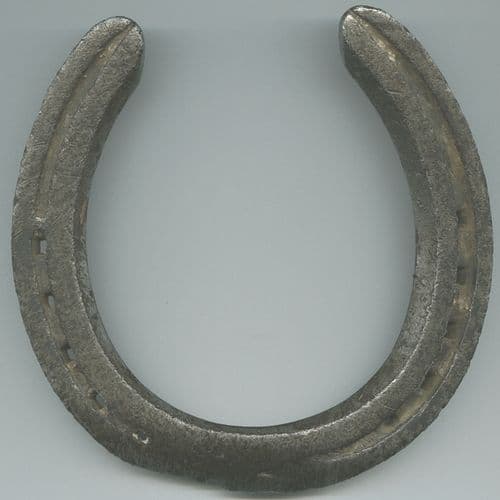
United Kingdom
An iron crescent hung above doorways to catch and hold good luck.

Ireland
The rarest clover mutation, treasured as nature's own lucky charm.
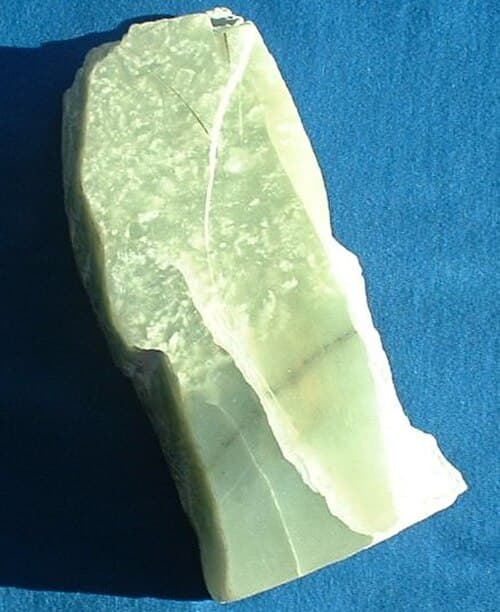
China
Revered for over 7,000 years, jade is the stone of heaven in Chinese culture, believed to protect health, ward off evil, and connect the wearer to divine virtue.
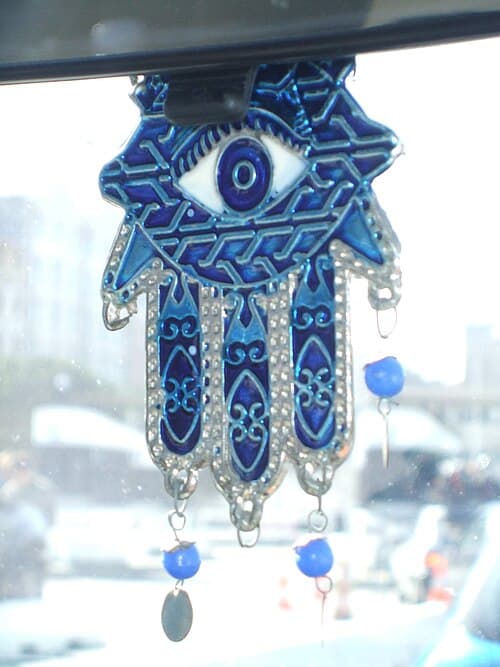
Middle East
An open palm amulet warding off the evil eye across Middle Eastern and North African cultures.

China
The Chinese dragon is the supreme symbol of imperial power, auspicious fortune, and the dynamic yang energy that drives all achievement and transformation.
In Italy, 13 is lucky and 17 is cursed. In China, 4 is feared and 8 is coveted. In many cultures, Friday the 13th is just another day. Explore how different civilisations have constructed entirely different systems of luck — and what that reveals about human nature.
The sea has always been humanity's most dangerous workplace. From Phoenician amulets to modern-day tattoo traditions, explore the rich world of maritime lucky charms — objects that sailors have trusted with their lives for millennia.
The ancient Silk Road was not merely a trade route for silk and spices — it was the world's first great highway of symbolic exchange, carrying lucky charms, amulets, and magical beliefs between East and West for over a millennium.

