

2
General
🍀
Four-Leaf Clover
Ireland
The rarest clover mutation, treasured as nature's own lucky charm.
4.9Learn more →

Europe - Eastern
8 charms from this country
Albania's charm tradition draws from its unique position as a country where bektashi Sufism, Sunni Islam, Orthodox Christianity, and Catholicism coexist, layered over pre-Islamic Illyrian folk traditions. The evil eye (syri i keq) is the primary source of misfortune, and blue beads (boncuk) are hung from babies' cribs, vehicles, and building cornerstones. The hamsa hand appears on jewelry and wall decorations.
The Kanun, the ancient Albanian customary law code that governed mountain communities for centuries, includes specific lucky and unlucky practices. The Eagle — the double-headed eagle of the national flag — is the supreme protective symbol of Albanian identity. Specific herb bundles, garlic strings, and horseshoes are hung above doors. The evil eye diagnosis and cure by elderly women is a living practice across the country.
Ireland
The rarest clover mutation, treasured as nature's own lucky charm.
United Kingdom
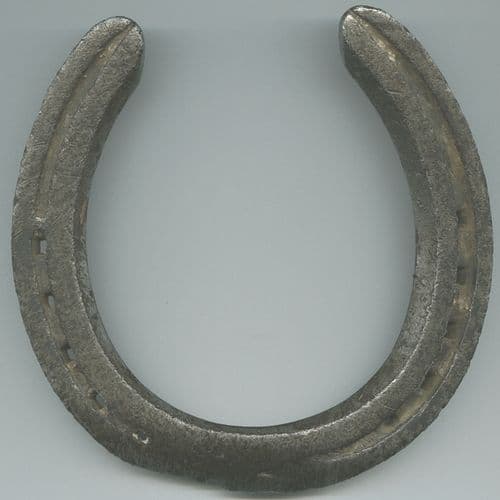
An iron crescent hung above doorways to catch and hold good luck.
Middle East
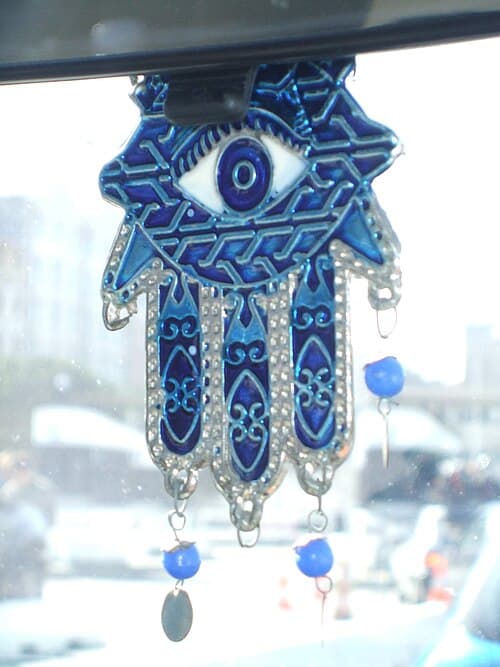
An open palm amulet warding off the evil eye across Middle Eastern and North African cultures.

United Kingdom
The spotted red beetle that brings good fortune to whoever it lands upon.

United Kingdom
The humble copper coin that promises a turn of fortune when found heads-up.
Medieval Europe
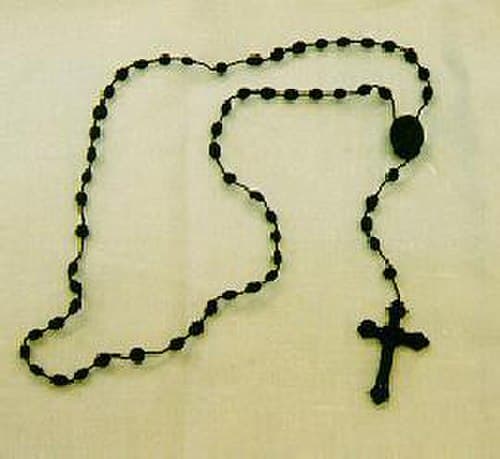
Rosary beads are the most recognizable Catholic prayer tool in the world, used by hundreds of millions for meditative prayer, protection, and the invocation of divine grace.

United Kingdom
The most universally lucky number in Western culture, encoded in the cosmos itself.

Albania
The double-headed black eagle of Albania — one of heraldry's most ancient symbols, worn by Albanians as a declaration of Illyrian pride and unbreakable sovereignty.

