

4
Wealth
🐱
Maneki-neko (Lucky Cat)
Japan
The beckoning cat is Japan's most iconic good-luck charm, believed to wave fortune, customers, and prosperity into any space it occupies.
4.9Learn more →

East Asia
17 charms from this country
Hong Kong is arguably the world's most superstition-saturated city, where centuries of Cantonese folk religion coexist with a gleaming financial metropolis. Feng shui masters are consulted for every major building project, and the distinctive slant of the HSBC headquarters was reportedly designed to channel favorable qi. The money frog sits at cash registers across the city, and the pixiu charm hangs from rearview mirrors and briefcases alike.
Wong Tai Sin Temple draws thousands of daily worshippers shaking fortune sticks to divine their fate in business and love. The jade market at Yau Ma Tei buzzes with buyers seeking protective bangles and carved auspicious symbols. Red envelopes are given not only at Lunar New Year but at weddings, birthdays, and the opening of every new business.
Japan
The beckoning cat is Japan's most iconic good-luck charm, believed to wave fortune, customers, and prosperity into any space it occupies.
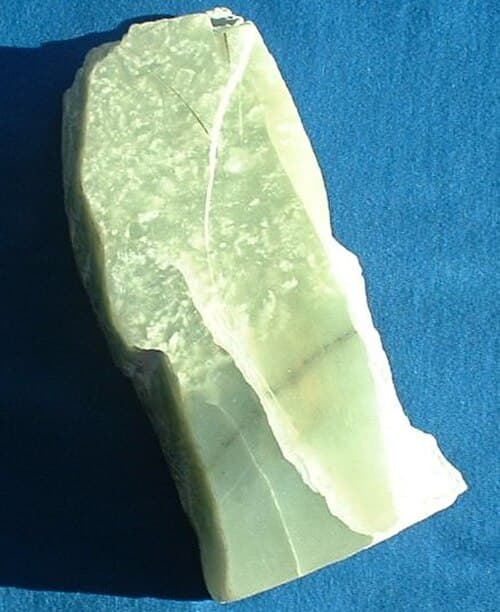
China
Revered for over 7,000 years, jade is the stone of heaven in Chinese culture, believed to protect health, ward off evil, and connect the wearer to divine virtue.

China
The Laughing Buddha — the round, joyful, sack-carrying monk — is China's most beloved symbol of happiness, wealth, and the simple abundance that comes from contentment.
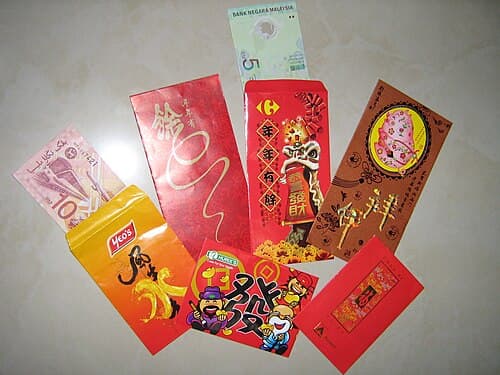
China
The red envelope (hongbao) is China's most universal good-fortune gift, transferring luck and blessings along with cash at every major life celebration.

China
Lucky Bamboo is a feng shui staple believed to bring good fortune, prosperity, and positive energy when placed in the home or office.

China
The Chinese dragon is the supreme symbol of imperial power, auspicious fortune, and the dynamic yang energy that drives all achievement and transformation.

China
Goldfish have been symbols of wealth and abundance in China for over a thousand years, their gold color and fluid movement embodying the easy flow of prosperity.
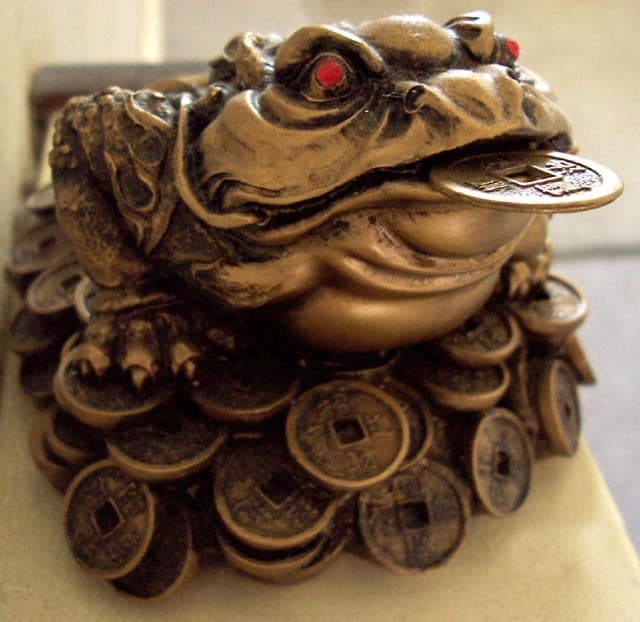
China
The three-legged toad sitting on coins with a coin in its mouth is one of feng shui's most potent wealth activators, said to attract money and prevent it from leaving.

Japan
The koi fish symbolizes perseverance, ambition, and transformation — the legendary carp that swam upstream and leaped the Dragon Gate to become a dragon.

China
The Bagua Mirror is feng shui's most powerful deflection tool — an octagonal mirror ringed with the eight trigrams of the I Ching, used exclusively for exterior protection.

China
Pixiu is a mythical Chinese creature with a dragon's head, horse's body, and lion's feet that eats gold but cannot excrete it — the ultimate symbol of wealth accumulation.
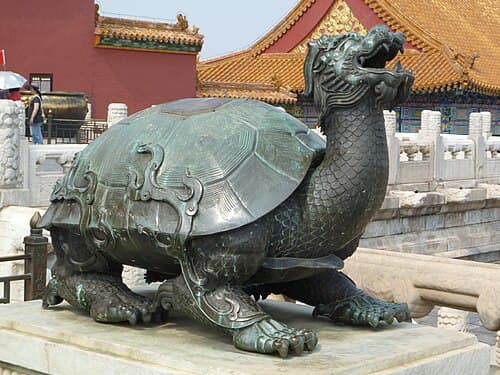
China
The Dragon Turtle combines the protective wisdom of the turtle with the powerful success energy of the dragon, creating one of feng shui's most potent talismans for career advancement.
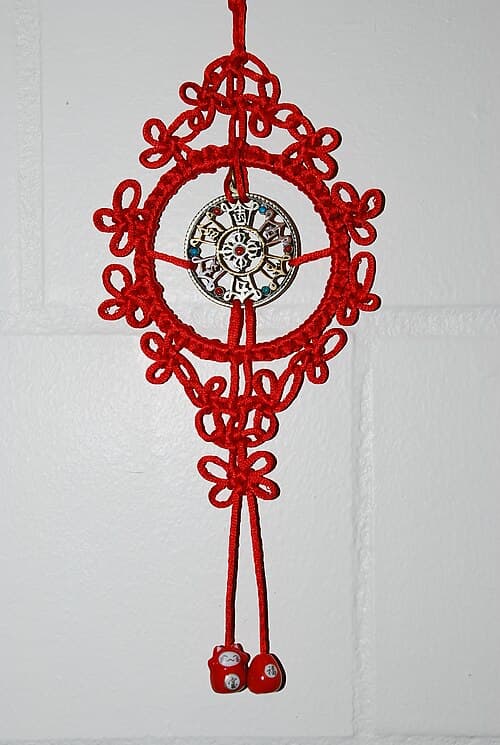
China
Chinese decorative knots are intricate single-cord creations representing unity, good fortune, and the endless continuity of blessings — each pattern carries its own specific meaning.

China
The Wu Lou bottle gourd is China's most important health and longevity charm, carried by the Eight Immortals and believed to contain the elixir of immortal life.

China
Fu Dogs — imperial stone lions that guard the gates of palaces, temples, and homes — are China's supreme protective talisman against evil, theft, and misfortune.
China
An ancient Chinese mythological creature, the three-legged toad of the moon is a powerful feng shui wealth symbol believed to attract money and protect against financial loss.
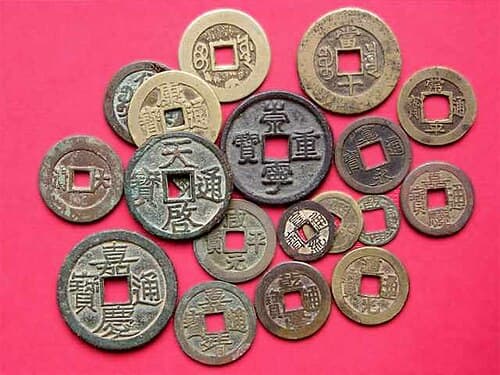
China
Ancient Chinese coins with square holes, tied in groups of three with red string, are powerful feng shui wealth activators connecting the circular heavens with the square earth.

